
Get Answers
Introduction to AI in Lung Cancer Diagnosis
The use of artificial intelligence (AI) in healthcare is rapidly advancing. In the UK, AI systems are increasingly being integrated into medical practices. Lung cancer diagnosis is one area where AI shows great potential.
AI algorithms can analyze medical images such as CT scans. They aim to detect signs of lung cancer with high accuracy. This technology is seen as a promising tool in the fight against cancer.
AI Systems Augmenting Human Radiologists
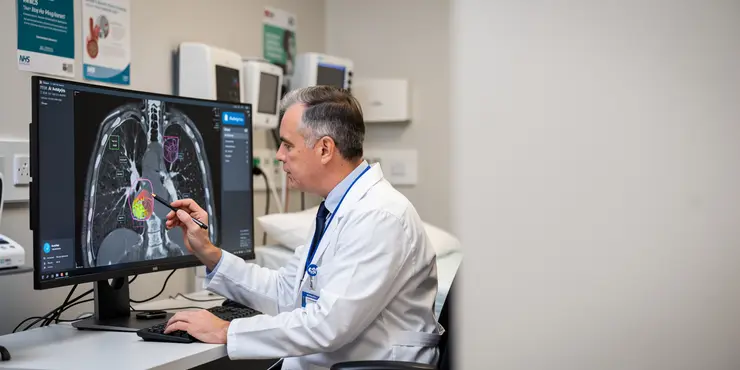
In the UK, AI systems are not typically used alone to diagnose lung cancer. Instead, they augment the work of human radiologists. AI can quickly review images and highlight potential areas of concern.
Radiologists then use the AI's findings to support their diagnosis. This partnership can enhance accuracy and efficiency in detecting lung cancer. It allows for more confident decision-making in a clinical setting.
The Benefits of Combining AI and Human Expertise
Using AI alongside human radiologists offers several benefits. AI can process large volumes of data swiftly. This reduces the time needed for diagnosis and alleviates the workload for radiologists.
Moreover, AI systems can identify patterns and anomalies that might be missed by the human eye. This combination of machine precision and human expertise can improve diagnostic outcomes.
Current Challenges and Considerations
Despite its advantages, the use of AI in lung cancer diagnosis is not without challenges. AI systems rely on high-quality data to function accurately. Errors or biases in data can affect outcomes.
Additionally, there are concerns about the integration of AI into existing workflows. Training radiologists to effectively use AI tools is crucial. Ensuring ethical standards and patient confidentiality also remains a priority.
The Future of AI in Lung Cancer Diagnosis
The future for AI in lung cancer diagnosis looks promising. Continued research and development are likely to refine these technologies. AI systems may play an increasingly significant role in healthcare.
In the UK, embracing technological advancements can lead to better patient outcomes. Collaboration between AI and human radiologists will likely continue to evolve. This partnership represents a new era in medical diagnostics.
Frequently Asked Questions
AI systems assist in analyzing medical images, improving the speed and accuracy of lung cancer diagnosis.
AI systems are typically used alongside human radiologists to enhance diagnostic accuracy rather than being used alone.
AI systems are not intended to replace radiologists but to support them by providing additional insights and reducing diagnostic errors.
AI systems can quickly analyze large volumes of imaging data to identify patterns and anomalies that may indicate lung cancer.
Yes, AI systems can improve diagnostic accuracy by identifying subtle signs of lung cancer that may be missed by human eyes.
AI systems can review images quickly and consistently, allowing radiologists to focus on more complex cases and decision-making.
Radiologists may need training to understand and effectively use AI tools integrated into their diagnostic workflows.
Certain AI systems for lung cancer diagnosis have received FDA approval, ensuring they meet safety and effectiveness standards.
AI systems can assist in detecting various types of lung cancer, including non-small cell and small cell lung cancers.
AI systems are trained using large datasets of medical images which help them recognize patterns associated with lung cancer.
Yes, AI systems can quickly process and analyze imaging data, potentially reducing the time to reach a diagnosis.
AI systems may struggle with unusual cases and rely on data quality; they work best in conjunction with human expertise.
Complex cases are generally handled by radiologists, with AI providing supporting data which aids in decision-making.
AI can help manage workload by performing preliminary image analysis, allowing radiologists to focus on reviewing and making final decisions.
While initial costs can be high, AI systems may improve efficiency and accuracy, potentially reducing long-term healthcare costs.
AI is likely to become more integrated, offering deeper insights and supporting personalized treatment plans alongside radiologists.
Ethical concerns include data privacy, the potential for bias in AI algorithms, and the need for human oversight in diagnosis.
AI systems can be integrated into existing PACS systems, providing seamless assistance without disrupting current workflows.
AI systems have shown high accuracy rates, often comparable to or exceeding radiologists in certain studies, though they perform best in collaboration.
Hospitals often start with pilot programs, evaluating AI systems alongside radiologist feedback before full-scale implementation.

Ergsy Search Results
This website offers general information and is not a substitute for professional advice.
Always seek guidance from qualified professionals.
If you have any medical concerns or need urgent help, contact a healthcare professional or emergency services immediately.
Some of this content was generated with AI assistance. We've done our best to keep it accurate, helpful, and human-friendly.
- Ergsy carefully checks the information in the videos we provide here.
- Videos shown by Youtube after a video has completed, have NOT been reviewed by ERGSY.
- To view, click the arrow in centre of video.
- Most of the videos you find here will have subtitles and/or closed captions available.
- You may need to turn these on, and choose your preferred language.
- Go to the video you'd like to watch.
- If closed captions (CC) are available, settings will be visible on the bottom right of the video player.
- To turn on Captions, click settings.
- To turn off Captions, click settings again.