
Get Answers
Understanding Prostate Screening
Prostate screening is a crucial step for men's health, particularly for those over 50. It helps detect prostate cancer early when treatment is most effective. Understanding what the process involves can help reduce anxiety and make the experience smoother.
There are different methods for prostate screening, including the prostate-specific antigen (PSA) blood test and the digital rectal examination (DRE). Each method has its own procedures and preparation steps.
Pre-Screening Consultation
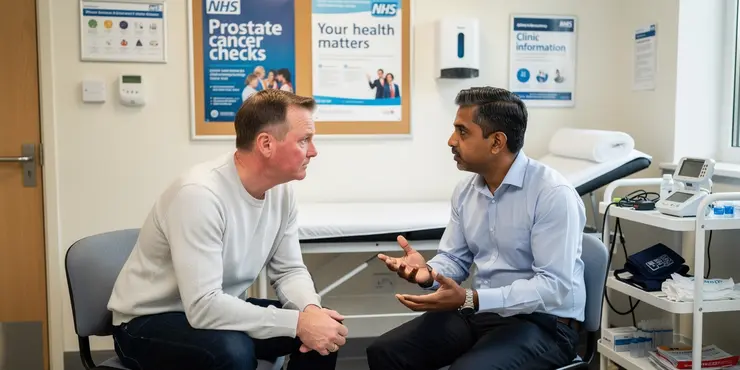
Before undergoing prostate screening, it's important to consult with your GP. This discussion helps determine if screening is appropriate for you based on your age, family history, and risk factors.
Your GP will explain the benefits and limitations of screening. They can provide personalised advice and answer any questions you may have about the procedure.
Preparing for the PSA Test
The prostate-specific antigen (PSA) test is a simple blood test. However, certain factors can affect PSA levels, so preparation is important.
It is recommended to avoid vigorous exercise, such as cycling or jogging, 48 hours before the test. These activities can raise PSA levels temporarily and potentially affect the test results.
Additionally, it's best to avoid ejaculation 48 hours before the test, as this can also temporarily increase PSA levels. Inform your GP if you are taking any medications, as some can influence PSA measurements.
Preparing for the Digital Rectal Examination (DRE)
The digital rectal examination (DRE) requires minimal preparation. It involves a doctor inserting a gloved, lubricated finger into the rectum to feel the prostate gland.
Wearing comfortable, loose-fitting clothing can make the procedure easier for you and your doctor. Mental preparation is equally important. Knowing what to expect may help ease any discomfort or embarrassment.
On the Day of the Screening
On the day of the screening, ensure you have a list of any medications you are taking for the healthcare provider. It's also helpful to have a note of any symptoms or concerns to discuss during the appointment.
Arrive early to the appointment, allowing yourself some time to relax before the procedure. Being in a calm state can make the experience less stressful.
Post-Screening Considerations
After the screening, it’s essential to understand what the results mean. Your GP will interpret the results and discuss the next steps with you if necessary.
If any irregularities are found, further testing may be needed. It's important to follow your GP's advice to ensure proactive and effective prostate health management.
Frequently Asked Questions
Prostate screening involves tests to check the health of the prostate gland and detect any abnormalities, such as prostate cancer, at an early stage.
Proper preparation ensures accurate test results and helps in the timely detection of any prostate issues.
It's generally recommended to avoid heavy meals and caffeine a few hours before the test, but you should confirm specific instructions with your healthcare provider.
Yes, inform your doctor about all medications, supplements, or herbs you are taking as some can affect test results.
Fasting is not typically required for prostate screening, but your doctor may provide specific instructions.
During a DRE, a doctor will gently insert a gloved, lubricated finger into the rectum to feel the prostate for any abnormalities.
The most common tests include the Prostate-Specific Antigen (PSA) blood test and the Digital Rectal Exam (DRE).
It's usually advised to avoid strenuous physical activity, such as cycling, a day before the test as it can affect PSA levels.
Practice relaxation techniques, such as deep breathing, and discuss any concerns with your healthcare provider beforehand.
It's advisable to avoid alcohol 24 hours before a PSA test as it can influence the results.
Yes, it is usually recommended to abstain from ejaculation 24 to 48 hours before the PSA test as it can lead to temporary elevations in PSA levels.
Provide your complete medical history, including any family history of prostate cancer and current symptoms.
Symptoms like difficulty urinating, frequent urination, blood in urine, or pelvic discomfort may prompt earlier screening.
The frequency depends on factors like age, family history, and previous test results. Your doctor will recommend a schedule.
Yes, some supplements may affect PSA levels. Discuss any supplements you are taking with your healthcare provider.
It is not necessary as prostate screenings are non-invasive, but you can if it makes you more comfortable.
The DRE takes only a few minutes, while the PSA test is a simple blood draw that can be done quickly.
Anxiety doesn't directly affect test results, but discussing concerns with your doctor can help manage stress and provide clarity.
Yes, recent surgical procedures can affect results. Inform your doctor about any recent surgeries before screening.
PSA test results are usually available within a few days, while DRE results are immediate. Discuss the timeline with your provider.

Ergsy Search Results
This website offers general information and is not a substitute for professional advice.
Always seek guidance from qualified professionals.
If you have any medical concerns or need urgent help, contact a healthcare professional or emergency services immediately.
Some of this content was generated with AI assistance. We've done our best to keep it accurate, helpful, and human-friendly.
- Ergsy carefully checks the information in the videos we provide here.
- Videos shown by Youtube after a video has completed, have NOT been reviewed by ERGSY.
- To view, click the arrow in centre of video.
- Most of the videos you find here will have subtitles and/or closed captions available.
- You may need to turn these on, and choose your preferred language.
- Go to the video you'd like to watch.
- If closed captions (CC) are available, settings will be visible on the bottom right of the video player.
- To turn on Captions, click settings.
- To turn off Captions, click settings again.