
Get Answers
Understanding Woodland Burials
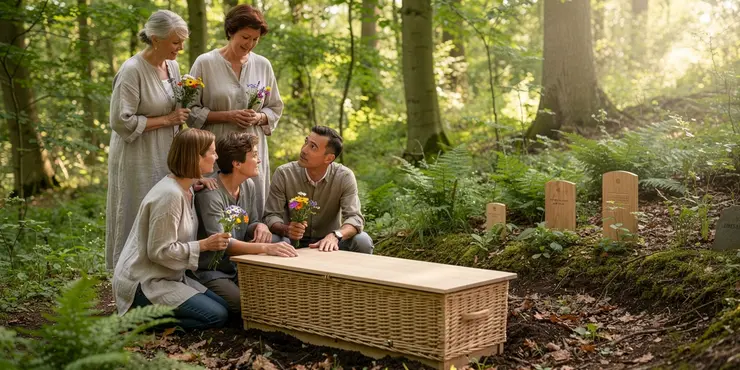
Woodland burials, also known as natural or green burials, offer an eco-friendly alternative to traditional burial practices. They typically involve interring the body in a biodegradable coffin or shroud without a permanent headstone.
This approach aims to minimise environmental impact and often takes place in designated natural burial grounds. It provides a way to conserve natural habitats and support biodiversity.
Environmental Benefits
One of the primary advantages of woodland burials is their promotion of natural land restoration. These burials help protect green spaces and preserve wooded areas.
The absence of headstones and traditional grave markers allows for the land to remain undisturbed. This aids in maintaining a more natural landscape and supports various local flora and fauna.
Biodegradable materials used in woodland burials break down naturally. This reduces the use of harmful chemicals, such as embalming fluids, that can leach into the soil.
Challenges and Considerations
While there are clear environmental benefits, woodland burials do pose some challenges. The availability of suitable sites and plots may be limited compared to traditional cemeteries.
The management of natural burial sites requires careful planning to ensure that they remain sustainable. This includes adhering to ecological guidelines and maintaining the balance of local ecosystems.
Additionally, families may need to adapt to the absence of a conventional gravesite. They might need alternative ways to commemorate and visit their loved ones.
Popularity and Availability in the UK
The interest in woodland burials has been increasing in the UK due to rising environmental awareness. More people are embracing sustainable burial options that align with their eco-conscious values.
There are now numerous woodland burial sites across the UK. These offer a range of settings, from open meadows to lush forests, to cater to individual preferences.
This growing demand has prompted owners and operators of burial grounds to expand their offerings. They aim to accommodate the needs and wishes of environmentally conscious individuals and families.
Conclusion: A Greener Future for Burials?
Woodland burials present an innovative approach to end-of-life practices. They offer significant environmental benefits by preserving natural landscapes and reducing ecological footprints.
Although they come with certain limitations, the increasing popularity of woodland burials signifies a shift towards more sustainable rituals in the UK. They reflect a broader movement towards embracing eco-friendly lifestyles.
As more people seek green burial options, the future of this practice looks promising. It may become an integral part of how the UK approaches the concept of a final resting place.
Frequently Asked Questions
A woodland burial, also known as a natural or green burial, is an eco-friendly method of interment where the body is laid to rest in a biodegradable coffin or shroud in a natural setting like a forest or meadow.
Yes, woodland burials are considered environmentally friendly because they avoid the use of embalming chemicals and non-biodegradable materials, and contribute to the conservation and preservation of natural habitats.
No, woodland burials generally do not use embalming fluids, as these chemicals can be harmful to the environment.
Woodland burials typically use biodegradable materials such as wicker, cardboard, or untreated softwood for coffins, or simple shrouds made of natural fibers.
Yes, many woodland burial sites are part of conservation efforts that protect and enhance natural ecosystems, offering wildlife habitats and helping to preserve green spaces.
Typically, woodland burials do not use traditional headstones. Instead, natural markers like indigenous plants, trees, or simple wooden plaques are used to maintain the natural landscape.
Many woodland burial sites are publicly accessible, as they often double as nature reserves or conservation areas, allowing people to visit and enjoy the natural environment.
Woodland burials reduce carbon emissions by forgoing the use of cement and energy-intensive manufacturing processes for caskets and headstones, and by preserving trees that absorb carbon dioxide.
Yes, woodland burials are subject to local legal regulations regarding land use and burial practices. These ensure environmental protection and respect for the deceased.
Many religions can accommodate woodland burials as they fulfill requirements for natural decomposition and often align with religious perspectives on simplicity and environmental stewardship.
Yes, in woodland burials, bodies can be buried directly in the earth using biodegradable materials to allow natural decomposition.
Trees planted for woodland burials enhance biodiversity, provide natural markers for graves, and contribute to carbon sequestration, making them essential for environmental balance.
Woodland burials can be more cost-effective than traditional burials as they avoid expensive embalming, caskets, and headstones, though costs can vary based on location and offerings.
Woodland burial sites often follow sustainable land management practices by preserving natural habitats, enhancing biodiversity, and using land stewardship principles.
Woodland burials positively impact wildlife by providing undisturbed habitats that support various species, contributing to ecological diversity.
Yes, woodland burials can be personalized with biodegradable items or natural elements that reflect the deceased’s personality, all while adhering to eco-friendly practices.
Some woodland burial sites seek environmental certifications that ensure eco-friendly practices are followed, promoting habitat conservation and sustainable management.
Family members are often encouraged to plant native trees or flowers at woodland burial sites, contributing to the area's ecological health and providing a living memorial.
In a woodland burial setting, graves naturally return to and integrate with the landscape, fostering a continual cycle of life and decay that supports ecological processes.
Yes, woodland burials support biodiversity by maintaining natural habitats and encouraging the growth of varied plant species, which in turn supports diverse animal life.

Ergsy Search Results
This website offers general information and is not a substitute for professional advice.
Always seek guidance from qualified professionals.
If you have any medical concerns or need urgent help, contact a healthcare professional or emergency services immediately.
Some of this content was generated with AI assistance. We've done our best to keep it accurate, helpful, and human-friendly.
- Ergsy carefully checks the information in the videos we provide here.
- Videos shown by Youtube after a video has completed, have NOT been reviewed by ERGSY.
- To view, click the arrow in centre of video.
- Most of the videos you find here will have subtitles and/or closed captions available.
- You may need to turn these on, and choose your preferred language.
- Go to the video you'd like to watch.
- If closed captions (CC) are available, settings will be visible on the bottom right of the video player.
- To turn on Captions, click settings.
- To turn off Captions, click settings again.