
Get Answers
Is breastfeeding in public illegal in the United States?
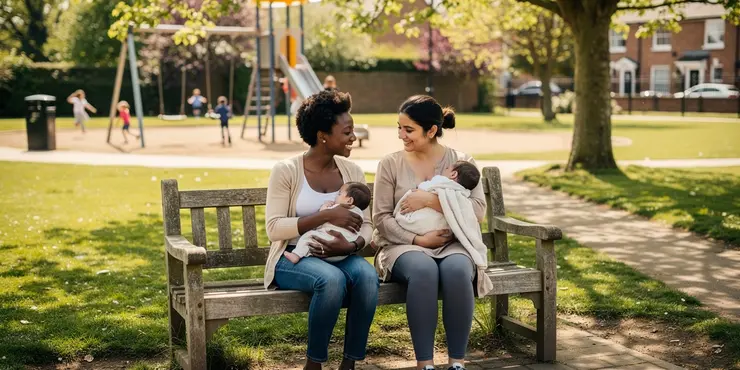
No, breastfeeding in public is not illegal in the United States. In fact, all 50 states, the District of Columbia, and Puerto Rico have laws protecting a mother’s right to breastfeed in public or private places where she is otherwise allowed to be.
That means a woman can usually breastfeed in shops, restaurants, parks, airports, and other public spaces without breaking the law. While local rules and venue policies may vary in practice, the legal position is clear: breastfeeding is protected.
What does the law say?
US breastfeeding laws are based on state-level protections rather than one single federal rule. Most states say a mother may breastfeed in any public or private location where she has a legal right to be present.
Some states also make it clear that breastfeeding is not considered indecent exposure or public nudity. This helps prevent businesses or police from treating breastfeeding as something unlawful or inappropriate.
What about private businesses?
Private businesses can set general rules for their premises, but they cannot usually stop a person from breastfeeding simply because they are breastfeeding. In many cases, asking someone to leave or cover up could lead to complaints or legal issues.
In practice, problems still happen because not everyone knows the law. A business may have a staff member who misunderstands the rules, which can create awkward situations even though the law is on the mother’s side.
How does this compare with the UK?
For a UK audience, the key difference is that the United States relies heavily on state laws, so the legal detail can vary slightly from place to place. However, the overall result is similar to the UK: breastfeeding in public is protected and should not be treated as unlawful.
In both countries, social attitudes may differ from the legal position. A woman may still face uncomfortable comments or pressure, but that does not mean she is doing anything illegal.
Why people still get confused
Confusion often comes from the fact that US laws are not always well known, and some people assume breastfeeding can be restricted like other forms of nudity. That is usually not correct.
Another reason is that public breastfeeding can still be controversial culturally, even when it is lawful. Legal rights and public opinion do not always match.
The bottom line
Breastfeeding in public is not illegal in the United States. It is protected by law across the country, and mothers generally have the right to feed their babies wherever they are lawfully allowed to be.
If you are travelling in the US, there is no need to worry about breaching the law by breastfeeding in a public place. The main issue is usually social comfort, not legality.
Frequently Asked Questions
Breastfeeding in public legality United States generally means the right to breastfeed in public or private places where a mother is legally allowed to be. In all 50 states, breastfeeding in public is protected by law to some extent, and it is generally allowed.
Breastfeeding in public legality United States is protected in all 50 states, the District of Columbia, Puerto Rico, and the U.S. Virgin Islands through laws that protect a mother's right to breastfeed in public or in certain workplaces and facilities.
Breastfeeding in public legality United States is supported by federal protections in certain contexts, such as workplace accommodations under the PUMP Act and anti-discrimination rules in some settings, but most direct public-breastfeeding rights come from state law.
Breastfeeding in public legality United States is generally protected, and businesses usually cannot bar a person from breastfeeding if the person is otherwise permitted to be there. A business may set ordinary conduct rules, but it cannot treat breastfeeding as improper or illegal in states that protect the practice.
In breastfeeding in public legality United States, law enforcement generally should not stop or cite someone merely for breastfeeding in a place where the person has a right to be. Because breastfeeding is protected in all states, it is not treated as indecent exposure in normal circumstances.
Yes, breastfeeding in public legality United States typically applies in restaurants, stores, malls, and other public accommodations. If a person is lawfully present, they are generally allowed to breastfeed there.
Breastfeeding in public legality United States may apply on private property that is open to the public, such as businesses and venues, depending on state law and the property owner's general access rules. Private homes or truly private spaces can set their own access rules.
Under breastfeeding in public legality United States, a person may be asked to cover up, but in many states they are not required to do so. The legal right usually protects breastfeeding itself, not a requirement to breastfeed in a specific way.
No, breastfeeding in public legality United States generally excludes breastfeeding from indecent exposure laws. Most states specifically protect breastfeeding and do not treat the exposure of a breast while nursing as a crime.
Breastfeeding in public legality United States usually protects a mother's right to stay in a venue if she is otherwise allowed to be there. Removing someone solely for breastfeeding may violate state protections or anti-discrimination rules.
Breastfeeding in public legality United States is related to breastfeeding, but pumping protections may be different. Many workplace laws protect pumping, and some public accommodation rules may also protect it, but the exact coverage depends on state law and the situation.
Penalties under breastfeeding in public legality United States vary by state and situation. A person or business that interferes with protected breastfeeding may face complaints, civil claims, or other legal consequences depending on local law.
Breastfeeding in public legality United States generally applies in airports, and federal airline rules also protect the right to breastfeed on airplanes within normal safety and security limits.
Breastfeeding in public legality United States applies differently at work. Workplace protections often come from federal and state laws requiring reasonable break time and a private space for pumping, while breastfeeding during work breaks may also be protected.
Breastfeeding in public legality United States may limit a school's ability to restrict breastfeeding by a student, visitor, or staff member depending on the setting and state law. Schools generally cannot punish lawful breastfeeding, and many institutions must accommodate it.
Breastfeeding in public legality United States protections generally apply to the act of breastfeeding, not the age of the person breastfeeding. If a person is legally allowed to be in the location, the breastfeeding protection usually still applies.
Breastfeeding in public legality United States may provide grounds for a complaint or lawsuit if a person is denied service, removed, or treated unlawfully because of breastfeeding. The available remedy depends on the state law and facts involved.
Breastfeeding in public legality United States generally does not allow dress codes to prohibit breastfeeding itself. Some places may have neutral attire rules, but they usually cannot force a person to stop breastfeeding or make it impossible to nurse discreetly.
Yes, breastfeeding in public legality United States differs in details by state, even though all states protect the right to breastfeed in public. Differences may involve enforcement, remedies, and specific definitions of protected locations.
Before relying on breastfeeding in public legality United States, a person should know that the right is broadly protected but can depend on the location and state-specific rules. If a dispute arises, it can help to review local law or seek legal advice.

Ergsy Search Results
This website offers general information and is not a substitute for professional advice.
Always seek guidance from qualified professionals.
If you have any medical concerns or need urgent help, contact a healthcare professional or emergency services immediately.
Some of this content was generated with AI assistance. We've done our best to keep it accurate, helpful, and human-friendly.
- Ergsy carefully checks the information in the videos we provide here.
- Videos shown by Youtube after a video has completed, have NOT been reviewed by ERGSY.
- To view, click the arrow in centre of video.
- Most of the videos you find here will have subtitles and/or closed captions available.
- You may need to turn these on, and choose your preferred language.
- Go to the video you'd like to watch.
- If closed captions (CC) are available, settings will be visible on the bottom right of the video player.
- To turn on Captions, click settings.
- To turn off Captions, click settings again.