
Speak To An Expert
Get clear, personalised advice for your situation.
Jot down a few questions to make the most of your conversation.
Can adults with type 1 diabetes get NHS diabetes technology?
Yes, many adults with type 1 diabetes can get access to NHS diabetes technologies, but eligibility is not always the same across the country. The most common technologies include insulin pumps, continuous glucose monitoring (CGM), and flash glucose monitoring.
Access depends on your clinical needs, local NHS policies, and whether your diabetes team feels a device would improve your diabetes management. In England, Scotland, Wales, and Northern Ireland, the general principle is that technology should be offered when it is likely to help.
What technologies may be available?
Common NHS diabetes technologies include insulin pumps, hybrid closed-loop systems, CGM, and flash monitors such as FreeStyle Libre. These tools can help track glucose levels more closely and reduce the need for frequent finger-prick tests.
Some people may also be offered diabetes apps or connected pens, although availability varies. Your specialist team will usually decide which option is most suitable for your treatment goals and daily routine.
Who is likely to be eligible?
Adults with type 1 diabetes may be eligible if they have significant difficulty managing blood glucose levels with injections alone. This can include recurrent severe hypos, hypoglycaemia unawareness, high HbA1c despite best efforts, or frequent glucose swings.
People who have a strong clinical need, a willingness to use the technology safely, and regular contact with a diabetes specialist team are more likely to be approved. In some areas, local guidance may also consider work, driving, pregnancy planning, or the risk of complications.
How is access decided?
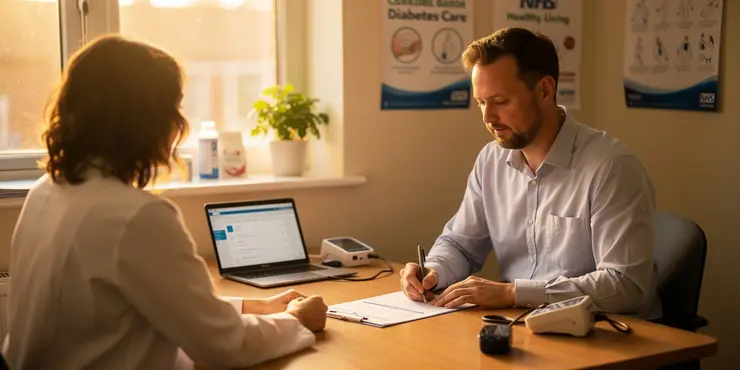
Usually, access starts with your diabetes consultant, specialist nurse, or clinic team. They assess your blood glucose patterns, current treatment, and whether a device could improve safety and control.
If your team agrees you may benefit, they can submit a request or prescription through NHS pathways. In some cases, a local funding panel or integrated care board may need to approve the device, especially for newer systems.
What if you are turned down?
If you are not offered a device, you can ask why and request a review. It may help to explain specific problems, such as frequent hypos, anxiety about lows, or difficulty reaching agreed targets.
You can also ask about trying another technology, or whether your local service has different criteria for CGM or pump therapy. A second opinion from another diabetes specialist may be possible in some circumstances.
What should you do next?
If you think a diabetes technology could help you, speak to your diabetes clinic or GP and ask for a referral to the specialist team if needed. Bring examples of your glucose readings, hypo episodes, and any issues with injections or monitoring.
Eligibility can feel confusing, but many adults do get NHS support when there is a clear medical reason. The best starting point is an honest conversation with your diabetes team about what is affecting your control and daily life.
Frequently Asked Questions
Eligibility usually depends on clinical need, diabetes control, risk of hypoglycaemia, ability to use the technology safely, and agreement with your diabetes team. A specialist clinician assesses whether the technology is appropriate for your individual situation.
This eligibility applies to adults, meaning people aged 18 and over with type 1 diabetes, although local NHS policies may vary slightly in how they define transition from paediatric to adult services.
Insulin pump therapy may be considered for adults with type 1 diabetes who meet clinical criteria, such as difficulty achieving targets with multiple daily injections, frequent severe hypos, or specific lifestyle or medical needs.
Continuous glucose monitoring may be offered to adults with type 1 diabetes who need closer glucose tracking, especially if they have problematic hypoglycaemia, high glucose variability, or difficulty with finger-prick testing alone.
Flash glucose monitoring may be available to adults with type 1 diabetes who would benefit from easier glucose pattern monitoring, provided they can use the device correctly and it is judged clinically appropriate.
Common criteria include HbA1c levels, frequency of severe or nocturnal hypoglycaemia, hypoglycaemia unawareness, glucose variability, pregnancy plans, and whether standard insulin therapy is not meeting treatment goals.
Yes, a persistently high HbA1c can support eligibility if the diabetes team believes technology could improve glucose control, but eligibility is based on overall clinical assessment rather than HbA1c alone.
Yes, frequent or severe hypoglycaemia is a major factor in assessing eligibility because some technologies can help reduce lows and improve safety for adults with type 1 diabetes.
Yes, hypoglycaemia unawareness often strengthens the case for technology such as continuous glucose monitoring or pump therapy because it can help detect and prevent dangerous lows.
Yes, pregnancy planning can influence eligibility because tighter glucose management is important before and during pregnancy, and specialist teams may recommend suitable diabetes technology if clinically needed.
They may qualify if the difficulty with injections creates a significant barrier to safe and effective diabetes management, and the specialist team agrees that a device such as an insulin pump would help.
They may qualify if irregular work patterns, sleep cycles, or meal timing make glucose control difficult and a technology would improve safety and management.
A diabetes specialist team usually reviews your glucose records, treatment history, hypoglycaemia risk, daily routine, and ability to use the device before deciding whether the technology is suitable.
Usually yes. Eligibility is typically assessed by a diabetes specialist, such as a consultant or specialist nurse, rather than through a routine GP prescription alone.
It can. Other health conditions may increase the need for monitoring or make self-management harder, but they may also affect whether a particular device is practical or safe.
Switching between devices may be possible if your clinical needs change, but the diabetes team will review whether the new technology is still appropriate and cost-effective.
Yes, local NHS Integrated Care Board or hospital policies can affect access, so eligibility criteria and availability may differ slightly depending on where you live in the UK.
Yes, most technologies require regular use, ongoing follow-up, and the ability to respond to readings or alerts appropriately, so the team will assess whether you can use the device safely.
Access may be reviewed if the technology is not being used safely, is not meeting clinical goals, or circumstances change, but decisions are usually made with support from the diabetes team.
If access is refused, you can ask your diabetes team for the reasons, request a review, and discuss whether further evidence or an alternative device could support a new assessment.

Ergsy Search Results
This website offers general information and is not a substitute for professional advice.
Always seek guidance from qualified professionals.
If you have any medical concerns or need urgent help, contact a healthcare professional or emergency services immediately.
Some of this content was generated with AI assistance. We've done our best to keep it accurate, helpful, and human-friendly.
- Ergsy carefully checks the information in the videos we provide here.
- Videos shown by Youtube after a video has completed, have NOT been reviewed by ERGSY.
- To view, click the arrow in centre of video.
- Most of the videos you find here will have subtitles and/or closed captions available.
- You may need to turn these on, and choose your preferred language.
- Go to the video you'd like to watch.
- If closed captions (CC) are available, settings will be visible on the bottom right of the video player.
- To turn on Captions, click settings.
- To turn off Captions, click settings again.