
Get Answers
Can I travel after Ebola exposure?
If you have been exposed to Ebola, travel is not usually advised until you have been assessed by a health professional. Ebola can cause a serious and sometimes fatal illness, and symptoms may not appear for 2 to 21 days after exposure.
Even if you feel well, you may still be asked to stay where you are and avoid non-essential travel. This is to reduce the risk of spreading infection and to make sure you can be monitored properly.
What to do first
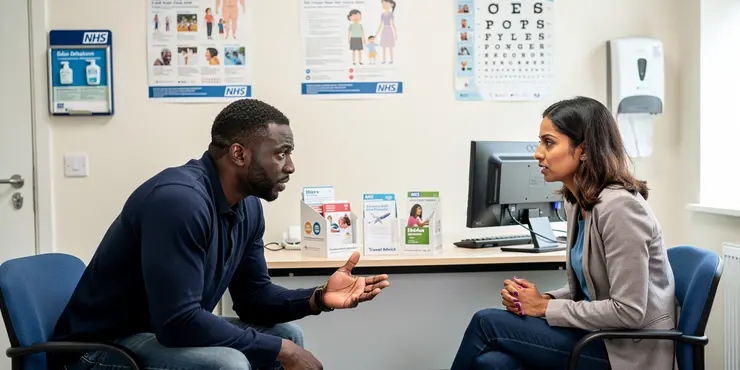
Contact a healthcare professional, your local NHS 111 service, or the UK Health Security Agency advice line if you think you have been exposed. Explain clearly where you were, what happened, and whether you have any symptoms.
If you are already in the UK and think there is a risk of Ebola, do not go directly to a GP surgery, pharmacy, or hospital waiting room unless told to do so. Call ahead so staff can advise you on the safest next steps.
If you must leave the area
If travel is unavoidable, speak to public health officials before you leave. They may advise on monitoring, transport arrangements, and whether you need to travel in a particular way to reduce risk to others.
Try to avoid public transport if you have been told to self-monitor or isolate. Use private transport if possible, and keep contact with other people to a minimum during the journey.
Watch for symptoms during travel
Symptoms can include fever, headache, muscle aches, weakness, vomiting, diarrhoea, and abdominal pain. If any symptoms start, treat it as urgent and seek medical help immediately.
Do not continue travelling if you become unwell. Tell the travel provider, airline, or transport staff that you may have had Ebola exposure so they can help manage the situation safely.
Protect others and plan ahead
Carry the contact details of the hospital, local public health team, or NHS service you have been told to use. Keep your phone charged and make sure you can be reached if officials need to update you.
Let close contacts know there may be health monitoring involved, but only share what is necessary. Follow any instructions on hand hygiene, cleaning of personal items, and staying away from vulnerable people.
When to seek urgent help
If you develop symptoms after exposure, call 999 if you are seriously unwell or cannot safely get medical help another way. Tell the operator about the Ebola exposure before describing anything else.
Quick action helps protect you and others. If you are unsure whether it is safe to travel, get advice before you leave rather than waiting until symptoms begin.
Frequently Asked Questions
Ebola exposure travel after exposure refers to traveling after you may have been exposed to Ebola virus. It is risky because symptoms can appear after travel begins, creating a public health concern and possible spread if the person becomes ill.
Before traveling after Ebola exposure travel after exposure, the person should contact local public health authorities or a healthcare provider immediately, disclose the exposure, and follow any monitoring, testing, or travel guidance they are given.
A person should not assume air travel is safe after Ebola exposure travel after exposure. Air travel decisions depend on exposure level, symptom status, and public health instructions, and travel may be restricted to prevent risk to others.
During Ebola exposure travel after exposure, watch for fever, headache, muscle pain, weakness, fatigue, vomiting, diarrhea, abdominal pain, and unexplained bleeding or bruising. Any symptom should prompt immediate medical attention and notification of health authorities.
Eligibility for travel after Ebola exposure travel after exposure depends on the type and timing of exposure, whether the person has symptoms, and the guidance of public health officials. Some exposures may allow monitored travel, while others may require quarantine or no travel.
Monitoring after Ebola exposure travel after exposure typically continues for the full incubation period, which is up to 21 days after the last possible exposure. Public health officials may require daily symptom checks during this time.
Quarantine rules for Ebola exposure travel after exposure vary by jurisdiction and exposure risk. Authorities may require restricted movement, symptom monitoring, or a stay-at-home order, especially if the exposure was high risk or if symptoms develop.
Ebola exposure travel after exposure may sometimes be postponed if public health officials determine it is safe to do so. The final decision depends on the exposure details, timing, and whether the traveler can be monitored appropriately.
Documents for Ebola exposure travel after exposure may include contact information for public health officials, a travel clearance letter, symptom-monitoring instructions, and any required health declarations. Requirements depend on destination and local regulations.
Yes, a healthcare provider should be notified about Ebola exposure travel after exposure as soon as possible. The provider can help assess risk, arrange testing or monitoring, and advise whether travel should be delayed or avoided.
Airport screening for Ebola exposure travel after exposure may include symptom questions, temperature checks, review of travel history, and confirmation of public health monitoring. Screening does not replace medical assessment if exposure has occurred.
Precautions during Ebola exposure travel after exposure may include avoiding contact with others, following hand hygiene, wearing a mask if instructed, carrying monitoring instructions, and being ready to seek care immediately if symptoms begin.
Family members may be affected by restrictions related to Ebola exposure travel after exposure if they are traveling together or providing support. Public health authorities can explain whether companions may travel and what precautions they should follow.
If symptoms start during Ebola exposure travel after exposure, the person should immediately isolate as much as possible, notify public health officials and the travel carrier if relevant, and seek urgent medical evaluation using the instructions they were given.
International travel after Ebola exposure travel after exposure may be restricted by the departure country, transit countries, or destination country. Travelers should check public health requirements and obtain official guidance before making plans.
Public health officials assess Ebola exposure travel after exposure by reviewing the type of contact, when it occurred, whether symptoms are present, and whether the person can be safely monitored. They then decide on travel, monitoring, or isolation measures.
Work travel after Ebola exposure travel after exposure may continue only if public health officials say it is safe and monitoring can be maintained. In many cases, travel should be delayed to avoid exposing coworkers, clients, or the public.
If travel is unavoidable after Ebola exposure travel after exposure, pack contact information for health authorities, a thermometer, symptom log, hand hygiene supplies, a mask if instructed, and written instructions for where to seek care at the destination.
Legal requirements for Ebola exposure travel after exposure can include reporting obligations, movement restrictions, quarantine orders, and destination-specific health documentation. These rules differ by location and should be confirmed with official authorities.
After Ebola exposure travel after exposure ends, the person should continue monitoring for the full 21-day period, avoid donating blood or organs, follow all public health instructions, and seek immediate care if any symptoms appear.

Ergsy Search Results
This website offers general information and is not a substitute for professional advice.
Always seek guidance from qualified professionals.
If you have any medical concerns or need urgent help, contact a healthcare professional or emergency services immediately.
Some of this content was generated with AI assistance. We've done our best to keep it accurate, helpful, and human-friendly.
- Ergsy carefully checks the information in the videos we provide here.
- Videos shown by Youtube after a video has completed, have NOT been reviewed by ERGSY.
- To view, click the arrow in centre of video.
- Most of the videos you find here will have subtitles and/or closed captions available.
- You may need to turn these on, and choose your preferred language.
- Go to the video you'd like to watch.
- If closed captions (CC) are available, settings will be visible on the bottom right of the video player.
- To turn on Captions, click settings.
- To turn off Captions, click settings again.