
Speak To An Expert
Get clear, personalised advice for your situation.
Jot down a few questions to make the most of your conversation.
Introduction
Inmates in the United Kingdom have the right to access legal assistance. This right is fundamental to ensuring justice and fairness within the criminal justice system. Access to legal resources is crucial for inmates to understand and exercise their legal rights, appeal convictions, or address grievances related to their incarceration.
Legal Framework
The right to legal assistance for inmates is enshrined in various legal provisions and statutes. Human rights laws, particularly the Human Rights Act 1998, stress the importance of fair legal proceedings. Additionally, the European Convention on Human Rights emphasizes the right to a fair trial and access to legal counsel. These provide a legal basis for inmates in the UK to seek and obtain legal help.
Legal Aid and Assistance
Legal aid is available to inmates in the UK under certain circumstances. The Legal Aid, Sentencing and Punishment of Offenders Act 2012 outlines the eligibility criteria for accessing legal aid. Inmates can apply for legal aid to cover costs related to legal representation, especially if they are appealing a conviction or sentence. Additionally, legal aid may be available for addressing issues such as prison conditions or human rights violations.
Access to Lawyers
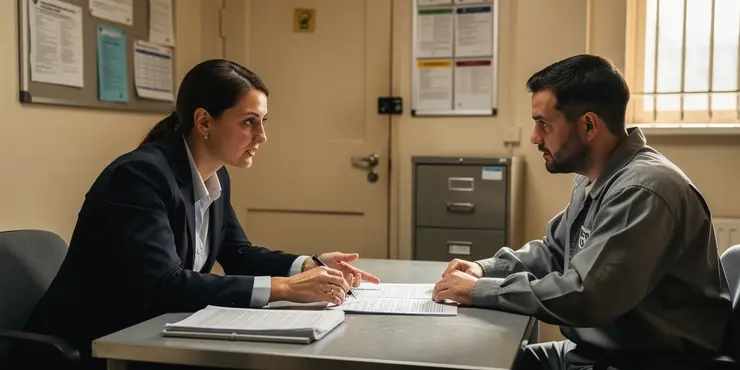
Inmates have the right to consult with solicitors and barristers. They can arrange for legal visits in prison, where they can communicate confidentially with their legal representatives. This contact is crucial for preparing and presenting legal cases. Prisons in the UK facilitate legal visits, ensuring that inmates can engage with their attorneys effectively.
Challenges in Access
Despite these rights, inmates may face challenges in accessing legal assistance. Overcrowding in prisons, limited resources, and administrative hurdles can impede timely access to legal help. Furthermore, some inmates may be unaware of their rights or the procedures to obtain legal assistance, highlighting the need for increased legal literacy among the incarcerated population.
Support Services
Several organisations work to support inmates in accessing legal assistance. Organisations such as the Prisoners' Advice Service and the Howard League for Penal Reform provide guidance and advocacy for inmates seeking legal help. These organisations play a critical role in bridging the gap between inmates and the legal system, offering advice and support to those in need.
Conclusion
Access to legal assistance is a vital right for inmates in the UK, ensuring that justice and fairness are upheld within the criminal justice system. While legal frameworks and support services exist to facilitate this access, challenges remain. Continued efforts are needed to enhance legal literacy and ensure that all inmates can exercise their rights effectively.
Introduction
People in prison in the UK have the right to get legal help. This is important to make sure things are fair and right in the law system. Getting legal help lets people in prison know their rights and can help if they want to change something about their punishment or prison conditions.
Legal Rules
There are laws that say people in prison should get legal help. The Human Rights Act 1998 and the European Convention on Human Rights say it's important to have a fair trial and access to a lawyer. These rules help people in prison get the legal help they need in the UK.
Legal Aid and Help
People in prison in the UK can sometimes get help paying for a lawyer. The Legal Aid, Sentencing and Punishment of Offenders Act 2012 explains who can get this help. Legal aid can pay for a lawyer if someone in prison is trying to change their punishment or has issues with prison conditions or rights.
Visiting Lawyers
People in prison can talk to lawyers like solicitors and barristers. They can have private meetings in prison to talk about their legal cases. Prisons in the UK help set up these visits so people in prison can speak with their lawyers.
Problems Getting Legal Help
Even though there are rights to legal help, sometimes it's hard to get it. Prisons can be crowded, and resources can be tight, which makes it hard to see a lawyer. Some people in prison may not know what rights they have or how to get help, so it’s important to teach them about these things.
Help Services
There are groups that help people in prison get legal help, like the Prisoners' Advice Service and the Howard League for Penal Reform. They give advice and support to people in prison who need legal help. These groups help connect people in prison with the legal help they need.
Conclusion
Getting legal help is very important for people in prison in the UK. It makes sure the law is fair. There are laws and groups to help, but there are still challenges. We need to keep working to teach people about their rights and help them get the legal help they need.
Frequently Asked Questions
Yes, inmates can access legal assistance while they are incarcerated through various means.
Inmates can access public defenders, legal aid organizations, inmate law libraries, and sometimes pro bono legal services.
Yes, various legal aid organizations provide assistance to inmates, depending on their jurisdiction and specific legal needs.
Yes, inmates have the right to represent themselves in legal proceedings, although it is generally not recommended.
Inmates who cannot afford to hire an attorney may be provided with a public defender for criminal cases.
Most prisons have law libraries or provide access to legal resources for inmates to research their legal issues.
Inmates can contact attorneys through mail, phone calls, or visits, depending on the prison's regulations.
Challenges include limited access to resources, restrictions on communication, and difficulties in finding legal representation.
Inmates can generally receive legal mail confidentially, although it may be subject to inspection for contraband.
While both provide legal resources, the availability and type of assistance can vary between federal and state prisons.
Yes, family members can assist by contacting attorneys or legal aid organizations on behalf of the inmate.
Inmates can seek help for a variety of legal issues, but priority is often given to criminal and civil rights cases.
Inmates have the right to appeal their convictions, and they can seek legal assistance to initiate this process.
Yes, some pro bono lawyers and organizations volunteer their services to assist inmates with legal matters.
Inmate law clerks, often other inmates, assist their peers with legal research and document preparation in prison.
Yes, inmates can request legal books and materials through the prison's law library or other approved means.
An inmate must demonstrate financial need to qualify for a public defender, usually assessed by the court.
Inmates can file lawsuits against prisons or prison staff for civil rights violations and other grievances.
Some prisons offer programs or resources to educate inmates about their legal rights and the legal system.
Yes, legal visits are usually conducted in a confidential manner to protect attorney-client privilege.
Yes, people in prison can get help with legal matters while they are in jail. They can do this in different ways.
People in prison can get help from public defenders, legal aid groups, and prison libraries. Sometimes, they can also get free legal help.
Yes, there are groups that help people in jail with legal problems. These groups can help in different areas and with different types of law issues.
Yes, people in prison can choose to speak for themselves in court. But it is often better to have a lawyer help them.
If someone is in jail and can't pay for a lawyer, they can get a free lawyer called a public defender to help them in criminal cases.
Most prisons have places with law books. These places help people in prison learn about the law. They can look up things that are important for their legal problems.
People in prison can talk to their lawyers by sending letters, making phone calls, or having visits. This depends on the prison's rules.
There are some problems people face. They might not have enough things they need. They might find it hard to talk to others. It can also be tough to get a lawyer to help them.
If you find these things hard, try asking someone to help you understand or use pictures to explain. You can also use simple apps that help with reading and talking.
People in prison can usually get legal mail in a private way. However, the mail might be checked to make sure nothing dangerous or banned is inside.
Federal and state prisons both have help for legal stuff, but the kind of help you get can be different.
Here’s a tip: You can ask someone to help you understand the prison rules. You can also use tools like a dictionary or simple language apps to help with big words.Yes, family members can help. They can call lawyers or groups that give legal help for the person in jail.
People in prison can get help for different legal problems, but the most important ones are usually about crime or their rights.
People in prison can ask for their court case to be looked at again. They can get help from a lawyer to do this.
Yes, some lawyers help for free. These lawyers and their groups help people in jail with legal problems.
People in prison called inmate law clerks help other inmates. They help with finding legal information and filling out legal papers.
Yes, people in prison can ask for legal books and information. They can get them from the prison's law library or in other allowed ways.
If a person in jail cannot afford a lawyer, they can get a free one called a public defender. The court (judge) will check if they really need help paying for a lawyer.
People in jail can tell a court if the prison or the workers are being unfair or breaking rules.
Some prisons have programs to help teach people about their legal rights and the law.
Yes, when you visit your lawyer, it is usually done in private. This way, the things you talk about stay secret.

Ergsy Search Results
This website offers general information and is not a substitute for professional advice.
Always seek guidance from qualified professionals.
If you have any medical concerns or need urgent help, contact a healthcare professional or emergency services immediately.
Some of this content was generated with AI assistance. We've done our best to keep it accurate, helpful, and human-friendly.
- Ergsy carefully checks the information in the videos we provide here.
- Videos shown by Youtube after a video has completed, have NOT been reviewed by ERGSY.
- To view, click the arrow in centre of video.
- Most of the videos you find here will have subtitles and/or closed captions available.
- You may need to turn these on, and choose your preferred language.
- Go to the video you'd like to watch.
- If closed captions (CC) are available, settings will be visible on the bottom right of the video player.
- To turn on Captions, click settings.
- To turn off Captions, click settings again.