
Speak To An Expert
Get clear, personalised advice for your situation.
Jot down a few questions to make the most of your conversation.
Understanding Your Rights to Privacy
In the UK, issues surrounding privacy and surveillance are taken seriously, as individuals have a right to enjoy their property without undue intrusion. With the increasing use of security cameras for home protection, it is important for homeowners to understand the legal landscape if a neighbour's security camera points towards their property.
Legal Framework
The legality of neighbours pointing security cameras at your property is governed by a combination of privacy laws, human rights legislation, and guidance from the Information Commissioner's Office (ICO). While the Data Protection Act does not typically apply to domestic CCTV use, the Regulation of Investigatory Powers Act 2000 and the Human Rights Act 1998 can influence whether such surveillance is deemed acceptable.
Reasonable Expectation of Privacy
A key consideration in these matters is the "reasonable expectation of privacy." This concept implies that individuals should have the right to privacy in their homes and gardens. If a neighbour's security camera captures areas of your property where privacy is expected, such as inside your home or your private garden, this could potentially be a violation of your privacy rights.
Neighbour Relations and Communication
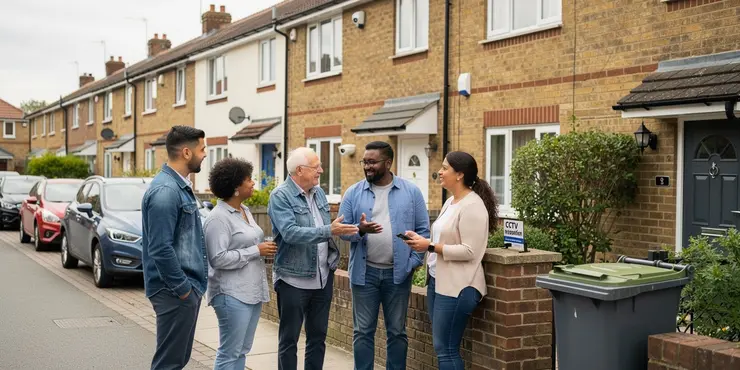
Before taking formal action, it is often best to communicate directly with your neighbour. Discuss your concerns and see if a compromise can be reached, such as angling the camera away from sensitive areas of your property. Many disputes over camera surveillance can be resolved amicably through open dialogue.
Seeking Legal Assistance
If a resolution cannot be reached and you believe your privacy rights are being infringed upon, you may need to seek legal advice. A solicitor specializing in privacy laws can guide you through your options, which might include taking the issue to court or seeking mediation.
Reporting to Authorities
If you suspect that a neighbour’s CCTV system is being used to unlawfully monitor you, you can report your concerns to the ICO. They can investigate whether the CCTV use complies with the necessary legal standards and offer guidance on appropriate steps to take.
Conclusion
While security cameras provide valuable protection, it is essential that their use respects the privacy rights of others. Understanding the legal context and engaging in constructive communication with neighbours are critical steps in addressing concerns about surveillance and maintaining good neighbourly relations.
Understanding Your Privacy Rights
In the UK, privacy is important. People should be able to enjoy their homes without others watching them. More people use security cameras to keep their homes safe. If your neighbour’s camera points at your home, it's good to know the rules.
The Laws
There are rules about where security cameras can point. These rules come from privacy laws and advice from the Information Commissioner’s Office (ICO). Some laws like the Data Protection Act are not used for home cameras. But laws like the Regulation of Investigatory Powers Act 2000 and the Human Rights Act 1998 can be important.
Privacy Expectations
You should have privacy at home. This means people should not be able to see into your home or garden without your permission. If your neighbour’s camera shows parts of your home or garden, it might break privacy rules.
Talking to Your Neighbour
Before making a complaint, it is good to talk to your neighbour. Tell them your worries and try to find a solution, like moving the camera. Many problems can be solved by talking kindly and openly.
Getting Legal Help
If talking does not work and you feel your privacy is not respected, you might need legal help. A lawyer who knows privacy laws can help you understand what to do next. This might mean going to court or finding another way to solve the problem.
Contacting Authorities
If you think your neighbour uses a camera unfairly, you can tell the ICO. They will check if the camera is used correctly and suggest what to do.
Conclusion
Security cameras can keep us safe, but they should not break privacy rules. Knowing the law and talking with your neighbours is important for solving problems and keeping peace.
Frequently Asked Questions
It depends on local privacy laws and regulations, but generally, if the camera is capturing areas in which you have a reasonable expectation of privacy, it may be considered a violation.
A reasonable expectation of privacy refers to places where you expect not to be observed, like inside your home or private yard areas.
You should begin by having a polite conversation with your neighbor to address your concerns and find a mutually agreeable solution.
Yes, many jurisdictions have laws that address privacy concerns, which can regulate where and what security cameras can capture.
Yes, you can ask them, especially if the camera is infringing on your privacy. Open communication can often resolve these issues.
Security cameras can be equipped with audio recording, but recording audio may require additional consent under wiretapping or eavesdropping laws.
Areas such as bedrooms, bathrooms, and other spaces not visible from public viewpoints are typically considered private.
If your backyard is visible from public spaces or your neighbor's property, it might be legal, but it depends on local regulations.
Yes, installing fake security cameras is generally legal as they do not capture footage.
You can consult local laws, contact your neighborhood association, or seek legal advice if your privacy is being violated.
Yes, the angle can determine what the camera captures and can influence whether it breaches privacy laws.
Exemptions may exist for law enforcement and some private entities, but these vary significantly by jurisdiction.
Privacy laws can restrict where cameras can be placed and what they can record, affecting home security setups.
Public property is generally accessible to the public, like sidewalks, whereas private property requires permission to enter or use.
Security cameras can often capture shared spaces but should not infringe on private areas or spaces belonging solely to you.
Yes, property lines can determine legal capture areas, as the camera should not infringe past those lines into private property.
You could obstruct the view from your side with landscaping or physical barriers, as long as it is on your property.
Legal professionals, local government offices, or legal aid services can provide information on security camera laws.
Document instances with photos, videos, or logs of dates and times when privacy intrusions occur as evidence.
If the camera violates privacy laws, legal action may be possible, but it usually involves proving the breach of laws.
This depends on the laws about privacy where you live. But usually, if a camera is looking at places where you expect to be private, it might be breaking the rules.
A reasonable expectation of privacy means thinking you won't be watched. This is in places like the inside of your house or your private yard.
Start by talking nicely with your neighbor. Tell them what you’re worried about. Try to find a way to solve the problem together.
Yes, many places have rules about privacy. These rules say where security cameras can be and what they can record.
Yes, you can ask them to move the camera if it feels like it goes against your privacy. Talking it out can often fix these problems.
Some security cameras can also record sounds. But to record sound, you might need to ask people for permission because of special laws.
Rooms like bedrooms and bathrooms are private. This means they are not easy for everyone to see from outside.
If people can see your backyard from the street or a neighbor's yard, it might be okay. Rules are different depending on where you live, so you should check them.
Yes, it is usually okay to put up fake security cameras because they do not record anything.
If someone is not respecting your privacy, you can do a few things to get help. You can check the rules in your area. You can also talk to your neighborhood group. If you need more help, you can ask a lawyer.
Using tools like a calendar or reminders on a phone can also help you keep track of what you have done and plan your next steps.
Yes, the way a camera is pointed can change what it sees. It can also decide if it is breaking privacy rules.
Sometimes police and certain private groups might have special rules. These rules can change a lot depending on where you are.
Certain rules about privacy tell us where we can put cameras and what they can record. This can change how we set up cameras at home to keep things safe.
If you find reading hard, using an audiobook or an app that reads text aloud can help. A friend or family member can also explain things if needed.
Public property is for everyone. You can walk on it, like sidewalks.
Private property is not for everyone. You need permission to go there or use it.
Using pictures or drawings can help understand this better. Asking someone to read it with you can also be helpful.
Security cameras can watch areas where people share space. They should not watch private areas, like places that belong just to you.
Yes, where your land ends can change what your camera can see legally. It should not see places that belong to someone else.
You can block the view from your side by planting trees or putting up fences. Just make sure they are on your property.
People who work with the law, local government offices, or places that help with legal issues can tell you about security camera rules.
Take pictures or videos, or write down the dates and times, when someone goes into your private space. This will help as proof.
If the camera breaks privacy rules, people might be able to go to court. To do this, they need to show that the rules were broken.

Ergsy Search Results
This website offers general information and is not a substitute for professional advice.
Always seek guidance from qualified professionals.
If you have any medical concerns or need urgent help, contact a healthcare professional or emergency services immediately.
Some of this content was generated with AI assistance. We've done our best to keep it accurate, helpful, and human-friendly.
- Ergsy carefully checks the information in the videos we provide here.
- Videos shown by Youtube after a video has completed, have NOT been reviewed by ERGSY.
- To view, click the arrow in centre of video.
- Most of the videos you find here will have subtitles and/or closed captions available.
- You may need to turn these on, and choose your preferred language.
- Go to the video you'd like to watch.
- If closed captions (CC) are available, settings will be visible on the bottom right of the video player.
- To turn on Captions, click settings.
- To turn off Captions, click settings again.