
Speak To An Expert
Get clear, personalised advice for your situation.
Jot down a few questions to make the most of your conversation.
Can the NHS help with addiction, substance misuse and mental health problems?
Yes, the NHS can help people who are struggling with addiction, substance misuse and mental health problems. In many cases, these issues are linked, so support may need to cover both physical and emotional wellbeing. Getting the right help early can make recovery feel more manageable.
The NHS offers a range of services depending on the problem and how serious it is. This can include talking therapies, community drug and alcohol services, GP support, crisis care and specialist mental health treatment. If someone is unsure where to start, their GP is often the first point of contact.
How NHS support usually works
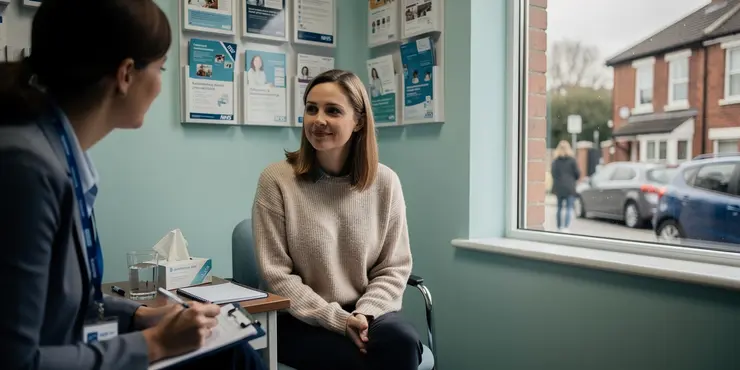
A GP can assess symptoms, discuss concerns and refer someone to the most suitable service. They may also check whether physical health issues, medication, or withdrawal symptoms are affecting mental wellbeing. In some areas, people can refer themselves directly to local drug and alcohol services or talking therapies.
NHS services often work with local councils and charities to provide joined-up care. This can be important when someone needs help with housing, employment, family issues or safeguarding as well as treatment. Support plans are usually tailored to the individual.
Support for substance misuse and addiction
The NHS can help with many types of substance misuse, including alcohol, illegal drugs and dependence on prescription medicines. Treatment may involve counselling, harm reduction advice, detox support or medication to reduce cravings and withdrawal symptoms. In some cases, specialist rehab or inpatient care may be considered.
People do not need to wait until their situation becomes severe before asking for help. Early support can reduce the risks of overdose, liver disease, mental health decline and relationship problems. It can also help people stay safer while they work towards reducing or stopping use.
Support for mental health problems
The NHS can also help with conditions such as anxiety, depression, trauma, self-harm and severe mental illness. Treatment may include talking therapies, medication, peer support or referral to a community mental health team. For urgent mental health concerns, crisis services may be available.
If someone is using substances to cope with low mood, stress or trauma, mental health treatment can be an important part of recovery. Treating both issues together often gives better results than addressing only one problem. This is because substance use and mental health can affect each other.
Getting help and finding the right service
If you are worried about yourself or someone else, speak to a GP, call NHS 111, or contact a local drug and alcohol service. In an emergency, such as if someone is in immediate danger, call 999 or go to A&E. If there is a risk of suicide or serious harm, urgent help should be sought straight away.
Asking for help is a positive first step, and you do not need to face it alone. NHS services are there to support recovery, reduce harm and improve mental wellbeing. The sooner support starts, the better the chance of making meaningful changes.
Frequently Asked Questions
NHS addiction substance misuse mental health support is help from the NHS for people affected by alcohol or drug misuse alongside mental health needs. It can include assessment, advice, talking therapies, medication, community services, and referral to specialist treatment.
Anyone in England, Scotland, Wales, or Northern Ireland who needs help with addiction, substance misuse, or related mental health problems may be able to access NHS support. Eligibility and referral routes can vary by area and service, but support is generally based on need rather than income.
You can usually access NHS addiction substance misuse mental health support by contacting your GP, local drug and alcohol service, community mental health team, or by self-referring where available. If you are in immediate danger or at risk of overdose or self-harm, call emergency services right away.
In many areas, yes. Some NHS addiction substance misuse mental health support services accept self-referrals, while others may ask for a GP or professional referral. Your local service can tell you the quickest route.
Treatment may include withdrawal support, detoxification, counselling, cognitive behavioural therapy, trauma-informed therapy, relapse prevention, substitution treatments, medication for mental health symptoms, and help with housing or social needs. The exact options depend on your situation and local services.
Yes. NHS addiction substance misuse mental health support often includes specialist help for alcohol dependence, including screening, brief interventions, supervised withdrawal, relapse prevention, and referral to community or inpatient services if needed.
Yes. NHS addiction substance misuse mental health support can help with misuse of opioids, stimulants, cannabis, benzodiazepines, and other substances. Support may include harm reduction, prescribing, counselling, and recovery planning.
Yes. Dual diagnosis means having both substance misuse and mental health problems, and NHS addiction substance misuse mental health support can address both together. Integrated care is often important because each condition can affect the other.
The length of NHS addiction substance misuse mental health support varies depending on the severity of the addiction, your mental health, and the type of treatment. Some people need short-term support, while others benefit from longer-term follow-up and relapse prevention.
Yes, NHS addiction substance misuse mental health support is usually free at the point of use for people eligible for NHS care. Some services may have local differences, but standard NHS treatment does not normally require payment.
If someone has overdosed, is unconscious, has severe withdrawal symptoms, or is at immediate risk of suicide or serious harm, call emergency services immediately. NHS addiction substance misuse mental health support is important, but emergencies need urgent medical attention first.
Yes. NHS addiction substance misuse mental health support may include medically supervised withdrawal or detox, depending on the substance and level of dependence. A clinician can assess the safest way to manage withdrawal symptoms.
Common issues include depression, anxiety, PTSD, psychosis, sleep problems, self-harm risk, and emotional distress linked to substance use. NHS addiction substance misuse mental health support aims to treat both the substance use and the mental health condition.
Yes. Many NHS addiction substance misuse mental health support services offer advice, information, and family or carer support. Family involvement can help with understanding the condition, improving communication, and supporting recovery.
An assessment usually covers your substance use, physical health, mental health, safety risks, home situation, and goals for treatment. It helps clinicians decide the most suitable NHS addiction substance misuse mental health support for you.
Yes. Pregnant people can receive NHS addiction substance misuse mental health support, and early help is especially important to protect both parent and baby. Services may coordinate with maternity care and specialist substance misuse teams.
Yes, NHS addiction substance misuse mental health support is generally confidential. Information is shared only when necessary for your care or if there is a serious risk of harm, and staff should explain confidentiality rules to you.
Yes. Depending on the substance and your mental health needs, NHS addiction substance misuse mental health support may include medication such as opioid substitution treatment, medicines to reduce cravings, or medicines for anxiety, depression, or sleep problems.
If local NHS addiction substance misuse mental health support has a waiting list, you can ask your GP, local service, or mental health team about interim help, crisis support, harm reduction advice, and self-help options. If your risk is high, seek urgent care immediately.
You can find local NHS addiction substance misuse mental health support services by contacting your GP, searching your local NHS website, speaking to your community mental health team, or asking a local drug and alcohol service for referral details.

Ergsy Search Results
This website offers general information and is not a substitute for professional advice.
Always seek guidance from qualified professionals.
If you have any medical concerns or need urgent help, contact a healthcare professional or emergency services immediately.
Some of this content was generated with AI assistance. We've done our best to keep it accurate, helpful, and human-friendly.
- Ergsy carefully checks the information in the videos we provide here.
- Videos shown by Youtube after a video has completed, have NOT been reviewed by ERGSY.
- To view, click the arrow in centre of video.
- Most of the videos you find here will have subtitles and/or closed captions available.
- You may need to turn these on, and choose your preferred language.
- Go to the video you'd like to watch.
- If closed captions (CC) are available, settings will be visible on the bottom right of the video player.
- To turn on Captions, click settings.
- To turn off Captions, click settings again.