
Speak To An Expert
Get clear, personalised advice for your situation.
Jot down a few questions to make the most of your conversation.
Can a travel health check help with jet lag and travel fatigue?
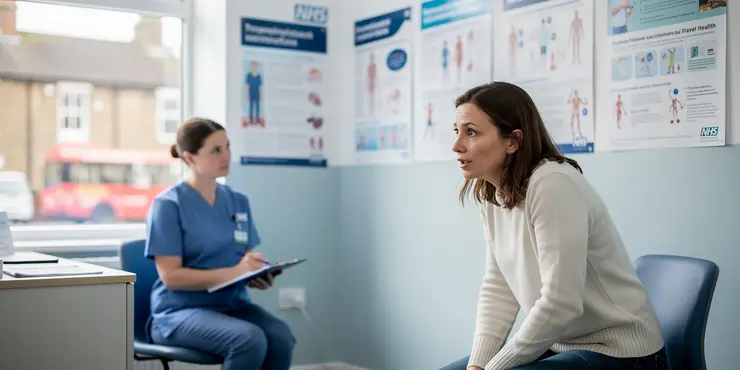
A travel health check for a high-risk country can help you prepare better for the strain of long-haul travel, but it will not directly cure jet lag. What it can do is make sure you are fit to travel and reduce the chances of feeling worse when you arrive.
Travel fatigue and jet lag are often made more noticeable by dehydration, poor sleep, stress, or an existing health condition. A pre-travel appointment can highlight these issues early and give you practical advice before you fly.
What the check-up can cover
A travel health check usually includes advice on vaccinations, malaria prevention, food and water safety, and how to manage existing medicines abroad. It may also include guidance on staying well during a long journey, especially if you are travelling across several time zones.
If you have conditions such as diabetes, heart disease, asthma, or blood pressure problems, the clinician can review your medicines and fitness to travel. This is important because tiredness, poor sleep, and disrupted routines can make symptoms harder to manage.
You may also get advice on compression stockings, moving around on flights, and keeping hydrated. These simple steps can help reduce travel exhaustion and the risk of circulation problems on longer trips.
How it may reduce jet lag and fatigue
Although a travel health check does not reset your body clock, it can help you plan ahead. Knowing when to take medicines, how to sleep before departure, and what to eat and drink during travel can make a real difference.
If you are travelling to a high-risk country, you may need to take extra precautions that affect rest and energy levels. For example, malaria tablets or altitude advice may influence how rested you feel, so it helps to discuss these in advance.
Advice given at the appointment can also help you avoid arriving already run down. Good planning may mean less disruption to sleep, fewer stomach problems, and a smoother first few days abroad.
Practical steps for UK travellers
For UK travellers, it is best to book a travel health check at least 4 to 6 weeks before departure. This gives time for any vaccinations, medicine changes, or follow-up advice to take effect.
Before you travel, try to sleep well, drink plenty of water, and avoid overloading your first day abroad. On the flight, keep moving, limit alcohol, and set your watch to local time as soon as you board if you are crossing multiple time zones.
If you have severe fatigue, sleep problems, or symptoms that do not improve after arrival, speak to a healthcare professional. A travel health check is a useful starting point, but ongoing symptoms should not be ignored.
Frequently Asked Questions
Travel health check high-risk country jet lag travel fatigue refers to checking your health risks, travel-related fatigue, and jet lag concerns before visiting a higher-risk destination. It is important because it can help identify vaccination needs, medication adjustments, sleep planning, and safety steps for your specific itinerary.
Anyone traveling to a destination with increased infectious disease, limited medical access, or significant time-zone changes should consider a travel health check high-risk country jet lag travel fatigue. It is especially important for older adults, pregnant travelers, people with chronic conditions, and immunocompromised travelers.
It is best to book a travel health check high-risk country jet lag travel fatigue at least 4 to 6 weeks before departure. This gives enough time for vaccines, prescription planning, and advice on how to reduce jet lag and travel fatigue.
A travel health check high-risk country jet lag travel fatigue usually includes a review of your destination risks, vaccination status, medications, sleep and hydration advice, and guidance on preventing illness and managing fatigue during travel.
During travel health check high-risk country jet lag travel fatigue, a clinician may discuss routine vaccines, destination-specific vaccines, and boosters based on your itinerary. Examples can include hepatitis A, typhoid, yellow fever, and others depending on the country and your health history.
Travel health check high-risk country jet lag travel fatigue can help by suggesting when to adjust sleep, light exposure, caffeine, and meal timing before travel. It may also include advice on short naps, hydration, and medication considerations to make the time-zone change easier.
Travel health check high-risk country jet lag travel fatigue can help reduce travel fatigue by planning rest breaks, movement during long flights, hydration, and realistic schedules. It also helps you avoid overpacking your itinerary and identifies health issues that may worsen fatigue.
If you have a chronic condition, travel health check high-risk country jet lag travel fatigue is especially useful because it can review your medications, emergency plans, and destination risks. It can also help you prepare for heat, altitude, infection exposure, and delayed access to care.
Yes, travel health check high-risk country jet lag travel fatigue can include advice on medications for sleep, motion sickness, diarrhea, or altitude symptoms. A clinician can tell you which options are appropriate, how to use them safely, and what to avoid with your medical history.
Bring your itinerary, vaccine record, medication list, allergy information, and any details about your medical conditions to a travel health check high-risk country jet lag travel fatigue appointment. It also helps to note flight times, layovers, planned activities, and any rural or high-risk areas you will visit.
Yes, children can benefit from travel health check high-risk country jet lag travel fatigue because they may need special vaccine timing, medication dosing, and sleep planning. The appointment can also help parents prepare for dehydration, motion sickness, and changes in routine.
Yes, older adults often benefit from travel health check high-risk country jet lag travel fatigue because they may be more vulnerable to dehydration, fatigue, and complications from infections. The review can also address balance, mobility, medication interactions, and sleep disruption.
Travel health check high-risk country jet lag travel fatigue can differ for business travel and leisure travel because schedules, rest time, and exposure risks may be different. Business travelers may need advice on rapid time-zone adaptation, while leisure travelers may need more guidance on outdoor activities and remote areas.
Yes, travel health check high-risk country jet lag travel fatigue is especially valuable for remote or high-risk regions where medical care may be limited. It can help with emergency planning, preventive medications, vaccinations, and strategies to manage fatigue and jet lag.
After travel health check high-risk country jet lag travel fatigue, seek urgent care for severe shortness of breath, chest pain, confusion, high fever, dehydration, fainting, or severe weakness. If you develop symptoms after travel to a high-risk country, prompt medical evaluation is important.
After travel health check high-risk country jet lag travel fatigue, you can prepare by gradually shifting bedtime, getting morning or evening light at the right times, and avoiding long naps. A clinician may recommend a specific plan based on the number of time zones crossed.
Yes, travel health check high-risk country jet lag travel fatigue often includes food and water safety advice because stomach infections can worsen fatigue and disrupt travel plans. You may be advised on safe drinking water, hand hygiene, and avoiding risky foods.
Yes, travel health check high-risk country jet lag travel fatigue can include advice about altitude, heat, humidity, or cold exposure depending on your destination. These factors can increase fatigue and affect hydration, sleep, and overall health.
For travel health check high-risk country jet lag travel fatigue, you may need vaccination records, a medication list, insurance details, and travel itinerary documents. Some destinations may also require proof of vaccination or other health-related paperwork.
If you travel often, you should repeat travel health check high-risk country jet lag travel fatigue before trips that involve new destinations, long-haul flights, or changing health conditions. A yearly review may also be helpful to keep vaccines, medications, and travel advice up to date.

Ergsy Search Results
This website offers general information and is not a substitute for professional advice.
Always seek guidance from qualified professionals.
If you have any medical concerns or need urgent help, contact a healthcare professional or emergency services immediately.
Some of this content was generated with AI assistance. We've done our best to keep it accurate, helpful, and human-friendly.
- Ergsy carefully checks the information in the videos we provide here.
- Videos shown by Youtube after a video has completed, have NOT been reviewed by ERGSY.
- To view, click the arrow in centre of video.
- Most of the videos you find here will have subtitles and/or closed captions available.
- You may need to turn these on, and choose your preferred language.
- Go to the video you'd like to watch.
- If closed captions (CC) are available, settings will be visible on the bottom right of the video player.
- To turn on Captions, click settings.
- To turn off Captions, click settings again.