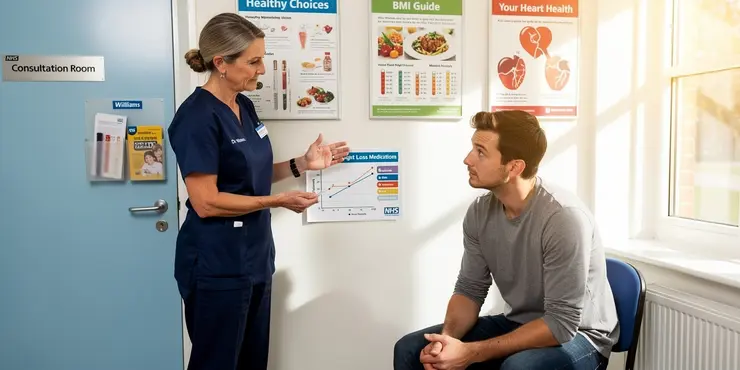

Speak To An Expert
Get clear, personalised advice for your situation.
Jot down a few questions to make the most of your conversation.
Can weight loss drugs cause dehydration?
Yes, some weight loss drugs can increase the risk of dehydration. This is more likely if the medicine causes vomiting, diarrhoea, reduced appetite, or makes you drink less than usual.
Dehydration can also happen if you are eating less food and not replacing fluids properly. This can be more noticeable in hot weather or if you are being physically active.
Why it can happen
Many weight loss medicines work by reducing appetite or slowing digestion. For some people, this leads to nausea, sickness, or stomach upset, which can make it harder to keep fluids down.
Some treatments may also affect blood sugar control or how the body handles fluid balance. If you are eating smaller portions, you may also be taking in less water from food.
Signs of dehydration to look out for
Common signs include feeling thirsty, having a dry mouth, dark urine, and passing urine less often. You may also feel tired, light-headed, or have a headache.
In more serious cases, dehydration can cause confusion, dizziness when standing, or a rapid heartbeat. If symptoms are severe, you should seek medical advice quickly.
Who may be at higher risk
Some people are more likely to become dehydrated while taking weight loss drugs. This includes older adults, people with kidney problems, and anyone who has been vomiting or has diarrhoea.
Your risk may also be higher if you already struggle to drink enough fluids, are following a very low-calorie diet, or take other medicines that can affect fluid levels.
How to reduce the risk
Drink water regularly through the day, even if you do not feel very thirsty. Small, frequent sips can help if you feel sick.
Try to eat foods with a high water content, such as soup, yoghurt, fruit, and vegetables. If you are exercising or it is warm, you may need to be more careful about replacing fluids.
When to speak to a doctor or pharmacist
Contact a doctor or pharmacist if you are repeatedly being sick, cannot keep fluids down, or feel faint. You should also get advice if you think your medicine is causing side effects that are affecting hydration.
Do not stop prescription weight loss treatment without medical advice. A healthcare professional can help adjust the dose, suggest ways to manage side effects, or check whether another cause is involved.
Frequently Asked Questions
Weight loss drugs dehydration refers to fluid loss or reduced hydration that can occur while using medications for weight loss. It may happen because some drugs suppress appetite, cause nausea, vomiting, diarrhea, or reduce how much you eat and drink.
Weight loss drugs dehydration risk can be higher with medications that cause gastrointestinal side effects such as nausea, vomiting, or diarrhea. The risk can vary by person, dose, and how well fluids are replaced.
Early signs of weight loss drugs dehydration can include thirst, dry mouth, darker urine, headache, dizziness, fatigue, and reduced urination. These symptoms should be taken seriously, especially if they continue or worsen.
To help prevent weight loss drugs dehydration, drink fluids regularly, eat balanced meals if tolerated, and follow your prescriber’s instructions. It may also help to avoid excess alcohol and to replace fluids after vomiting, diarrhea, or heavy sweating.
You should contact a doctor about weight loss drugs dehydration if you cannot keep fluids down, have persistent vomiting or diarrhea, feel faint, have confusion, or notice very little urination. Severe symptoms need prompt medical attention.
Yes, weight loss drugs dehydration can cause dizziness or fainting because lower fluid levels can reduce blood pressure and circulation. If this happens, stop activity, hydrate if possible, and seek medical advice.
Yes, weight loss drugs dehydration can put stress on the kidneys and may worsen kidney function, especially in people with existing kidney disease. Staying hydrated and reporting symptoms early is important.
Exercising when you have weight loss drugs dehydration symptoms is not a good idea because it can make fluid loss worse and increase the risk of heat illness. Rest and rehydrate first, and resume activity only when you feel better.
For weight loss drugs dehydration, water is usually best, and oral rehydration drinks may help if you have significant fluid loss. Foods with high water content, such as soups, fruit, and yogurt, can also support hydration.
Yes, weight loss drugs dehydration can still happen even if you are drinking water if you are losing fluids faster than you replace them or if the medication causes vomiting or diarrhea. In that case, you may need more frequent fluids and medical guidance.
Weight loss drugs dehydration does not always mean you must stop the medication, but you should talk to your prescriber before making changes. They may recommend hydration strategies, a dose adjustment, or temporary discontinuation depending on severity.
People at higher risk for weight loss drugs dehydration include older adults, people with kidney disease, those taking diuretics, and anyone with vomiting, diarrhea, poor intake, or heavy sweating. The risk may also be higher in hot weather.
Yes, weight loss drugs dehydration can contribute to constipation because the body pulls more water from the stool when fluid intake is low. Drinking enough fluids and getting appropriate fiber may help.
Mild weight loss drugs dehydration can often be treated at home by sipping water or an oral rehydration solution, resting, and avoiding further fluid loss. If symptoms are severe or do not improve, seek medical care.
Yes, weight loss drugs dehydration can be dangerous if it becomes severe, leading to low blood pressure, kidney problems, electrolyte imbalance, or heat illness. Severe cases may require urgent medical treatment.
Weight loss drugs dehydration symptoms can come from both the drug’s side effects and reduced food and fluid intake. Some medications also directly cause nausea, vomiting, or diarrhea, which increases fluid loss.
Yes, monitoring urine can help you notice weight loss drugs dehydration early. Dark urine, small amounts of urine, or urinating much less often can be warning signs that you need more fluids or medical advice.
Yes, alcohol can worsen weight loss drugs dehydration because it can contribute to fluid loss and make it harder to stay hydrated. Limiting alcohol is often a good idea while taking weight loss medication.
The duration of weight loss drugs dehydration depends on the cause and how quickly fluids are replaced. Mild cases may improve within hours to a day, while ongoing vomiting, diarrhea, or poor intake can make it last longer.
Emergency signs of weight loss drugs dehydration include confusion, severe weakness, fainting, no urination for many hours, chest pain, trouble breathing, or inability to keep fluids down. These symptoms require urgent medical care.

Ergsy Search Results
This website offers general information and is not a substitute for professional advice.
Always seek guidance from qualified professionals.
If you have any medical concerns or need urgent help, contact a healthcare professional or emergency services immediately.
Some of this content was generated with AI assistance. We've done our best to keep it accurate, helpful, and human-friendly.
- Ergsy carefully checks the information in the videos we provide here.
- Videos shown by Youtube after a video has completed, have NOT been reviewed by ERGSY.
- To view, click the arrow in centre of video.
- Most of the videos you find here will have subtitles and/or closed captions available.
- You may need to turn these on, and choose your preferred language.
- Go to the video you'd like to watch.
- If closed captions (CC) are available, settings will be visible on the bottom right of the video player.
- To turn on Captions, click settings.
- To turn off Captions, click settings again.