
Find Help
More Items From Ergsy search
-
Can a womb lining test detect cancer?
Relevance: 100%
-
Can a womb lining test detect cancer?
Relevance: 85%
-
Endometrial Cancer
Relevance: 76%
-

Endometrial Cancer
Relevance: 74%
-

Endometrial Cancer
Relevance: 74%
-
Why is a womb lining test performed?
Relevance: 70%
-
What is the womb lining test?
Relevance: 70%
-

Why might someone need a womb lining test?
Relevance: 70%
-
What is the Womb Lining test?
Relevance: 70%
-
Is the womb lining test covered by the NHS?
Relevance: 68%

-
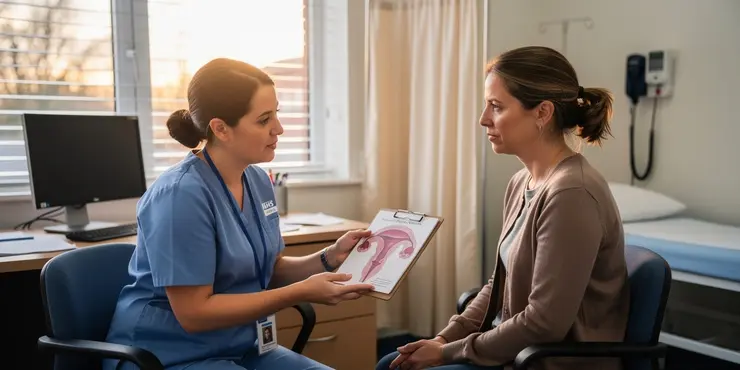
How is the womb lining test performed?
Relevance: 66%
-
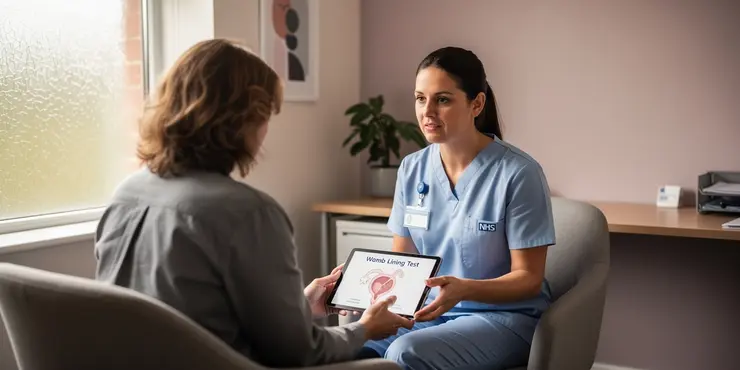
Is the womb lining test covered by the NHS?
Relevance: 64%
-
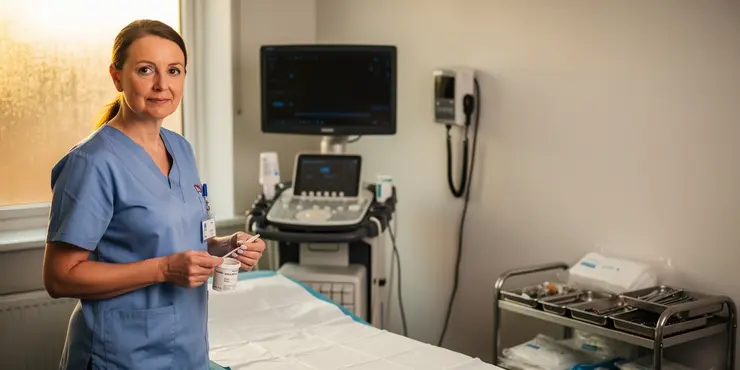
How is a womb lining test conducted?
Relevance: 61%
-

Are there risks associated with a womb lining test?
Relevance: 59%
-
Is there any follow-up required after a womb lining test?
Relevance: 59%
-
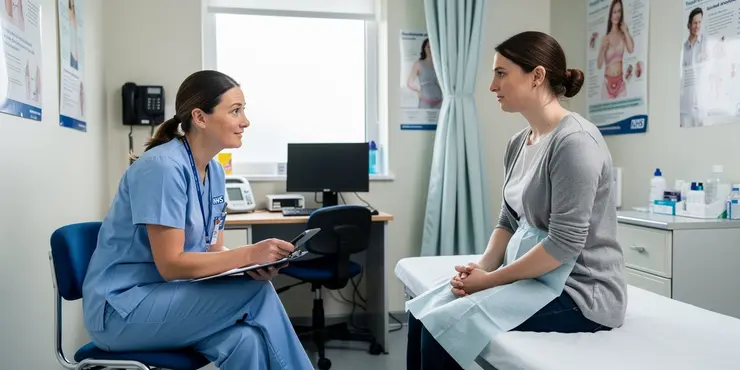
What happens after a womb lining test?
Relevance: 58%
-
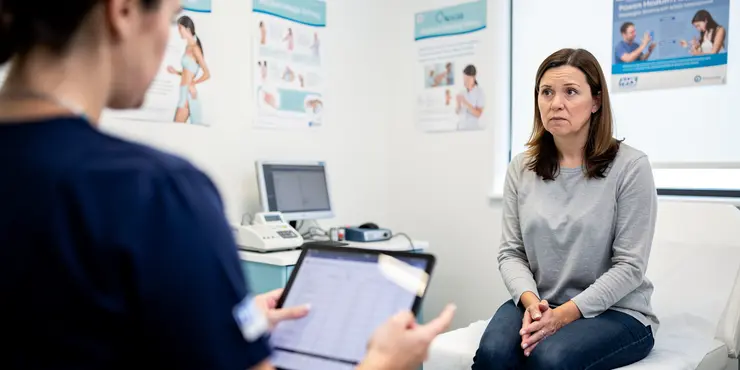
How long does it take to get results from a womb lining test?
Relevance: 54%
-

Is a womb lining test painful?
Relevance: 54%
-
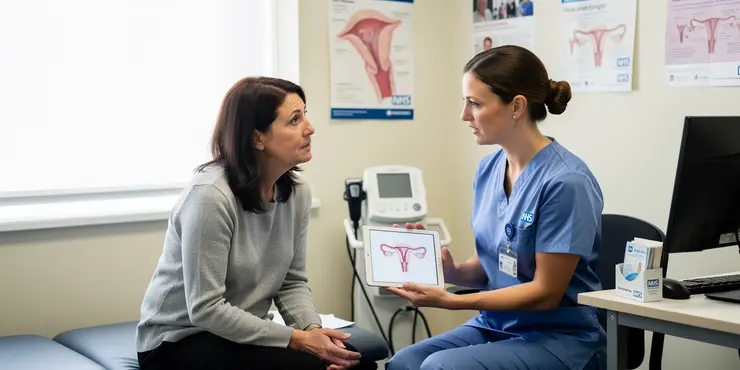
Are there any risks associated with the womb lining test?
Relevance: 53%
-
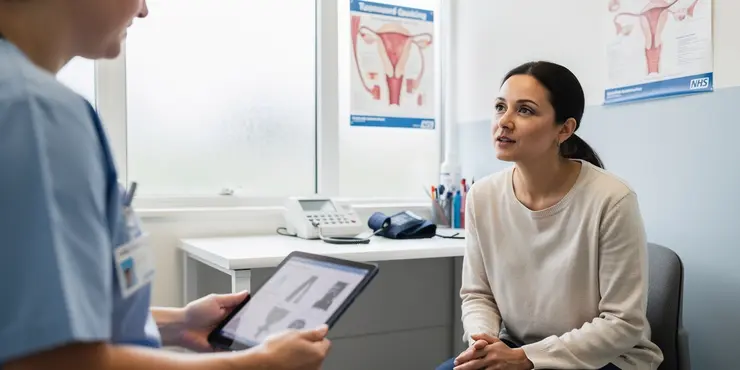
How should I prepare for a womb lining test?
Relevance: 53%
-
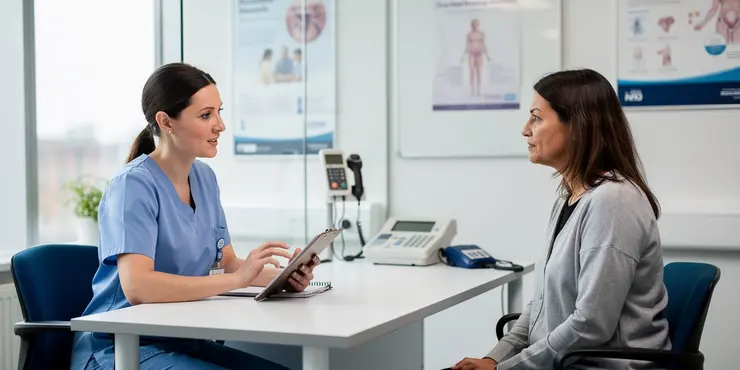
Is the womb lining test painful?
Relevance: 53%
-
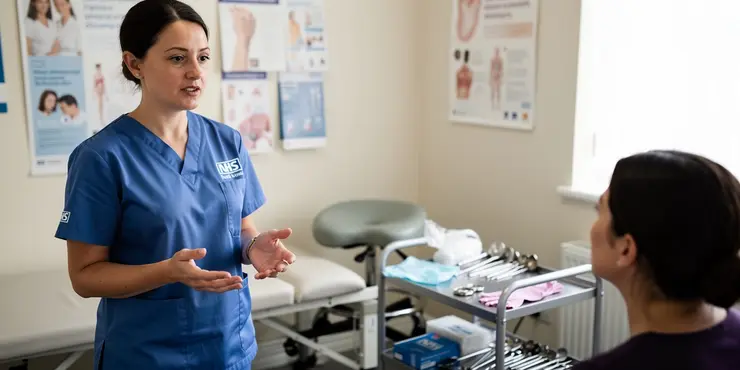
Does the womb lining test require any special preparation?
Relevance: 51%
-
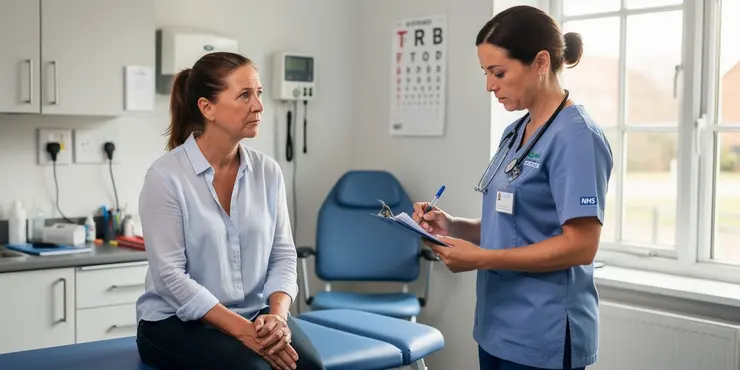
How long does it take to get results from a womb lining test?
Relevance: 44%
-
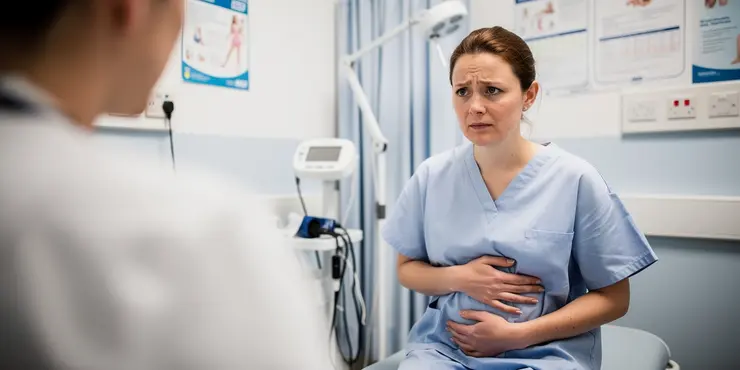
Can I drive after the womb lining test?
Relevance: 41%
-

Can ultrasound detect cancer?
Relevance: 39%
-
Prostate cancer diagnosis and tests
Relevance: 39%
-

How is bowel cancer diagnosed?
Relevance: 33%
-
Can home colorectal cancer tests replace a colonoscopy?
Relevance: 31%
-

Post Menopausal Bleeding Clinic | A Guide to What Happens at An Appointment
Relevance: 31%
-
How are AI and Robots used to detect lung cancer?
Relevance: 30%
-
How is the stage of bowel cancer determined?
Relevance: 30%
-
Vaginal Cancer
Relevance: 30%
-
Is genetic testing available for colorectal cancer?
Relevance: 30%
-
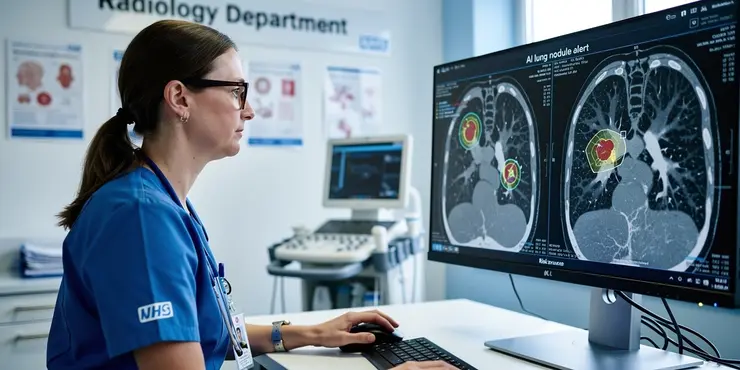
What role does AI play in lung cancer detection?
Relevance: 30%
-

Prostate cancer symptoms - detecting them early
Relevance: 29%
-

How does AI impact the cost of lung cancer detection?
Relevance: 29%
-

How is testicular cancer diagnosed?
Relevance: 29%
-
How can I test myself for colorectal cancer?
Relevance: 29%
-

Are there risks associated with home colorectal cancer tests?
Relevance: 29%
-

What is Pancreatic Cancer?
Relevance: 28%
Can a Womb Lining Test Detect Cancer?
Understanding the Womb Lining Test
The womb lining test, also known as an endometrial biopsy, is a medical procedure whereby a small sample of tissue is taken from the lining of the uterus, known as the endometrium. This sample is then examined under a microscope to identify any abnormalities. The test is commonly used in the UK to investigate causes of abnormal uterine bleeding and to evaluate the health of the endometrium.Detection of Endometrial Cancer
One primary application of an endometrial biopsy is to detect endometrial cancer, also known as uterine cancer. This type of cancer starts in the layer of cells that form the lining (endometrium) of the uterus. The biopsy can reveal cancerous cells or pre-cancerous changes, such as atypical hyperplasia, which can indicate an increased risk of developing cancer. Early detection is crucial, as it significantly improves treatment outcomes and survival rates.Limitations of the Test
While a womb lining test is a valuable diagnostic tool, it has limitations. Not all areas of the endometrium are sampled during the procedure, which means that focal cancerous lesions might be missed. Additionally, the test may not detect cancers that originate in deeper layers of the uterus, such as uterine sarcomas.Supplementary Diagnostic Tools
To enhance accuracy, doctors may use supplementary diagnostic methods alongside the biopsy. These include ultrasound imaging, which can help identify structural abnormalities, and hysteroscopy, where a camera is inserted into the uterus for direct visualization. If cancer is suspected or detected, further imaging tests and surgical procedures might be required to determine the extent of the disease.Conclusion
In the UK, the womb lining test is an important procedure for identifying endometrial abnormalities and detecting cancer. Though it has some limitations, when combined with other diagnostic approaches, it provides a comprehensive assessment of uterine health. Early diagnosis is vital, underscoring the importance of seeking medical advice if experiencing unusual symptoms, such as abnormal uterine bleeding.Can a Womb Lining Test Find Cancer?
What is a Womb Lining Test?
A womb lining test is also called an endometrial biopsy. This is a medical test where doctors take a tiny piece of tissue from the lining of the womb, which is the uterus. They look at this tissue under a microscope to check if everything is okay. In the UK, doctors use this test to find out why someone might have unusual bleeding from the womb and to check the health of the womb lining.Finding Womb Cancer
The womb lining test can help find womb cancer, which is also called endometrial or uterine cancer. This cancer starts in the lining of the womb. The test can show if there are cancer cells or changes that might lead to cancer. Finding cancer early is important because it makes treatment more effective.Limits of the Test
The womb lining test is very useful, but it isn’t perfect. It doesn’t check every part of the womb lining, so it might miss some cancer spots. Also, it might not find cancers that start deeper in the womb.Other Tests That Help
To get better results, doctors might do other tests with the womb lining test. These can include an ultrasound, which uses sound waves to look at the womb, or a hysteroscopy, where they use a small camera to see inside the womb. If the tests show signs of cancer, more tests might be needed to learn how much cancer there is.Important Points
In the UK, the womb lining test is a key way to find problems in the womb and to look for cancer. Even though it has limits, it works well when used with other tests. It is very important to see a doctor if you have unusual symptoms like strange bleeding from the womb. Early checks can help catch problems sooner.Frequently Asked Questions
What is a womb lining test?
A womb lining test, also known as an endometrial biopsy, involves taking a small sample of tissue from the lining of the womb (endometrium) to examine for abnormalities.
Can a womb lining test detect cancer?
Yes, a womb lining test can help detect cancerous cells in the endometrium, making it useful for diagnosing endometrial cancer.
When might a doctor recommend a womb lining test?
A doctor may recommend a womb lining test if you are experiencing abnormal uterine bleeding, postmenopausal bleeding, or other symptoms suggestive of potential endometrial cancer.
What types of conditions can a womb lining test detect?
Besides cancer, a womb lining test can detect endometrial hyperplasia, polyps, and other abnormalities within the uterine lining.
How is an endometrial biopsy performed?
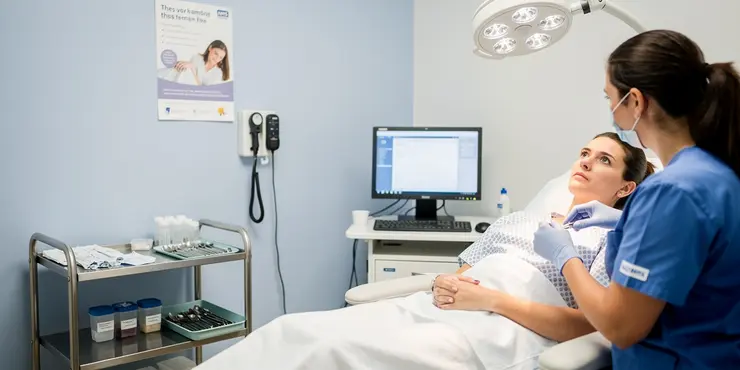
An endometrial biopsy is usually performed in a doctor's office or clinic. A thin tube is inserted through the cervix to collect a tissue sample from the uterine lining.
Is the procedure painful?
Most women experience some discomfort or cramping during the biopsy, but it is generally well-tolerated. Your doctor may suggest taking pain relief beforehand.
How long do results take?
Results from an endometrial biopsy typically take about one to two weeks, depending on the specific tests being conducted on the tissue sample.
Are there any risks associated with a womb lining test?
Risks are minimal but can include infection, uterine bleeding, or, rarely, injury to the uterus. Most complications are very uncommon.
What happens if the test detects cancer?
If cancerous cells are detected, your doctor will discuss further steps with you, which might include imaging tests, surgery, or other treatments depending on the cancer's stage and type.
Can this test detect other types of cancer?
The primary focus of a womb lining test is to detect endometrial cancer. It is not designed to detect other types of cancer, although abnormal findings may prompt further investigations.
Do I need to prepare for the test?
Preparation is usually minimal. Your doctor may advise you on specific instructions, such as avoiding certain medications before the test.
How should I care for myself after the procedure?
After the biopsy, you may experience light bleeding and cramping. Over-the-counter pain relief and resting for a day or two can help manage discomfort.
Who performs a womb lining test?
A gynecologist or a healthcare professional trained in procedures of the female reproductive system typically performs the test.
Is a referral needed for an endometrial biopsy?
In the UK, your GP would usually need to refer you to a specialist, such as a gynecologist, if they believe a womb lining test is necessary.
Are there alternatives to an endometrial biopsy?
Alternatives may include imaging studies like a pelvic ultrasound or a hysteroscopy, but an endometrial biopsy is often the most direct method for diagnosing abnormalities in the womb lining.
What is a womb lining test?
A womb lining test checks the inside of a woman's womb.
The womb is the place where a baby grows when a woman is pregnant.
This test helps doctors understand if the womb is healthy.
Doctors might use a small tool or a camera to look inside.
You can ask someone you trust to help you understand more.
A womb lining test is when doctors take a tiny bit of the inside of a woman's womb. This is also called an endometrial biopsy. They do this to check if everything is okay.
Can a womb lining test find cancer?
A womb lining test checks the inside of a woman's womb.
This test can help find out if there is cancer.
If you are worried, talk to a doctor. They can help you understand the test.
Using pictures or videos can make it easier to understand.
Make a list of questions to ask your doctor if you feel unsure.
A womb lining test can help find cancer cells in the inside lining of the womb. This can help doctors see if someone has womb cancer.
When Does a Doctor Check the Womb Lining?
A doctor might check the womb lining if:
- You have heavy or unusual bleeding.
- You have problems getting pregnant.
- You are going through menopause and have bleeding.
Tools or tips that can help you understand:
- Ask the doctor to explain slowly.
- Write down what the doctor says.
- Bring a friend to your doctor visit.
A doctor might want to check the lining inside your womb if you have bleeding that is not normal, bleeding after menopause, or signs that could mean there is a problem like womb cancer.
What can a womb lining test find?
A womb lining test can find health problems inside the womb. Here are some conditions it can find:
- Thick or thin womb lining.
- Infections.
- Cells that are not normal.
- Things that can turn into cancer.
If you have questions, ask a doctor or nurse for help. You can also use a computer or smartphone to search for more information.
A womb lining test can find more than just cancer. It can also find problems like endometrial hyperplasia, which is when the lining grows too thick. It can spot polyps and other unusual things in the uterus lining too.
How do doctors do an endometrial biopsy?
Doctors do a test called an endometrial biopsy to check the lining inside your uterus.
Here's how it works:
- You may lie down on a medical table.
- The doctor might use a tool to gently open your vagina, like in a pap smear.
- Then, they take a small piece of tissue from inside your uterus using a thin tube.
- This test might feel a bit uncomfortable, like a cramp.
To help you feel better, you can:
- Take deep breaths to relax.
- Bring a friend or family member with you for support.
- Talk to the doctor if you are nervous or have questions.
An endometrial biopsy is a test that happens at the doctor's office or clinic. The doctor will use a thin tube to get a small piece of tissue from inside the womb. This will help the doctor learn more about your health.
Will it hurt?
Most women feel a bit of pain or cramping during the biopsy. But it is usually not too bad. Your doctor might tell you to take some medicine for pain before the biopsy. This can help you feel better.
How long do results take?
We can tell you how long it takes to get results.
When you do a test or check, it can take time to know the answer.
Sometimes, the answer is fast. Other times, it can take a few days.
If you want to know more, you can ask a helper or use a calendar to count the days.
You usually get results from an endometrial biopsy in one to two weeks. The time depends on the tests done on the sample.
Are there any risks with a womb lining test?
This test checks the inside of a woman's womb. There may be some risks.
- You might feel a bit of pain.
- You might have some bleeding.
- You might get an infection.
If you feel worried, talk to your doctor. You can also ask someone to be with you to feel more comfortable.
The dangers are small, but some things might happen. You could get an infection, or you might bleed from your womb. It is not likely, but there could be a small injury to your womb. These problems do not happen often.
What if the test finds cancer?
If the test shows you have cancer, don't worry. Doctors will help you.
Here are some steps they might take:
- They will talk to you and your family.
- They might do more tests to learn more.
- They will make a plan to help you get better.
Remember, you are not alone. It is okay to ask questions and talk about how you feel.
Helpful tips:
- Bring someone you trust to the doctor with you.
- Write down your questions to ask the doctor.
- Use pictures or videos to help understand things better.
If the doctor finds cancer cells, they will talk to you about what to do next. This might include taking pictures of the inside of your body, having surgery, or getting other treatments. What happens next depends on how much cancer there is and what kind it is.
Can this test find other kinds of cancer?
A womb lining test checks for cancer in the lining of the womb. This is called endometrial cancer. The test doesn't look for other cancers, but if something doesn’t look right, doctors might do more tests.
Should I get ready for the test?
You might want to practice before the test. This can help you feel better and do well.
Here are some ideas:
- Ask a friend or family to quiz you.
- Use flashcards to remember important things.
- Take breaks to rest your mind.
- Get a good night's sleep before the test.
Good luck!
Getting ready for the test is usually easy. Your doctor might tell you not to take certain medicines before the test.
How can I take care of myself after the procedure?
After the test, you might bleed a little and feel some tummy pain. You can take simple pain medicine and rest for a day or two to feel better.
Who does the womb lining test?
A doctor or a nurse can do the womb lining test. You can ask someone to help understand what the doctor or nurse says. It's okay to ask questions if you do not understand.
A special doctor for women, called a gynecologist, or another healthcare worker who knows about women's bodies usually does this test.
Do I need a doctor's note for an endometrial biopsy?
In the UK, if your doctor thinks you need a special womb test, they will send you to see another doctor called a gynecologist.
Are there other options besides an endometrial biopsy?
A doctor uses a test called an endometrial biopsy to look at the lining inside a woman's uterus. But there are other ways to check the uterus:
- Ultrasound: This is like a special camera that uses sound waves to take pictures inside the body. It can help doctors see the uterus.
- MRI Scan: This is a big machine that takes detailed pictures of the inside of the body. It's very good at showing the uterus and other organs.
- Blood Tests: Sometimes, doctors can use blood tests to check for certain health problems.
These tests can help doctors learn about what is happening in the uterus and may be easier for some people than a biopsy.
If you find reading difficult, you can ask someone you trust to read this to you. There are also apps and tools that can read text out loud, like screen readers. You can also ask your doctor to explain things in a simple way.
You can use other tests like pictures from a pelvic ultrasound or a look inside with a hysteroscopy. But, taking a small piece of the womb lining (called an endometrial biopsy) is usually the best way to find out if something is wrong.

Useful Links
This website offers general information and is not a substitute for professional advice.
Always seek guidance from qualified professionals.
If you have any medical concerns or need urgent help, contact a healthcare professional or emergency services immediately.
Some of this content was generated with AI assistance. We’ve done our best to keep it accurate, helpful, and human-friendly.
- Ergsy carfully checks the information in the videos we provide here.
- Videos shown by Youtube after a video has completed, have NOT been reviewed by ERGSY.
- To view, click the arrow in centre of video.
- Most of the videos you find here will have subtitles and/or closed captions available.
- You may need to turn these on, and choose your preferred language.
- Go to the video you'd like to watch.
- If closed captions (CC) are available, settings will be visible on the bottom right of the video player.
- To turn on Captions, click settings .
- To turn off Captions, click settings again.
More Items From Ergsy search
-
Can a womb lining test detect cancer?
Relevance: 100%
-
Can a womb lining test detect cancer?
Relevance: 85%
-
Endometrial Cancer
Relevance: 76%
-
Endometrial Cancer
Relevance: 74%
-
Endometrial Cancer
Relevance: 74%
-
Why is a womb lining test performed?
Relevance: 70%
-
What is the womb lining test?
Relevance: 70%
-
Why might someone need a womb lining test?
Relevance: 70%
-
What is the Womb Lining test?
Relevance: 70%
-
Is the womb lining test covered by the NHS?
Relevance: 68%
-
How is the womb lining test performed?
Relevance: 66%
-
Is the womb lining test covered by the NHS?
Relevance: 64%
-
How is a womb lining test conducted?
Relevance: 61%
-
Are there risks associated with a womb lining test?
Relevance: 59%
-
Is there any follow-up required after a womb lining test?
Relevance: 59%
-
What happens after a womb lining test?
Relevance: 58%
-
How long does it take to get results from a womb lining test?
Relevance: 54%
-
Is a womb lining test painful?
Relevance: 54%
-
Are there any risks associated with the womb lining test?
Relevance: 53%
-
How should I prepare for a womb lining test?
Relevance: 53%
-
Is the womb lining test painful?
Relevance: 53%
-
Does the womb lining test require any special preparation?
Relevance: 51%
-
How long does it take to get results from a womb lining test?
Relevance: 44%
-
Can I drive after the womb lining test?
Relevance: 41%
-
Can ultrasound detect cancer?
Relevance: 39%
-
Prostate cancer diagnosis and tests
Relevance: 39%
-
How is bowel cancer diagnosed?
Relevance: 33%
-
Can home colorectal cancer tests replace a colonoscopy?
Relevance: 31%
-
Post Menopausal Bleeding Clinic | A Guide to What Happens at An Appointment
Relevance: 31%
-
How are AI and Robots used to detect lung cancer?
Relevance: 30%
-
How is the stage of bowel cancer determined?
Relevance: 30%
-
Vaginal Cancer
Relevance: 30%
-
Is genetic testing available for colorectal cancer?
Relevance: 30%
-
What role does AI play in lung cancer detection?
Relevance: 30%
-
Prostate cancer symptoms - detecting them early
Relevance: 29%
-
How does AI impact the cost of lung cancer detection?
Relevance: 29%
-
How is testicular cancer diagnosed?
Relevance: 29%
-
How can I test myself for colorectal cancer?
Relevance: 29%
-
Are there risks associated with home colorectal cancer tests?
Relevance: 29%
-
What is Pancreatic Cancer?
Relevance: 28%