
Get Answers
Understanding Gig Work in the UK
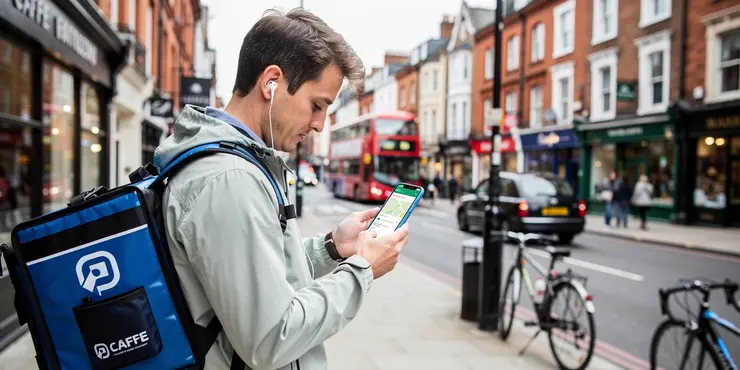
Gig workers are individuals who are engaged in short-term, flexible jobs, often facilitated by digital platforms. This category includes a wide range of activities from food delivery and ride-sharing to freelance services in tech, design, and more. The nature of gig work often means that workers are classified as self-employed rather than as full-time employees.
Employment Rights and Benefits
In the UK, employment rights and benefits are primarily tied to employment status. Workers may be categorized as employees, workers, or self-employed, each offering different levels of protection and benefits. Employees generally benefit from a full array of rights, including sick pay and entitlement to statutory leave and notice periods. Workers, a distinct category, receive some rights such as the National Minimum Wage and holiday pay. Self-employed individuals, including many gig workers, are often excluded from these benefits, as they are generally deemed to operate their own businesses.
Access to Unemployment Benefits
Unemployment benefits in the UK are primarily available to those with employee or worker status. This is typically tied to contributions-based Jobseeker’s Allowance (JSA) or the Universal Credit system, depending on specific circumstances. Since gig workers often fall under the self-employed category, they do not automatically qualify for traditional unemployment benefits, as they do not contribute to National Insurance in the same way that employees do.
Impact of the COVID-19 Pandemic
The COVID-19 pandemic highlighted the precarious nature of gig work. During this time, the UK government introduced emergency measures to support self-employed individuals through the Self-Employment Income Support Scheme (SEISS). This provided temporary financial assistance to eligible self-employed workers whose business activities were adversely affected by the pandemic. However, this was a temporary measure, and gig workers face ongoing challenges in accessing support.
Current Challenges and Future Outlook
Gig workers continue to face uncertainty regarding unemployment benefits. With the end of pandemic-related support, many are left navigating a complex system with limited access to governmental assistance. The classification of gig workers remains a topic of legal and political debate in the UK, as calls grow for greater protection and clearer definitions of employment status. Changes in policy could potentially enhance gig workers' access to benefits traditionally reserved for employees.
Overall, while gig work offers flexibility and autonomy, the lack of access to unemployment benefits in the UK remains a significant issue. Without reforms, gig workers may continue to rely on personal savings and informal networks during periods of unemployment, posing challenges to their financial security.
Understanding Gig Work in the UK
Gig workers are people who do short jobs that can change quickly. They often use apps on their phones or computers to find these jobs. This can be things like delivering food, driving people around, or doing computer work like design. Gig workers usually work for themselves, not as full-time employees for a company.
Employment Rights and Benefits
In the UK, what rights and benefits you have depend on your job status. People can be employees, workers, or self-employed. Employees have the most protection, like getting paid when they are sick or having holidays. Workers have some rights, like getting at least the National Minimum Wage and holiday pay. Self-employed people, like many gig workers, usually don’t get these benefits because they are seen as running their own businesses.
Access to Unemployment Benefits
In the UK, unemployment benefits are mostly for employees or workers. This help can come from something called Jobseeker’s Allowance (JSA) or Universal Credit. Since many gig workers are self-employed, they often don't get this help because they don’t pay into the system like employees do.
Impact of the COVID-19 Pandemic
When COVID-19 happened, it showed how uncertain gig work can be. The UK government made a plan called the Self-Employment Income Support Scheme (SEISS) to help self-employed people. This gave some money to self-employed gig workers whose work was hurt by the pandemic. But this help didn't last, and gig workers still have a hard time getting support.
Current Challenges and Future Outlook
Gig workers still face problems with getting unemployment benefits. Now that the COVID-19 help is over, many gig workers have to deal with a tricky system and not much government help. People are talking about how gig workers should be treated by the law, with some saying they need more protection and clear job definitions. If the rules change, gig workers might be able to get more benefits like employees do.
In the end, gig work lets people choose when and how they work, but not having unemployment benefits in the UK is a big problem. Without changes, gig workers might have to use their own savings or ask friends and family for help when they don't have work, which can be hard for their money situation.
Frequently Asked Questions
Gig workers are independent contractors or freelancers who are hired on a per-job or per-task basis, often through digital platforms like Uber, Lyft, or TaskRabbit.
Typically, gig workers do not qualify for traditional unemployment benefits because they are not considered employees and do not pay into unemployment insurance.
During the COVID-19 pandemic, temporary programs like the Pandemic Unemployment Assistance (PUA) were introduced to provide benefits to gig workers and self-employed individuals.
PUA was a temporary federal program that provided unemployment benefits to individuals who were not traditionally eligible, including gig workers, freelancers, and independent contractors.
Gig workers could apply for PUA through their state's unemployment insurance program, usually via the state's unemployment benefits website.
Yes, gig workers needed to provide proof of their income and work history, such as 1099 forms, tax returns, or documentation of recent work.
PUA ended in 2021, and currently, there are no universal federal programs like it providing unemployment benefits to gig workers.
Gig workers are classified as independent contractors and do not pay into the unemployment insurance system, which is why they don't qualify for traditional unemployment benefits.
It depends on state laws. Some states have explored options to provide unemployment benefits to gig workers, but most do not as these workers are not considered traditional employees.
Yes, there have been discussions and proposals at both state and federal levels to modify laws to provide more protection for gig workers, including access to unemployment benefits.
The CARES Act introduced PUA, which temporarily expanded unemployment benefits to gig workers, freelancers, and independent contractors.
Gig workers needed to provide documentation such as income tax returns, 1099s, business records, or other proof of income from self-employment.
Challenges include classification as independent contractors, lack of permanent legislation, and varied state-level policies on gig worker benefits.
Yes, some states offered emergency relief programs similar to PUA to help gig workers and others not covered by regular unemployment insurance.
There are ongoing debates and legal cases about whether gig workers should be classified as employees, which could affect their access to benefits like unemployment insurance.
Changes could redefine gig workers as employees, making them eligible for unemployment insurance and other employee benefits.
No, gig workers typically do not pay unemployment insurance taxes, as they are considered self-employed and not subject to payroll taxes by an employer.
Gig workers should check state resources for any available local assistance programs and explore other federal aid programs for which they might qualify.
If a gig worker qualifies for unemployment benefits under PUA or similar circumstances, they must report any earned income, which could affect benefit eligibility.
Gig workers can visit state unemployment websites and federal resources like the U.S. Department of Labor's website for information on available benefits.
Gig workers are people who work on different jobs for a short time. They are not regular employees. They might drive for Uber, Lyft, or do tasks found on websites like TaskRabbit.
Most gig workers can't get normal unemployment money. This is because they are not thought of as employees and don't pay into unemployment insurance.
If you find this hard to understand, try asking someone you trust to help explain or use a text-to-speech tool. These can read text out loud to make it easier to understand.
During the COVID-19 pandemic, there was help for people who lost their jobs. One program called Pandemic Unemployment Assistance (PUA) gave money to people who work for themselves, like gig workers.
PUA was a short-term program from the government. It gave money to people who lost their jobs but couldn't get help before. This includes people like gig workers, freelancers, and independent contractors.
Gig workers can ask for PUA by going to their state's unemployment website. This is where they can apply for help if they are out of work.
Yes, gig workers needed to show they made money and worked. They can use forms like 1099, tax papers, or papers that show their recent work.
The PUA program stopped in 2021. Now, there are no big programs from the government to help gig workers with unemployment benefits.
Gig workers are people who work short jobs, like driving or delivering food. They are called independent contractors.
They do not pay money into the system that gives people money if they lose their job. This system is called unemployment insurance.
Because of this, gig workers do not get money from unemployment benefits if they stop working.
If you are a gig worker and need help, you can look for other support. You can talk to someone you trust or find help online like support groups or advice services.
The rules are different in each state. Some places try to help gig workers, like people who drive for apps or do small jobs, if they lose work. But most states do not give them help because they are not regular employees.
Yes, people have talked about changing the rules to help gig workers. This includes giving them things like unemployment money when they don't have work. These talks are happening in different states and across the whole country.
For help with understanding more about this, you can use tools like text-to-speech apps that read aloud, or highlight important words with colored pens to make them stand out.
The CARES Act made a new plan called PUA. This plan helps gig workers, freelancers, and independent contractors. It gives them unemployment benefits for a short time.
Gig workers must show papers to prove how much money they make. These papers can be things like tax forms, 1099 forms, business papers, or other proof that they work for themselves.
There are some problems for gig workers:
1. They are called independent contractors.
2. There are no long-lasting laws to help them.
3. Each state has different rules about benefits for gig workers.
If this is hard to read, you can try using audiobooks or text-to-speech tools to listen instead. It can also help to read with a parent or friend and use a dictionary for difficult words.
Yes, some places had special programs to help gig workers and others who couldn't get regular jobless money.
People are talking and having legal fights about gig workers. Gig workers are people who do small jobs, like driving for Uber. Some people think gig workers should be called employees. This could help them get benefits, like money when they lose their job.
There might be new rules for gig workers. These rules could make them like regular workers. This means they could get help if they lose their job and other benefits like regular workers do.
No, people who work gig jobs do not usually pay unemployment insurance. They work for themselves and do not have an employer taking out these taxes.
People who work gig jobs can look for help in their state. They should also see if there are other federal aid programs they can get.
If a gig worker can get money from unemployment benefits, they need to tell the government if they earn any money from work. This could change whether they can get benefits or not.
Gig workers can go to their state’s unemployment websites. They can also look at the U.S. Department of Labor's website. These places have information about help and benefits.

Ergsy Search Results
This website offers general information and is not a substitute for professional advice.
Always seek guidance from qualified professionals.
If you have any medical concerns or need urgent help, contact a healthcare professional or emergency services immediately.
Some of this content was generated with AI assistance. We've done our best to keep it accurate, helpful, and human-friendly.
- Ergsy carefully checks the information in the videos we provide here.
- Videos shown by Youtube after a video has completed, have NOT been reviewed by ERGSY.
- To view, click the arrow in centre of video.
- Most of the videos you find here will have subtitles and/or closed captions available.
- You may need to turn these on, and choose your preferred language.
- Go to the video you'd like to watch.
- If closed captions (CC) are available, settings will be visible on the bottom right of the video player.
- To turn on Captions, click settings.
- To turn off Captions, click settings again.