
Get Answers
Introduction
Live-in caregivers play a crucial role in assisting individuals who require support in their daily lives, particularly those who are elderly or have disabilities. One important aspect of their responsibility includes aiding with transportation needs. In the UK, the scope of transportation assistance by live-in caregivers can vary depending on the specific arrangement and requirements of the person receiving care.
Responsibilities of a Live-in Caregiver
Live-in caregivers are responsible for a wide range of duties that ensure the well-being and comfort of the individual they are caring for. These duties often include personal care, medication management, meal preparation, housekeeping, and companionship. Transportation assistance is another key responsibility, which can significantly enhance the independence and quality of life for the person receiving care.
Transportation Assistance
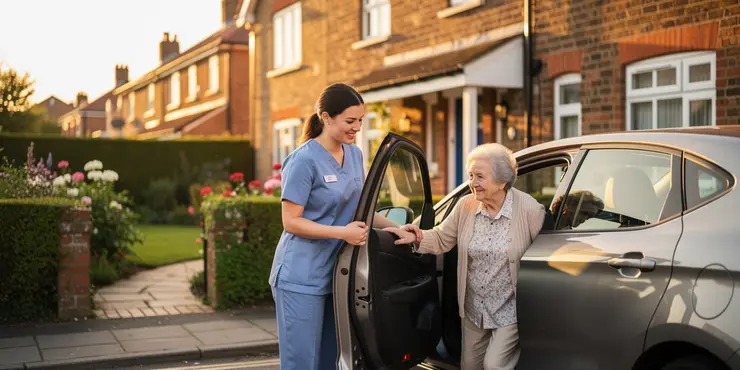
Transportation assistance by live-in caregivers can involve several tasks. These may include driving the individual to medical appointments, therapy sessions, social activities, and errands such as grocery shopping. The caregiver may use the care recipient’s vehicle or, in some cases, provide their own transport if agreed upon beforehand. It is important that the caregiver is properly licensed and insured to operate a vehicle in the UK.
Benefits of Transportation Assistance
Having a live-in caregiver who can assist with transportation offers numerous benefits. It allows individuals to maintain their independence and actively participate in community and social events. It also ensures that they can attend important healthcare appointments, which is crucial for monitoring and managing their health conditions. Moreover, it alleviates the stress and burden on family members who might otherwise need to provide transportation support.
Limitations and Considerations
While transportation assistance is a valuable service, there are limitations and considerations to keep in mind. Not all live-in caregivers are able to drive, and not every care arrangement includes transportation as a duty. It is essential to clarify transportation needs and discuss them with the caregiving agency or directly with the caregiver when establishing the care plan. Additionally, costs related to fuel, vehicle maintenance, and insurance should also be addressed.
Conclusion
Live-in caregivers in the UK can significantly enhance the quality of life for individuals requiring support by providing transportation assistance. This service not only promotes independence but also ensures continued access to essential services and social interaction. However, it is important to clearly outline the expectations and arrangements related to transportation as part of the care plan to ensure all parties are in agreement and to prevent any misunderstandings.
Introduction
Live-in caregivers help people who need support every day. They often help elderly people or those with disabilities. One of their jobs is to help with getting around. In the UK, how they help with transportation can change depending on what the person needs.
Responsibilities of a Live-in Caregiver
Live-in caregivers help make sure the person they care for is safe and happy. They do things like help with bathing, give medicines, cook meals, clean the house, and spend time with the person. They also help with transportation, which helps the person be more independent and enjoy life more.
Transportation Assistance
Caregivers help with transportation by doing things like driving the person to the doctor, therapy, social events, and shopping. They might use the person's car, or sometimes their own car if they agree on it. It is important that the caregiver knows how to drive and is allowed to drive in the UK.
Benefits of Transportation Assistance
When caregivers help with transportation, there are many good things. It helps people stay independent and go to events and appointments. They can see doctors to keep track of their health. It also helps the person’s family because they do not have to worry about driving them everywhere.
Limitations and Considerations
Even though transportation help is great, there are things to think about. Not all caregivers can drive, and not all jobs include driving. It is important to talk about transportation needs when setting up care. You should also talk about who pays for things like fuel and car upkeep.
Conclusion
In the UK, live-in caregivers can make life better for people who need help. They do this by helping with transportation. This service helps people be more independent and stay connected to important services and events. It is important to make sure everyone agrees on how transportation will be handled.
Frequently Asked Questions
Live-in caregivers often assist with transportation needs like driving the care recipient to appointments, running errands, and shopping.
Yes, a live-in caregiver can use their own car if agreed upon with the employer, but terms like reimbursements should be discussed beforehand.
While not always required, having a driver's license can be an important qualification for a live-in caregiver, especially if transportation is needed.
Typically, the employer covers fuel costs, but reimbursement terms should be clarified in the employment agreement.
Yes, if driving isn't an option, caregivers can assist clients in using public transportation safely.
Caregivers might be expected to maintain the cleanliness of the vehicle used, but mechanical maintenance is usually the employer’s responsibility.
Yes, caregivers can drive clients to social events or outings to promote engagement and activity, schedules permitting.
If non-driving, a caregiver may instead assist with coordinating alternative travel methods, like rideshares or public transport.
Compensation for travel time should be outlined in the employment agreement, potentially as part of regular hours or separate compensation.
Yes, apart from driving them, caregivers can attend appointments to provide support and assistance.
Caregivers using their personal vehicles typically need insurance, and the employer may require proof of coverage.
Distance limits can be set by the employer and should be established as part of the caregiver’s work agreement.
Procedures should be in place detailing insurance claims and responsibilities, agreed upon by both employer and caregiver.
Yes, they can assist clients in and out of vehicles and ensure any mobility devices are safely transported.
This can vary; some caregivers receive mileage reimbursements, while others might have a set expense allowance.
Transportation needs outside standard hours need to be pre-arranged and discussed, potentially affecting caregiving hours and pay.
Typically, parking fees and tolls incurred during client transportation are reimbursed by the employer.
Yes, some employers provide a vehicle for the caregiver’s use, which can simplify issues related to insurance and maintenance.
Employers may request a Motor Vehicle Report (MVR) to ensure a caregiver’s driving history is safe and acceptable.
Caregivers should communicate openly with their employer about any concerns regarding transportation assignments to find a suitable solution.
Live-in helpers often help with driving. They can take the person they care for to the doctor, to go shopping, and to run errands.
Yes, you can use your own car if you live with the person you take care of. Make sure to talk to your boss about using your car and discuss things like getting money back for gas before you start.
Sometimes, a live-in caregiver needs a driver's license. This is because they might need to drive places. But not every caregiver has to have one.
Usually, the boss pays for the fuel. It's important to make sure the work agreement explains how this is handled.
Yes, if you can't drive, someone can help you use buses or trains safely.
Caregivers need to keep the car clean. But fixing the car is usually the boss's job.
Yes, helpers can take people to fun events and trips if they have time. This can help people stay active and make friends.
If someone cannot drive, a helper can find other ways to travel. They can help with things like getting a ride with a rideshare service or using buses and trains.
Payment for travel time should be written in your job agreement. It might be part of your regular work hours or you could get extra money for it.
Yes, caregivers can drive people to their appointments. They can also go with them to help and give support.
When caregivers use their own cars for work, they usually need to have insurance. The boss might want to see proof that they have it.
The boss can decide how far you have to travel for work. This should be written down in the helper's job plan.
There should be a clear plan for how to make insurance claims. Both the boss and the caregiver need to agree on who does what.
Yes, they help people get in and out of cars. They also make sure things like wheelchairs are safely carried.
This can be different for everyone. Some people who help others get money back for the miles they drive. Other people might get a set amount of money for things they need to buy.
If you need a ride at a different time, you should talk about it and plan it in advance. This might change when caregivers work and their pay.
Your boss will usually pay you back for any parking and road fees when you drive for work.
Yes, some bosses give the caregiver a car to use. This makes things easier with insurance and taking care of the car.
Bosses might ask for a Motor Vehicle Report (MVR). This helps them check if a caregiver drives safely.
If you help take care of people, it is good to talk to your boss if you have any worries about getting to and from places. This way, you can both find a good answer.

Ergsy Search Results
This website offers general information and is not a substitute for professional advice.
Always seek guidance from qualified professionals.
If you have any medical concerns or need urgent help, contact a healthcare professional or emergency services immediately.
Some of this content was generated with AI assistance. We've done our best to keep it accurate, helpful, and human-friendly.
- Ergsy carefully checks the information in the videos we provide here.
- Videos shown by Youtube after a video has completed, have NOT been reviewed by ERGSY.
- To view, click the arrow in centre of video.
- Most of the videos you find here will have subtitles and/or closed captions available.
- You may need to turn these on, and choose your preferred language.
- Go to the video you'd like to watch.
- If closed captions (CC) are available, settings will be visible on the bottom right of the video player.
- To turn on Captions, click settings.
- To turn off Captions, click settings again.