
Get Answers
Understanding Indefinite Sentences
Indefinite sentences, such as Indeterminate Sentences for Public Protection (IPPs), mean that prisoners have no fixed release date. Instead, they must demonstrate to a parole board that they no longer pose a threat to society to be considered for release.
This type of sentence is different from those with a defined duration. The uncertainty can create a unique set of challenges for prisoners serving under these conditions, impacting their mental health and rehabilitation.
Comparison with Definite Sentences
Prisoners serving definite sentences know the time they will serve. This allows them to plan for the future and prepares them for eventual release. They generally progress through the system based on earned privileges.
Those with indefinite sentences often face difficulty in progression due to their uncertain release status. This can lead to disparities in access to rehabilitation programs and other privileges within the prison system.
Privileges in Prison
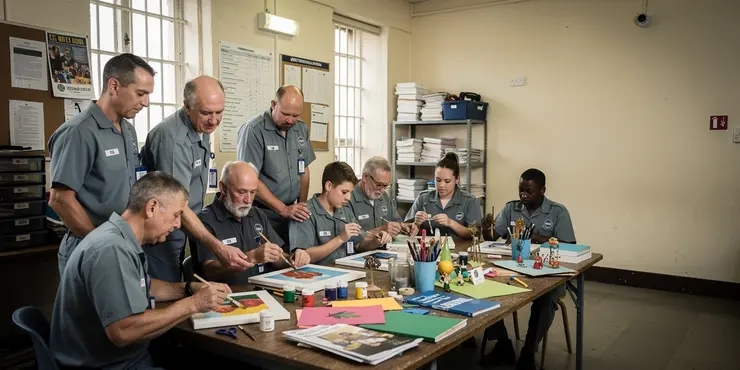
Both definite and indefinite sentence prisoners can earn privileges through good behaviour. These include access to better living conditions, more visiting opportunities, and educational programs.
However, the ability to access certain privileges might depend on the prisoner's assessed risk level and their time left to serve. Indefinite prisoners may experience limitations due to their uncertain release status.
Impact on Rehabilitation
Rehabilitation programs are crucial for preparing prisoners for reintegration into society. Indefinite sentence prisoners might find it harder to access these unless they can demonstrate progression.
This can create a cycle where the lack of opportunities delays their readiness for parole. The system may work against them, even if they exhibit good behaviour.
Mental Health Concerns
The uncertainty associated with indefinite sentences can lead to heightened stress and anxiety. Prisoners may struggle with the lack of a fixed date for release, impacting their mental health.
It is crucial for prison systems to address these mental health challenges. Adequate support services can help manage anxiety and improve overall well-being.
Calls for Reform
There have been ongoing calls for reform concerning indefinite sentences. Critics argue that these sentences can be unjust and hinder both rehabilitation and reintegration.
Reform advocates suggest more structured pathways to progression and better mental health support. Ensuring fairness and clarity in the system is vital for improving outcomes for all prisoners.
Frequently Asked Questions
In general, prisoners with indefinite sentences have similar visitation rights to other prisoners, but specific rules may vary by institution.
Eligibility for parole depends on the terms of the sentence and jurisdiction. Some indefinite sentences may allow for parole after a certain period.
Yes, prisoners with indefinite sentences often have access to educational programs, although availability may vary by facility.
Yes, prisoners with indefinite sentences are entitled to the same healthcare services as other inmates.
Prison work opportunities are typically available to prisoners with indefinite sentences, subject to institutional rules.
Prisoners, regardless of their sentence length, are generally permitted to have certain personal property, following prison regulations.
Yes, prisoners with indefinite sentences have the right to legal counsel, similar to other inmates.
Prisoners with indefinite sentences can receive mail and packages, subject to institutional policies and restrictions.
Eligibility for sentence reduction programs varies, and prisoners with indefinite sentences may qualify depending on the specific program and jurisdiction.
Yes, prisoners with indefinite sentences have access to religious services, as do other inmates, respecting their freedom of religion.
Yes, they are subject to the same disciplinary actions and institutional rules as other prisoners.
They often have access to rehabilitation programs, aimed at supporting reintegration and reducing recidivism, depending on facility offerings.
The potential to earn good behavior credits depends on the jurisdiction and specific terms of incarceration.
Yes, they generally have access to telephone privileges similar to other inmates, with regulations depending on the institution.
Typically, they have equivalent yard time as other inmates, though this can vary based on behavior and facility resources.
Eligibility for compassionate release can depend on individual circumstances and jurisdictional regulations.
Transfers depend on security needs, inmate behavior, and institutional requirements, applicable to all inmates.
Yes, they can access mental health services, as mental health care is generally provided to all inmates.
Yes, library services are commonly available to them, facilitating access to reading and educational materials.
Participation in work release programs depends on the nature of the sentence, institutional policy, and inmate eligibility criteria.

Ergsy Search Results
This website offers general information and is not a substitute for professional advice.
Always seek guidance from qualified professionals.
If you have any medical concerns or need urgent help, contact a healthcare professional or emergency services immediately.
Some of this content was generated with AI assistance. We've done our best to keep it accurate, helpful, and human-friendly.
- Ergsy carefully checks the information in the videos we provide here.
- Videos shown by Youtube after a video has completed, have NOT been reviewed by ERGSY.
- To view, click the arrow in centre of video.
- Most of the videos you find here will have subtitles and/or closed captions available.
- You may need to turn these on, and choose your preferred language.
- Go to the video you'd like to watch.
- If closed captions (CC) are available, settings will be visible on the bottom right of the video player.
- To turn on Captions, click settings.
- To turn off Captions, click settings again.