
Get Answers
Understanding the DVSA Theory Test
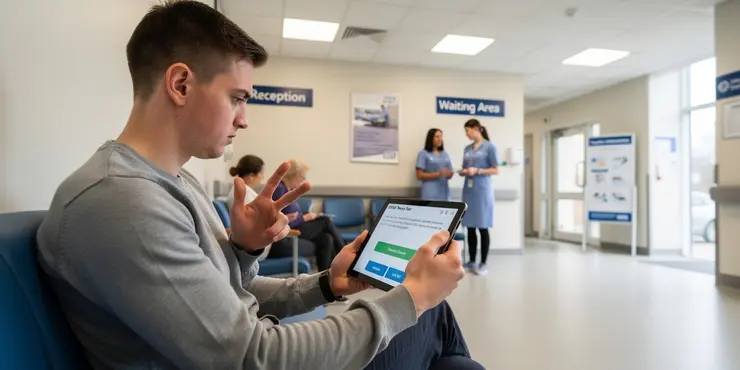
The Driver and Vehicle Standards Agency (DVSA) Theory Test is a crucial component of obtaining a driving license in the UK. It assesses a candidate's understanding of road signs, driving rules, and essential safety knowledge. Comprising multiple-choice questions and a hazard perception test, this examination ensures that only qualified individuals are permitted to drive. For individuals who are deaf or have hearing impairments, accessing this test can pose unique challenges, which is why the DVSA provides various accommodations.
British Sign Language (BSL) for Theory Test
British Sign Language (BSL) is the preferred language for many deaf individuals in the UK. Acknowledging the importance of inclusivity and equal opportunities, the DVSA offers the Theory Test in BSL. This option caters to BSL users by enabling them to fully understand and engage with the test content in their primary mode of communication. The inclusion of BSL in the Theory Test aims to bridge any communicative gaps and provide a fair testing environment for everyone.
How the BSL Theory Test Works
During the Theory Test, candidates have the choice to view questions and receive instructions in BSL. This feature is facilitated through an on-screen BSL video, where a signer translates the questions and choices. Candidates can select this option at the time of booking their test. The BSL translation covers both the multiple-choice part and the hazard perception test, ensuring comprehensive support throughout the testing process.
Booking the BSL Theory Test
Candidates wishing to take the Theory Test in BSL can do so by selecting the relevant option during the booking process. This can be done online through the official DVSA website or by contacting their booking line. It is important for candidates to specify this requirement in advance to ensure proper arrangements are made. The DVSA encourages early booking to secure a slot that accommodates BSL needs.
Additional Support for Deaf Candidates
In addition to BSL translation, the DVSA offers other support mechanisms for deaf candidates. This includes providing longer test durations and allowing the presence of a signer to assist during the test, if required. The DVSA is committed to ensuring that all drivers have an equal opportunity to demonstrate their knowledge and understanding without facing unfair disadvantages.
Conclusion
The availability of the DVSA Theory Test in British Sign Language is a significant step towards inclusivity and equal access for deaf individuals in the UK. By providing BSL translation and additional support, the DVSA ensures that all candidates, regardless of hearing ability, can pursue their driving goals. This approach not only facilitates fairer testing but also enhances road safety by ensuring that all drivers are well-informed and adequately prepared.
Understanding the DVSA Theory Test
The DVSA Theory Test helps you get a driving license in the UK. You need to know about road signs, driving rules, and how to be safe. The test has questions with choices and a hazard perception test to see if you can spot dangers on the road. People who are deaf may find it hard to take the test. That's why the DVSA offers help.
British Sign Language (BSL) for Theory Test
Many deaf people in the UK use British Sign Language (BSL). The DVSA makes sure every person has a fair chance. They offer the Theory Test in BSL. This way, people who use BSL can understand the test in their own language. BSL in the Theory Test helps everyone have a fair chance to pass.
How the BSL Theory Test Works
In the Theory Test, you can see questions in BSL. There is an on-screen video where someone signs the questions and answers. You can choose to have BSL when you book the test. The BSL video helps with both the questions and spotting hazards. This way, BSL users get full support during the test.
Booking the BSL Theory Test
You can book the BSL Theory Test online on the DVSA website or by calling them. When you book, say you need BSL. It's best to book early to make sure you get a BSL slot. This helps the DVSA prepare everything you need for the test.
Additional Support for Deaf Candidates
The DVSA also helps deaf people by giving them more time for the test. If needed, a signer can be there to help. The DVSA wants to make sure every driver has a fair chance to show what they know.
Conclusion
Having the DVSA Theory Test in BSL is great for deaf people in the UK. With BSL help, everyone can try to get their driving license. This makes the test fair and helps all drivers learn how to be safe on the road.
Frequently Asked Questions
Yes, the DVSA Theory Test is available in British Sign Language (BSL) to accommodate candidates who are deaf or have hearing impairments.
You can request the DVSA Theory Test in British Sign Language by indicating your need for BSL interpretation when booking the test.
There are no additional costs for taking the DVSA Theory Test in British Sign Language; it is included as part of the service to accommodate all candidates.
Yes, the BSL interpretation is available for both car and motorcycle theory tests.
The DVSA provides a professional BSL interpreter for the test, so you do not need to bring your own interpreter.
Yes, the BSL service should be available at all theory test centers across Great Britain.
The BSL interpretation is delivered via video, where you can see a BSL interpreter signing the questions.
Yes, there are practice materials available in BSL to help you prepare for the theory test.
You can book a DVSA Theory Test with BSL accommodation by choosing the appropriate options online or requesting assistance when you contact the DVSA.
BSL support is important to ensure accessibility and equal opportunities for deaf candidates to succeed in the theory test.
The hazard perception test is visual and does not require BSL interpretation, but support is available for understanding instructions.
You typically do not need to provide proof, but it is best to follow the DVSA's booking guidance regarding accessibility needs.
It is recommended to request BSL support at the time of booking to ensure arrangements can be made.
No, the pass mark remains the same, regardless of whether you take the test with BSL support.
Other options include extra time, reading assistance, and translation into other languages for those with specific needs.
Yes, you can contact the DVSA to reschedule your test if BSL accommodations cannot be provided at your appointment.
Yes, interpreters provided by the DVSA for the theory test are qualified BSL professionals.
You should inform the test center staff immediately if you face any issues with BSL support during your test.
Yes, you can provide feedback to the DVSA regarding your experience with BSL support to help improve services.
BSL support is provided for the multiple choice questions, while the hazard perception part is primarily visual.
Yes, you can take the DVSA Theory Test in British Sign Language (BSL). This helps people who are deaf or have trouble hearing.
You can ask for the DVSA Theory Test in British Sign Language (BSL). Just say you need BSL when you book your test.
You do not have to pay extra money for the DVSA Theory Test if you want to use British Sign Language. This is part of the service to help everyone take the test.
Yes, you can get BSL help for car and motorbike theory tests.
The DVSA gives you a BSL interpreter for your test. You don't need to bring your own interpreter with you.
Yes, you can get BSL help at all theory test centers in Great Britain.
The BSL (British Sign Language) interpretation is given through a video. You can watch a person using BSL to sign the questions.
Yes, you can find practice materials in BSL to help you get ready for the theory test.
You can book a DVSA Theory Test with help for BSL (British Sign Language). You can do this online by picking the right options. You can also ask for help when you talk to the DVSA.
BSL support helps deaf people have the same chances to do well on the theory test.
The hazard perception test uses pictures and does not need British Sign Language help, but you can get support to understand the instructions.
Usually, you don't need to show proof. But it's a good idea to follow the DVSA's advice for accessibility needs.
When you book, ask for a BSL helper. This way, we can make sure someone is there to help you.
No, the pass mark is always the same. It does not change if you use BSL (British Sign Language) help during the test.
There are other ways to help too. Some people might get more time to finish. Others might have someone to help them read. People who speak different languages might get help to understand in their own language.
You can contact the DVSA to change your test day if they can't provide BSL help at your appointment.
Yes, the interpreters for the theory test are trained to use British Sign Language (BSL).
If you have trouble with BSL help during your test, tell the staff right away.
Yes, you can tell the DVSA what you think about the BSL help. This can make their service better.
There is help with BSL (British Sign Language) for the multiple-choice questions.
The hazard part mostly uses pictures and videos.

Ergsy Search Results
This website offers general information and is not a substitute for professional advice.
Always seek guidance from qualified professionals.
If you have any medical concerns or need urgent help, contact a healthcare professional or emergency services immediately.
Some of this content was generated with AI assistance. We've done our best to keep it accurate, helpful, and human-friendly.
- Ergsy carefully checks the information in the videos we provide here.
- Videos shown by Youtube after a video has completed, have NOT been reviewed by ERGSY.
- To view, click the arrow in centre of video.
- Most of the videos you find here will have subtitles and/or closed captions available.
- You may need to turn these on, and choose your preferred language.
- Go to the video you'd like to watch.
- If closed captions (CC) are available, settings will be visible on the bottom right of the video player.
- To turn on Captions, click settings.
- To turn off Captions, click settings again.