
Get Answers
Introduction to AI and Robotics in Healthcare
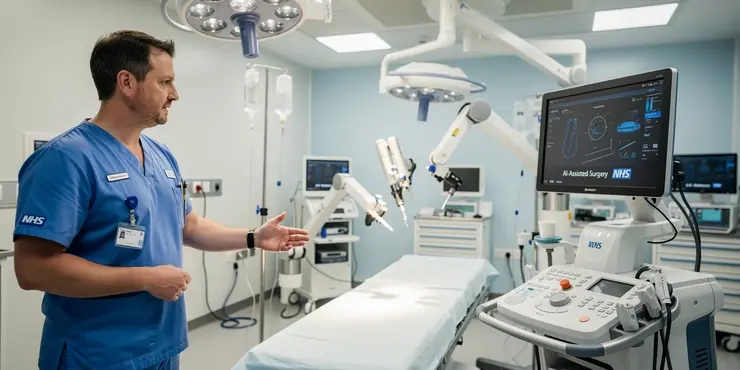
The integration of AI and robotic systems into healthcare settings is gaining momentum in the UK. These technologies are transforming how medical professionals work, leading to more efficient and effective care. The potential for streamlining operations while enhancing patient outcomes is significant.
AI and robotic systems can handle routine tasks, freeing up healthcare professionals for more complex duties. This shift allows medical staff to focus more on patient interaction and care. The ultimate goal is to improve service delivery while alleviating the pressure on an overburdened system.
Enhancing Diagnostics and Treatment
AI technologies are revolutionising diagnostics by providing more accurate and faster analyses of medical data. Algorithms can identify patterns in scans or tests that might be missed by the human eye. This leads to quicker diagnosis and timely intervention, which is crucial in critical cases.
Robotic systems assist in surgery, offering greater precision and control. This results in fewer complications and quicker recovery times for patients. Surgeons can rely on robotics for minimally invasive procedures, enhancing the efficacy of conventional methods.
Streamlining Administrative Tasks
AI-powered tools simplify time-consuming administrative tasks within healthcare facilities. These tasks include scheduling, billing, and patient record management, reducing the administrative burden on staff. Automation of these processes ensures greater accuracy and efficiency.
Robust data management solutions powered by AI maintain comprehensive patient records. This allows for seamless information flow across healthcare systems, ensuring that professionals have access to up-to-date information at all times. It also reduces errors associated with manual data entry.
Improving Patient Monitoring and Care
AI systems facilitate continuous patient monitoring and swiftly alert professionals to any abnormalities. Wearable devices and smart sensors gather real-time patient data, enhancing monitoring capabilities. This proactive approach leads to timely interventions, potentially saving lives.
Robotic systems can support routine patient care, especially for those requiring long-term assistance. Robots can help in lifting, moving, or providing companionship to patients, which alleviates physical demands on healthcare staff and improves patient experience.
Conclusion: The Future of Healthcare Workflow
The adoption of AI and robotic systems within the UK healthcare sector shows promising improvements in workflow efficiency and patient care. These technologies are not replacing human roles but augmenting them. The focus remains on making healthcare systems resilient and responsive to future challenges.
As these technologies evolve, continuous collaboration between developers, healthcare professionals, and regulators is essential. Together, they can ensure that innovations are safely and effectively integrated, driving the healthcare sector towards a brighter future.
Frequently Asked Questions
AI and robotics improve diagnostic accuracy by analyzing large volumes of medical data, identifying patterns, and offering precise insights that can lead to more accurate diagnoses.
Yes, AI and robotics can automate routine tasks, such as data entry and patient monitoring, freeing up healthcare staff to focus on more complex and critical tasks.
AI can analyze patient data to provide tailored treatment recommendations and predict patient outcomes, leading to more personalized and effective healthcare.
Robots assist in surgical procedures by providing greater precision and control, potentially reducing recovery time and improving outcomes for patients.
AI algorithms enhance medical imaging by improving image quality, assisting in the detection of anomalies, and enabling faster and more accurate interpretation of images.
Yes, robotic systems can automate logistics tasks, such as transporting supplies and medications, thereby improving efficiency and reducing human error in hospital management.
AI and robotic systems enhance patient monitoring by continuously collecting and analyzing patient data, enabling early detection of potential health issues and timely interventions.
AI and robotics assist in treatment planning by providing data-driven insights and simulations that help healthcare professionals create effective and personalized treatment plans.
AI accelerates drug discovery and development by analyzing biological data and identifying potential drug candidates faster and more cost-effectively than traditional methods.
AI can analyze trends and patterns in health data to predict potential disease outbreaks, allowing for proactive measures to prevent widespread health crises.
AI-driven chatbots enhance patient engagement by providing instant access to health information, answering questions, and assisting with appointment scheduling, even outside of business hours.
AI streamlines the management of electronic health records by organizing patient data efficiently, reducing errors, and facilitating easier data retrieval for healthcare providers.
Robotic systems are used in rehabilitation therapy to provide precise, consistent, and customizable support, enabling patients to perform exercises safely and effectively.
AI and robotics can reduce healthcare costs by improving efficiency, minimizing errors, and streamlining workflows, which can lead to shorter hospital stays and better resource allocation.
AI and robotics help manage chronic diseases by providing continuous monitoring, data analysis, and individualized care plans to better control disease progression and improve patient quality of life.
AI systems can improve mental health care by analyzing patient data to identify mental health conditions early, offering virtual therapy sessions, and providing data-driven treatment suggestions.
AI and robotics enable remote patient care by allowing health monitoring at home, supporting telemedicine consultations, and ensuring patients receive quality care without the need for frequent hospital visits.
AI and robotic systems streamline hospital operations by optimizing scheduling, managing inventory, and automating administrative tasks, leading to more efficient resource utilization.
AI aids in early disease detection by analyzing patient data to identify early warning signs and providing predictive analytics that prompt timely interventions.
AI and robotics facilitate healthcare research by analyzing vast amounts of data, conducting simulations, and automating repetitive experiments, allowing researchers to focus on innovation and discovery.

Ergsy Search Results
This website offers general information and is not a substitute for professional advice.
Always seek guidance from qualified professionals.
If you have any medical concerns or need urgent help, contact a healthcare professional or emergency services immediately.
Some of this content was generated with AI assistance. We've done our best to keep it accurate, helpful, and human-friendly.
- Ergsy carefully checks the information in the videos we provide here.
- Videos shown by Youtube after a video has completed, have NOT been reviewed by ERGSY.
- To view, click the arrow in centre of video.
- Most of the videos you find here will have subtitles and/or closed captions available.
- You may need to turn these on, and choose your preferred language.
- Go to the video you'd like to watch.
- If closed captions (CC) are available, settings will be visible on the bottom right of the video player.
- To turn on Captions, click settings.
- To turn off Captions, click settings again.