
Speak To An Expert
Get clear, personalised advice for your situation.
Jot down a few questions to make the most of your conversation.
Understanding Special Accommodations for the DVSA Theory Test
If you are preparing to take the Driver and Vehicle Standards Agency (DVSA) Theory Test in the UK and require special accommodations, it's essential to know the steps to ensure your needs are met. Special accommodations are provided to ensure that candidates with disabilities, learning difficulties, or other specific needs have equal access to the test.
Identify Your Needs
The first step in requesting special accommodations is to clearly identify your specific needs. Accommodations can include additional time, separate rooms, or assistance such as a reader or scribe. It is crucial to consider what adjustments will help you perform your best during the test.
Gather Necessary Documentation
To request special accommodations, you will need to provide appropriate evidence of your requirement. This typically involves medical or psychological documentation that outlines your specific condition and the recommended accommodations. Gather all necessary documents from qualified professionals, such as doctors or psychologists, to support your request.
Contact the DVSA
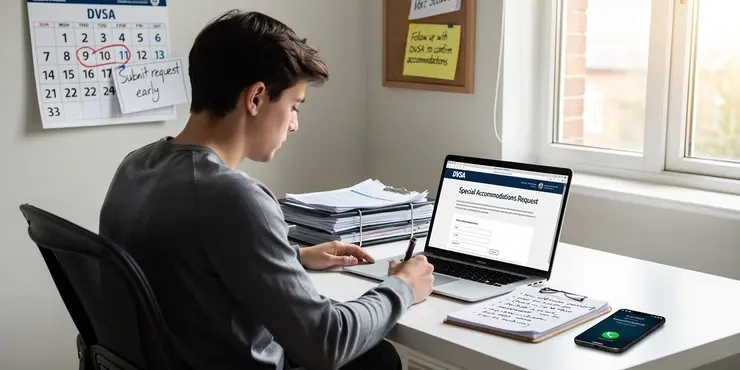
Once you have your documentation ready, contact the DVSA to make your request. Special arrangements need to be made in advance, so it is advisable to contact them as soon as possible. You can reach the DVSA by mail, phone, or the official website. Provide them with your personal details, the type of accommodation you are requesting, and attach the relevant documentation.
Booking the Theory Test
After your accommodation request is approved, you can proceed to book your theory test. It’s important to mention that you need special accommodations when booking to ensure everything is in place for your test day. The DVSA will guide you on how to book your test with accommodations.
Confirmation and Test Day Preparation
After booking, you should receive a confirmation letter or email detailing the accommodations arranged for you. Review this information carefully to ensure all agreed-upon accommodations will be available. In case of discrepancies, contact the DVSA immediately.
On the test day, arrive early to give yourself enough time to navigate any additional procedures related to your accommodations. Carry all necessary identification documents as well as the confirmation of your special arrangements.
Support and Resources
The DVSA and other organizations offer support and resources for candidates with special needs. It's worth exploring these resources in advance to maximize your preparation. The Citizens Advice Bureau, for instance, can offer guidance and support for individuals seeking accommodations.
By understanding and following these steps, you can confidently request and receive special accommodations for your DVSA Theory Test, ensuring you have the best opportunity to succeed with minimal stress.
Understanding Help for the DVSA Theory Test
If you are getting ready to take the Driver and Vehicle Standards Agency (DVSA) Theory Test in the UK and need extra help, it's important to know what to do. Extra help is there so that people with disabilities, learning difficulties, or other needs can take the test fairly.
Identify Your Needs
The first thing to do is to figure out what kind of help you need. This help could be more time to finish the test, taking the test in a quiet room, or having someone to read or write for you. Think about what will help you do your best in the test.
Gather Your Papers
To ask for extra help, you need to show why you need it. This means getting letters from doctors or other experts that say what help you need. Make sure you have all your papers from them ready.
Contact the DVSA
When you have your papers, contact the DVSA to ask for help. Do this early because special plans take time to set up. You can contact them by mail, phone, or their website. Tell them what help you need and send your papers with it.
Booking the Theory Test
Once the DVSA agrees to help you, you can book your test. Remember to say you need extra help when you book it. The DVSA will tell you how to book the test with your needs in mind.
Confirmation and Test Day Preparation
After booking, you will get a letter or email saying what help you will get. Check this letter to make sure it’s all correct. If something is wrong, contact the DVSA right away.
On the test day, get there early so you have time to get ready. Bring your ID and the letter that shows your special help details.
Support and Resources
The DVSA and other groups can help people who need extra support. It's a good idea to look for this help before your test. The Citizens Advice Bureau, for example, can give advice and help.
By following these steps, you can get the extra help you need to take your DVSA Theory Test. This will help you feel calm and ready to do your best.
Frequently Asked Questions
You may be eligible if you have a disability, health condition, learning difficulty, or other need that affects how you take the DVSA Theory Test. DVSA can consider adjustments such as extra time, a separate room, or support with reading the questions, depending on your circumstances and evidence provided.
You usually request accommodations when you book the DVSA Theory Test or by contacting the test booking service if you need help before booking. You may need to provide details of your needs and any supporting evidence so DVSA can assess the adjustments required.
DVSA may ask for evidence that explains your condition or difficulty and how it affects test-taking. This can include a letter from a doctor, specialist, teacher, or support professional, depending on the accommodation requested and your situation.
Possible adjustments can include extra time, a separate room, a reader or interpreter in some cases, breaks, or other support based on your needs. The exact adjustment depends on what is reasonable and appropriate for your circumstances.
Approval times can vary depending on the evidence provided and the type of adjustment requested. It is best to apply as early as possible so there is enough time for DVSA to review your request before the test date.
In many cases you can start the process online when booking the theory test, but some requests may need additional contact with the booking service. If your needs are complex, you may be asked to provide supporting information before the adjustment is confirmed.
Yes, extra time may be available if your condition or difficulty affects how quickly you can read, understand, or respond to the questions. DVSA will decide based on the information you provide and whether extra time is appropriate.
A reader may be possible in certain circumstances if you have difficulty reading the test questions because of a disability or condition. The availability of a reader depends on your needs, the format of the test, and DVSA assessment.
An interpreter may be considered if you need communication support because of hearing loss or another communication-related need. You should explain your requirements clearly so DVSA can assess whether an interpreter is suitable.
Yes, you should contact the booking service as soon as possible if your needs change after booking. DVSA may be able to update the arrangement, but changes are subject to availability and the type of adjustment required.
If your request is refused, you can ask for the reason and provide additional evidence if available. You may also contact the booking service to discuss whether another adjustment could meet your needs.
Special accommodations are normally provided without an extra charge, but the test fee itself still applies. If a specific arrangement needs extra coordination, DVSA will explain any costs or confirm if there are none.
You should make the request as early as possible, ideally when you book the test or well before your chosen date. Early requests give DVSA time to review evidence and arrange the correct support.
You may be able to request support if anxiety or exam stress is linked to a diagnosed condition or has a significant impact on your ability to take the test. DVSA will look at the details you provide and any supporting evidence before deciding.
Yes, support may be available for dyslexia if it affects reading speed, comprehension, or processing during the test. Possible adjustments can include extra time or other measures depending on the evidence and your individual needs.
Yes, accommodations may be available for autistic candidates if certain test conditions are difficult or overwhelming. DVSA may consider adjustments such as a separate room, breaks, or other support based on your needs.
On the day of the test, the centre should have the approved adjustments ready for you. Arrive early, bring any required identification, and tell the staff immediately if the support arranged is not in place as expected.
A quiet or separate room may be available if you need a reduced-distraction environment. This depends on what you request, the evidence provided, and what the test centre can reasonably arrange.
You can ask DVSA or the booking service to review the decision if you believe the assessment was incorrect or incomplete. Provide any extra information or evidence that may help them reconsider your request.
You can contact the DVSA theory test booking service through the official DVSA channels, by phone or online, depending on the type of help you need. Explain clearly that you are making a DVSA Theory Test special accommodations request and describe the support required.

Ergsy Search Results
This website offers general information and is not a substitute for professional advice.
Always seek guidance from qualified professionals.
If you have any medical concerns or need urgent help, contact a healthcare professional or emergency services immediately.
Some of this content was generated with AI assistance. We've done our best to keep it accurate, helpful, and human-friendly.
- Ergsy carefully checks the information in the videos we provide here.
- Videos shown by Youtube after a video has completed, have NOT been reviewed by ERGSY.
- To view, click the arrow in centre of video.
- Most of the videos you find here will have subtitles and/or closed captions available.
- You may need to turn these on, and choose your preferred language.
- Go to the video you'd like to watch.
- If closed captions (CC) are available, settings will be visible on the bottom right of the video player.
- To turn on Captions, click settings.
- To turn off Captions, click settings again.