
Get Answers
Introduction
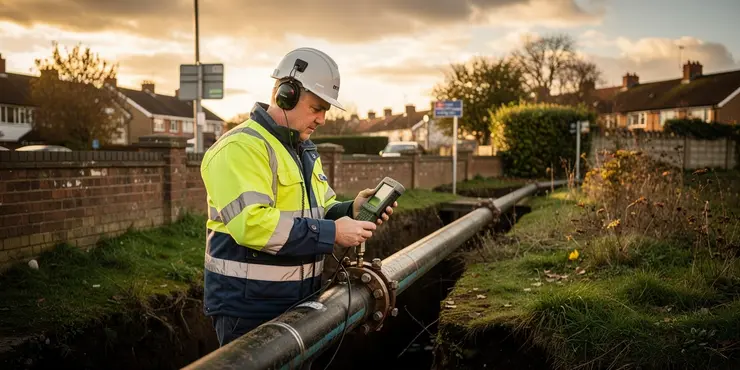
Water companies play a crucial role in conserving water and preventing wastage by detecting leaks in their networks promptly. Leak detection is essential not only for minimizing water loss but also for maintaining infrastructure and reducing costs in the long term. Various methodologies and technologies are employed to achieve accurate and efficient leak detection.
Advanced Monitoring Systems
Modern water companies in the UK rely heavily on advanced monitoring systems to keep track of their pipelines. These systems utilize sensors and pressure management tools to detect anomalies that may indicate leaks. By equipping key points in the water distribution network with these sensors, companies receive real-time data about changes in pressure and flow rates, enabling them to identify potential issues swiftly.
Acoustic Leak Detection
One of the most widely used techniques for leak detection is acoustic monitoring. Acoustic devices, often known as correlators, are deployed to listen for the sound of leaks. Water escaping from a pipe under pressure generates a distinct sound that these devices can detect. By placing sensors at various points on the pipeline, technicians can triangulate the position of the leak with considerable accuracy.
Ground Penetrating Radar
Ground Penetrating Radar (GPR) is another technological advance used in leak detection. GPR systems emit radar pulses into the ground and capture reflected signals to create a map of underground conditions. By analyzing these reflections, specialists can identify disruptions in the soil caused by leaking water, assisting in locating leaks without extensive excavation.
Smart Metering
Smart metering technology is increasingly being adopted by water companies to help detect leaks. These meters continuously measure water usage and can alert services to unusual patterns suggesting a leak. By providing detailed usage data throughout the day, smart meters help both providers and customers identify and address leaks more rapidly.
Drone Surveillance
Innovative solutions like drone surveillance are becoming more popular in leak detection efforts, particularly for large or difficult-to-access areas. Equipped with thermal imaging cameras, drones can fly over pipes and detect temperature changes caused by leaking water. This method is particularly effective in spotting leaks in rural or remote regions.
Conclusion
Detecting leaks in water systems is essential for conserving water, maintaining infrastructure, and reducing costs. In the UK, water companies employ a blend of traditional and cutting-edge technologies to uncover leaks swiftly and efficiently. As technology continues to advance, the methods of leak detection will undoubtedly evolve, leading to even more effective and sustainable water management.
Introduction
Water companies help save water by finding leaks quickly. This stops water from being wasted. Catching leaks early helps save money and keeps pipes in good condition. There are different ways and tools to find leaks.
Advanced Monitoring Systems
Water companies use smart tools to watch their pipes. These tools have sensors that check for problems that might mean a leak. Sensors give real-time information about water pressure and flow. This helps find problems fast.
Acoustic Leak Detection
Many companies use special listening tools to find leaks. These tools listen for the sound of water escaping from the pipe. Workers place these sensors on the pipe to find the exact spot of the leak.
Ground Penetrating Radar
Another tool used is Ground Penetrating Radar (GPR). GPR sends radar waves into the ground and makes a map of what it finds. This helps workers see where water might be leaking underground.
Smart Metering
Smart meters help find leaks by tracking water use. They can show strange patterns that might mean a leak. This helps both water companies and people find leaks quickly.
Drone Surveillance
Drones are flying tools that can find leaks from the sky. They have cameras that see heat changes from water leaks. This is useful for finding leaks in places that are hard to reach.
Conclusion
Finding leaks is important to save water and money. In the UK, water companies use different tools to catch leaks fast. As technology gets better, finding leaks will become even easier.
Frequently Asked Questions
Leak detection in water systems involves identifying and locating leaks in the water distribution network to prevent water loss and maintain system efficiency.
Leak detection is crucial to reduce water loss, conserve resources, minimize repair costs, and ensure the reliability of the water supply system.
Water companies use various technologies such as acoustic sensors, pressure loggers, correlators, and satellite imagery to detect leaks.
Acoustic sensors detect the sound of water escaping from pipes, allowing operators to pinpoint the location of a leak through the analysis of sound patterns.
A correlator is a device that uses sensors placed on both sides of a suspected leak. It compares the sound waves to determine the leak's exact location.
Satellite imagery can identify changes in soil moisture and temperature that may indicate water leaks, offering a broad overview that complements ground-based methods.
Pressure loggers measure fluctuations in water pressure, helping to identify unusual changes that may signal a leak in the system.
Yes, drones equipped with thermal cameras can fly over pipelines to detect temperature differences indicating water leaks.
Dye testing involves introducing a harmless dye into the water system. If a leak is present, the dye will appear at the site of the leakage.
Smart water meters provide real-time data on water usage, helping to quickly identify unusual spikes in usage that may indicate leaks.
Technicians conduct visual inspections of pipelines and surrounding areas to identify water pooling, damp spots, or other signs of leakage.
Infrared technology detects heat patterns around pipelines, identifying anomalies that could indicate a leak by showing temperature differences.
Companies prioritize leaks based on their size, location, potential water loss, and impact on the water supply to efficiently allocate resources.
Ground-penetrating radar sends electromagnetic waves into the ground to detect subsurface objects and anomalies that may indicate a leak.
An acoustic logger is a device that continuously listens for leak sounds in the water distribution system and transmits data for analysis.
Yes, AI can analyze data patterns from sensors and historical records to predict and identify potential leaks more accurately and efficiently.
Challenges include detecting small leaks, differentiating leak sounds from background noise, and accessing difficult-to-reach infrastructure.
Frequency depends on system size and previous leak history, but routine surveys are typically conducted annually or semi-annually.
After locating a leak, the repair process may involve replacing pipe sections, sealing joints, or using trenchless technology for minimally invasive repairs.
Future advancements may include enhanced AI algorithms, improved sensor technologies, and broader integration of IoT devices for more accurate and efficient leak detection.
Finding leaks in water pipes helps us stop water from being wasted. It also keeps the water system working well.
Finding leaks is very important. It helps save water, protect resources, spend less on fixing, and keep the water system working well.
Water companies have special tools to find leaks. They use listening devices, pressure checkers, machines that find noisy spots, and pictures from space.
These sensors listen for the sound of water leaking from pipes. This helps workers find out exactly where the leak is by studying the sounds.
If reading is hard, try using pictures to understand better.
You can also ask someone to read the text out loud and explain it to you.
A correlator is a special tool. It has sensors that are put on both sides of where a leak might be. It listens to sounds to find where the leak is exactly.
Pictures taken from space can help us see changes in the ground. They can show us if the ground is wetter or warmer in some places. This can help us find water leaks. These space pictures work well with the tools we use on the ground.
Pressure loggers are little gadgets. They watch how water moves. They look for water changes that don't seem right. This helps us find leaks.
Yes, drones with special cameras can fly over pipes to find water leaks. These cameras see heat and cold to spot leaks.
Dye testing is a way to check for leaks in water pipes. We put a safe color dye into the water. If there is a leak, the dye will show up where the water is coming out.
If reading is hard, you can use helpful tools like reading rulers or text-to-speech software. These can make reading easier.
Smart water meters show how much water you use right away. This helps you see if you are using too much water and see if there is a leak.
Technicians check pipelines. They look for water puddles, wet areas, or other signs of leaks.
Infrared light helps us find heat patterns near pipes. When it sees something different, it might mean there is a leak. This is because the temperature changes where there is a problem.
Companies look at leaks and decide what to fix first. They check how big the leak is, where it is, how much water might be lost, and how it affects the water supply. This helps them use their resources the best way possible.
Helpful Tip: Use tools like screen readers or text-to-speech apps to assist with reading. Highlighting keywords can also help understand the important parts.
Ground-penetrating radar is a tool. It sends waves into the ground. These waves find things under the ground, like pipes or leaks.
An acoustic logger is a tool that helps find leaks in water pipes. It listens for leaking sounds all the time and sends this information for checking.
Yes, AI can look at data from sensors and past records to find and predict leaks more easily and correctly.
Some problems are finding small leaks, telling leak noises apart from other sounds, and getting to places that are hard to reach.
To help with this, you can use tools like listening devices and sensors. Practice listening carefully and ask for help from experts if you need it.
How often you check for leaks depends on how big the system is and if there were leaks before. Usually, checks are done once or twice a year.
When you find a leak, fixing it might mean doing a few different things. You might change parts of the pipe, fix where the pipes join together, or use a special way to fix it without digging too much.
In the future, new technology might help us find leaks better. There will be smarter computer programs, better sensors, and more gadgets that talk to each other. This will make finding leaks easier and faster.

Ergsy Search Results
This website offers general information and is not a substitute for professional advice.
Always seek guidance from qualified professionals.
If you have any medical concerns or need urgent help, contact a healthcare professional or emergency services immediately.
Some of this content was generated with AI assistance. We've done our best to keep it accurate, helpful, and human-friendly.
- Ergsy carefully checks the information in the videos we provide here.
- Videos shown by Youtube after a video has completed, have NOT been reviewed by ERGSY.
- To view, click the arrow in centre of video.
- Most of the videos you find here will have subtitles and/or closed captions available.
- You may need to turn these on, and choose your preferred language.
- Go to the video you'd like to watch.
- If closed captions (CC) are available, settings will be visible on the bottom right of the video player.
- To turn on Captions, click settings.
- To turn off Captions, click settings again.