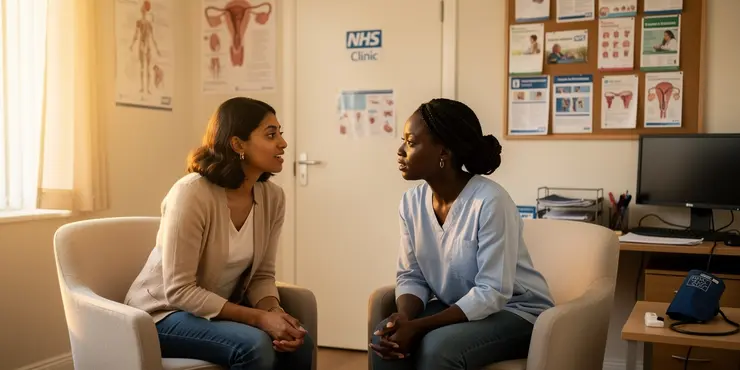

Speak To An Expert
Get clear, personalised advice for your situation.
Jot down a few questions to make the most of your conversation.
Understanding the link between insulin resistance and PCOS
Polycystic ovary syndrome (PCOS) is a common hormone condition that can affect periods, fertility, skin, and weight. Insulin resistance is often linked with PCOS, meaning the body does not respond to insulin as well as it should.
When insulin does not work properly, the body may make more of it. Higher insulin levels can encourage the ovaries to produce more androgens, which are sometimes called “male hormones”, and this can worsen PCOS symptoms.
How insulin resistance can affect symptoms
Insulin resistance may contribute to irregular periods, difficulty losing weight, acne, and increased facial or body hair. Some people also notice fatigue, sugar cravings, or feeling shaky between meals.
These symptoms do not prove PCOS on their own, but they can be part of the picture. For some people, insulin resistance is one of the reasons symptoms feel more noticeable or harder to manage.
What self diagnosis can and cannot tell you
It is possible to suspect PCOS from symptoms, especially if periods are irregular and there are signs of higher androgen levels. However, self diagnosis is not enough to confirm it, because other conditions can look similar.
In the UK, a GP can help check for PCOS and rule out other causes such as thyroid problems or high prolactin. They may ask about your cycle, weight changes, skin symptoms, and any family history.
Signs that may point towards insulin resistance
Some people with PCOS notice weight gain around the middle, intense cravings, or energy dips after meals. Darkened patches of skin, known as acanthosis nigricans, can also be a clue in some cases.
If these symptoms sound familiar, it may be worth mentioning them during a GP appointment. Keeping a simple diary of periods, symptoms, and any blood sugar-related issues can help make the discussion more useful.
Why getting checked matters
Knowing whether insulin resistance is involved can shape treatment options. Lifestyle changes, such as regular movement and balanced meals, may help improve symptoms for some people, and some may be offered medication.
PCOS can affect long-term health, including the risk of type 2 diabetes. If you think you may have PCOS, speak to your GP rather than relying on self diagnosis alone, so you can get the right tests and support.
Frequently Asked Questions
Common signs can include irregular periods, weight gain or difficulty losing weight, acne, excess facial or body hair, scalp hair thinning, darkened skin patches, frequent hunger, fatigue, and sugar cravings. These symptoms can overlap with other conditions, so self diagnosis should only be a starting point, not a final conclusion.
You can start by noting your menstrual pattern, changes in weight, skin and hair symptoms, energy levels, and blood sugar-related symptoms like cravings or energy crashes. Tracking symptoms over time helps you see patterns, but a clinician is needed to confirm the cause.
Irregular, infrequent, very long, or absent periods are common clues in PCOS. If these changes happen along with acne, excess hair growth, or weight changes, insulin resistance PCOS symptoms self diagnosis may be worth discussing with a medical professional.
Some people with PCOS notice weight gain around the abdomen, difficulty losing weight, or rapid regain after dieting. These patterns can be linked to insulin resistance, but they can also happen for many other reasons, so they are not proof on their own.
Acne, oily skin, skin tags, and dark velvety patches called acanthosis nigricans can all be relevant. These signs may suggest insulin resistance or hormone imbalance, especially if they occur with irregular cycles.
Yes, excess facial hair, chest hair, or thicker body hair can be a sign of higher androgen levels seen in PCOS. When this appears together with cycle changes or insulin resistance symptoms, it strengthens the case for medical evaluation.
Yes, thinning hair on the scalp, especially around the crown or part line, can happen in PCOS due to hormone changes. It is important to remember that hair loss can also be caused by stress, thyroid problems, low iron, and other conditions.
Frequent hunger, cravings for sweets or carbs, fatigue after meals, shakiness when hungry, and energy crashes may suggest blood sugar regulation problems. These symptoms can support suspicion of insulin resistance, but they do not diagnose it alone.
Symptom tracking is very useful because it can reveal patterns in periods, mood, skin changes, hair changes, appetite, and energy. A written record also helps a doctor decide whether testing for PCOS, insulin resistance, or another condition is needed.
A clinician may order blood tests for glucose, insulin, A1C, lipids, thyroid function, and reproductive hormones, and may also use ultrasound in some cases. Self diagnosis can point you toward testing, but only medical evaluation can confirm the condition.
Yes, thyroid disorders can cause fatigue, weight changes, menstrual irregularity, and hair loss, which can resemble PCOS. Because of this overlap, proper testing is important before assuming insulin resistance PCOS symptoms self diagnosis is correct.
Yes, stress, sleep problems, under-eating, over-exercising, and mood disorders can affect periods, appetite, skin, and weight. If symptoms persist or cluster together in a PCOS pattern, medical evaluation is still important.
Medical help is important if periods are very irregular or absent, if symptoms are worsening, if there is rapid weight change, or if you suspect high blood sugar. You should also seek care if you have signs of depression, severe acne, or unwanted hair growth that is affecting your quality of life.
It can suggest a possibility, but it cannot be fully accurate without medical testing. Blood tests and sometimes ultrasound are needed to separate PCOS from other causes and to check for insulin resistance or related conditions.
Strong cravings, especially for sugary or refined carbohydrates, can happen when blood sugar swings are frequent. They may be one clue among several, but cravings alone are not enough to diagnose PCOS or insulin resistance.
Fatigue can occur with insulin resistance, poor sleep, mood changes, or hormone imbalance. If fatigue happens along with irregular cycles, acne, weight changes, or excess hair growth, it may support the need for a PCOS evaluation.
Yes, teenagers can have acne, irregular periods, and weight changes from normal puberty, which makes self diagnosis harder. Persistent or severe symptoms should be reviewed by a clinician who understands adolescent PCOS.
People often discuss balanced meals, regular physical activity, adequate sleep, and stress reduction. These changes may help symptoms, but they do not replace a proper diagnosis or individualized medical care.
Because many other conditions can look similar, and the best treatment depends on the actual cause of symptoms. A correct diagnosis helps avoid missed problems and ensures the right monitoring for blood sugar, hormones, and long-term health.
Use it as a prompt to observe your symptoms, keep a record, and schedule a medical visit if the pattern fits PCOS or insulin resistance. It is safest to treat self diagnosis as a screening step, not a final medical answer.

Ergsy Search Results
This website offers general information and is not a substitute for professional advice.
Always seek guidance from qualified professionals.
If you have any medical concerns or need urgent help, contact a healthcare professional or emergency services immediately.
Some of this content was generated with AI assistance. We've done our best to keep it accurate, helpful, and human-friendly.
- Ergsy carefully checks the information in the videos we provide here.
- Videos shown by Youtube after a video has completed, have NOT been reviewed by ERGSY.
- To view, click the arrow in centre of video.
- Most of the videos you find here will have subtitles and/or closed captions available.
- You may need to turn these on, and choose your preferred language.
- Go to the video you'd like to watch.
- If closed captions (CC) are available, settings will be visible on the bottom right of the video player.
- To turn on Captions, click settings.
- To turn off Captions, click settings again.