
Get Answers
How often should solar panels be cleaned?
For many UK homes, solar panels do not need frequent cleaning. Rain often removes light dust and everyday dirt, so the panels can stay effective with little intervention. In most cases, a basic clean once every 12 to 24 months is enough.
The right schedule depends on where the panels are installed. Roof pitch, local weather, and surrounding trees can all affect how much grime builds up. Panels in exposed, rainy areas usually need less attention than those near traffic, farms, or heavy bird activity.
What affects cleaning frequency?
Panels in cities may collect more pollution and soot, while panels in rural areas can be affected by pollen, mud, and agricultural dust. Coastal homes may also see salt build-up over time. These factors can reduce output if they are allowed to accumulate.
The tilt of the panels matters too. Steeper panels tend to shed rainwater and dirt more easily than flatter systems. If your roof has a low pitch, a careful clean may be needed more often.
Signs your panels may need cleaning
A drop in energy output can be a good clue, especially if the weather has been consistent and there are no system faults. If you can see visible dirt, bird droppings, moss, or leaves from the ground, it may be time for a clean. Shading from dirt can affect performance across the whole array.
It is also worth checking after storms or high winds. Debris can collect around the edges of panels or in hard-to-see spots. Regular monitoring through your inverter or app can help you spot changes early.
Do all solar panels need regular cleaning?
Not always. Many systems continue to work well with little or no manual cleaning, particularly in the UK climate. In some cases, natural rainfall is enough to keep panels performing efficiently.
That said, solar panel maintenance should still include periodic checks. Even if cleaning is rare, it is sensible to inspect for damage, loose wiring, shading from overgrown branches, or build-up that rain cannot remove.
Should you clean them yourself?
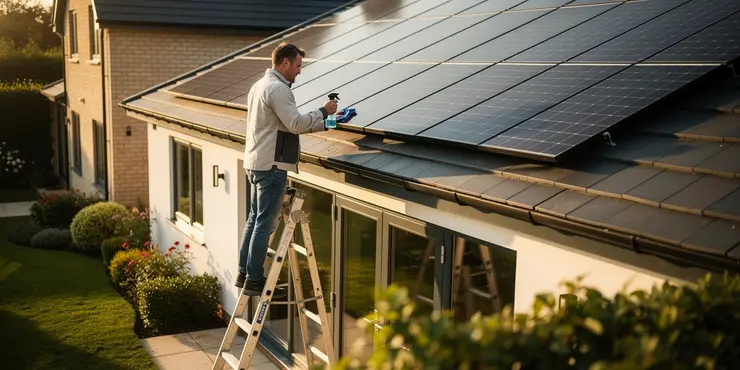
Some homeowners choose to clean panels themselves, but safety is the main concern. Working at height on a roof can be dangerous, and using the wrong tools can scratch the glass or damage seals. Soft water and non-abrasive equipment are usually recommended.
For many people, a professional solar panel cleaning service is the safer option. It is especially sensible for difficult roof access, large systems, or stubborn dirt. A specialist can also check for obvious maintenance issues while cleaning.
Frequently Asked Questions
Solar panel maintenance cleaning requirements frequency refers to how often solar panels should be inspected, maintained, and cleaned to keep them operating efficiently. The right frequency depends on location, weather, dust, pollen, bird activity, and system monitoring results.
For most residential systems, solar panel maintenance cleaning requirements frequency is often once or twice a year, with more frequent cleaning if the panels accumulate visible dirt, dust, leaves, or bird droppings. Homes in dry, dusty, or heavily polluted areas may need more frequent service.
In dusty climates, solar panel maintenance cleaning requirements frequency usually increases because dust can quickly reduce light absorption and energy output. Panels may need cleaning every few months, or even more often during dry seasons or after dust storms.
Factors affecting solar panel maintenance cleaning requirements frequency include local weather, nearby trees, pollen levels, bird activity, roof angle, air pollution, and how quickly debris builds up. System performance monitoring can also show when cleaning is needed.
Rain can help rinse off light dust, but it does not eliminate solar panel maintenance cleaning requirements frequency entirely. Sticky grime, pollen, bird droppings, sap, and mineral deposits may still require manual cleaning.
Signs that solar panel maintenance cleaning requirements frequency should increase include a noticeable drop in energy production, visible dirt buildup, uneven panel appearance, or shading from debris. Monitoring system output is one of the best ways to spot the need for cleaning sooner.
Yes, solar panel maintenance cleaning requirements frequency often differs for commercial solar arrays because larger systems may have stricter performance targets and more exposed surface area. Commercial sites in industrial or dusty environments may need scheduled cleaning several times a year.
For panels near trees, solar panel maintenance cleaning requirements frequency is often higher because leaves, sap, pollen, and bird droppings can accumulate more quickly. Seasonal cleaning may be needed during heavy pollen or leaf-drop periods.
Higher solar panel maintenance cleaning requirements frequency can help maintain better energy production by preventing dirt from blocking sunlight. When panels are cleaned regularly, they are more likely to operate closer to their expected output.
The safest way to manage solar panel maintenance cleaning requirements frequency is to follow manufacturer guidance, shut down the system if required, and use non-abrasive tools and clean water. If roof access is risky, a professional solar cleaning service is often the best choice.
Yes, solar panel maintenance cleaning requirements frequency should usually include both inspection and cleaning. Inspections can identify cracked glass, loose wiring, shading issues, mounting problems, and buildup before they affect performance.
Seasonal changes can strongly impact solar panel maintenance cleaning requirements frequency. Spring may bring pollen, summer may bring dust and bird activity, autumn may add leaves, and winter may require checks for snow, ice, or grime buildup.
Yes, solar panel maintenance cleaning requirements frequency can be too high if panels are cleaned unnecessarily or with harsh methods. Overcleaning may increase wear on protective coatings or create safety risks without improving performance much.
Tools used when following solar panel maintenance cleaning requirements frequency commonly include soft brushes, squeegees, clean water, mild soap if approved, and non-abrasive cloths. Pressure washers and harsh chemicals are generally avoided unless specifically recommended by the manufacturer.
Rooftop tilt affects solar panel maintenance cleaning requirements frequency because steeper panels may shed dust and rain more easily than flat or low-angle panels. Flat or low-tilt panels usually need more frequent inspection and cleaning.
In urban areas, solar panel maintenance cleaning requirements frequency is often moderate, but pollution, soot, and construction dust can increase the need for cleaning. Many systems benefit from scheduled checks every few months and cleaning as needed.
Monitoring systems help with solar panel maintenance cleaning requirements frequency by showing drops in output that may indicate dirty panels. This allows cleaning to be based on actual performance instead of only on a fixed schedule.
Yes, solar panel maintenance cleaning requirements frequency can depend on panel type, surface coating, and installation angle. While most panels need similar care, some surfaces may resist dirt better or require more careful cleaning methods.
If solar panel maintenance cleaning requirements frequency is ignored, dirt and debris can reduce efficiency, create hot spots, and shorten the useful life of the system. Neglected maintenance can also make it harder to detect damage early.
A qualified solar installer, maintenance provider, or the equipment manufacturer should help determine solar panel maintenance cleaning requirements frequency for a specific system. They can consider local conditions, panel type, safety needs, and performance goals.

Ergsy Search Results
This website offers general information and is not a substitute for professional advice.
Always seek guidance from qualified professionals.
If you have any medical concerns or need urgent help, contact a healthcare professional or emergency services immediately.
Some of this content was generated with AI assistance. We've done our best to keep it accurate, helpful, and human-friendly.
- Ergsy carefully checks the information in the videos we provide here.
- Videos shown by Youtube after a video has completed, have NOT been reviewed by ERGSY.
- To view, click the arrow in centre of video.
- Most of the videos you find here will have subtitles and/or closed captions available.
- You may need to turn these on, and choose your preferred language.
- Go to the video you'd like to watch.
- If closed captions (CC) are available, settings will be visible on the bottom right of the video player.
- To turn on Captions, click settings.
- To turn off Captions, click settings again.