
Speak To An Expert
Get clear, personalised advice for your situation.
Jot down a few questions to make the most of your conversation.
Impact of Rising Energy Costs on Family Budgets
Economic Strain on Households
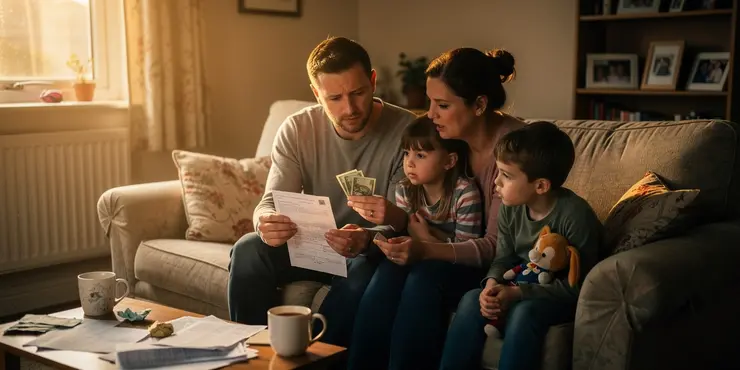
As energy costs continue to soar in the United Kingdom, many families are feeling the pinch. With household budgets already stretched thin by inflation and other rising costs, increased energy bills add a significant burden. This financial strain is particularly challenging for lower-income households, who spend a higher proportion of their income on utilities. Struggling to keep up with the rising expenses, many families face tough decisions, such as cutting back on other essential areas like food, education, and healthcare.
Increase in Energy Poverty
The phenomenon of energy poverty, which refers to households spending more than 10% of their income on energy bills, is becoming increasingly prevalent in the UK. Families grappling with energy poverty are often forced to choose between heating their homes and other critical needs. This situation can lead to long-term adverse effects on family health and wellbeing, particularly during the harsh winter months when heating is not just a luxury but a necessity.
Impact on Mental Health
Rising energy costs can also take a toll on the mental health of family members. Constant anxiety about how to afford the next utility bill creates significant stress, leading to conditions such as anxiety and depression. The psychological impact is felt not just by adults but also by children, who may experience stress and worry about their family's financial stability. Over time, this heightened stress can affect overall family dynamics and quality of life.
Government and Community Support
To mitigate the impact of rising energy costs, various government and community support schemes are being implemented. Initiatives like the Warm Home Discount and Winter Fuel Payment aim to provide financial assistance to those most in need. Community groups and non-profits also offer support through energy-saving advice, access to grants, and other resources to help families reduce their energy usage and costs. However, while these measures provide some relief, the broader problem of rising energy prices needs holistic and longer-term solutions.
Encouraging Energy Efficiency
Another critical response to rising energy costs is encouraging families to adopt energy-efficient practices. Simple measures such as using energy-efficient appliances, improving home insulation, and adopting smart heating systems can significantly reduce energy consumption. Educational campaigns and subsidies for energy-saving home improvements can support families in making these changes, ultimately aiding in the reduction of overall energy expenditures.
Impact of Rising Energy Costs on Family Budgets
Economic Strain on Households
In the UK, energy prices are going up. This makes it hard for families to pay their bills. Many families already have to spend more on other things like food. Now, more money is needed for bills. Families with less money suffer the most because they spend a lot on energy. They might have to choose between paying for heat or buying food, school stuff, and medicine.
Increase in Energy Poverty
Energy poverty means spending more than 10% of your money on energy bills. More families in the UK are dealing with this. They have to pick between heating their homes or buying other important things. This is hard in the winter when it is cold, and homes need heating. Cold homes can make families sick over time.
Impact on Mental Health
High energy bills can make people worried and sad. Families start to feel stressed about how they will pay for heat and electricity. This stress doesn’t just affect parents; kids can feel worried too. This can change how happy the family is and how they get along with each other.
Government and Community Support
The government and local groups are helping by giving money to families who need it. There are programs like the Warm Home Discount and Winter Fuel Payment. These help families pay their bills. Community groups also give advice on saving energy to lower bills. These are helpful, but energy costs need bigger solutions to really help everyone.
Encouraging Energy Efficiency
Families can also save money by using less energy. They can use special machines that do not waste energy and keep homes warm without using much heat. Learning about saving energy and getting support for home improvements can help cut down on energy costs. Simple changes at home can make a big difference in what families pay for energy.
Frequently Asked Questions
Rising energy costs increase household expenses, reducing the available budget for other essentials like food, transportation, and savings.
In the UK, natural gas and electricity have seen significant price increases, largely due to global supply issues and increased demand.
Yes, higher energy costs can reduce consumer spending, impact industrial production, and lead to higher inflation, affecting the overall economy.
The UK government offers schemes like the Warm Home Discount, Winter Fuel Payment, and Cold Weather Payment to assist families with energy costs.
Families can reduce energy consumption by improving home insulation, using energy-efficient appliances, and adopting habits like turning off lights and reducing heating use.
Factors include global supply chain disruptions, increased demand post-pandemic, geopolitical tensions, and shifts to greener energy sources.
Low-income families are disproportionately affected as a higher percentage of their budget is spent on essentials, leaving them with fewer resources to absorb rising costs.
Energy efficiency improvements, such as better insulation and modern heating systems, can lower energy usage and reduce bills, mitigating the impact of rising costs.
Higher energy consumption can lead to increased greenhouse gas emissions, contributing to climate change and environmental degradation.
The UK government offers incentives like the Feed-in Tariff for solar power and the Renewable Heat Incentive to encourage the use of renewable energy sources.
Switching energy suppliers can help households find better rates or tariffs, especially if they move to suppliers offering competitive prices or green energy options.
Energy suppliers pass on increased wholesale costs to consumers, meaning that global market conditions directly affect household energy prices.
Energy price caps limit the amount suppliers can charge for each unit of gas and electricity, protecting consumers from excessively high prices.
Smart meters help households monitor their energy usage in real-time, encouraging more efficient usage and potentially leading to lower bills.
Long-term strategies include investing in renewable energy sources, improving home energy efficiency, and advocating for policies that stabilize energy markets.
When energy prices go up, it costs more money to run your home. You have less money to spend on other important things like food, getting around, and saving money.
If reading is hard, you can try using text-to-speech tools that read aloud. It might also help to break the text into smaller parts and read one part at a time.
In the UK, the prices for gas and electricity have gone up a lot. This happened because there is less gas and electricity available in the world, but more people want to use it.
Yes, when energy costs go up, people spend less money on other things. This can slow down how much factories make and can make prices go up. This can make the economy weaker.
The UK government helps families pay for energy. They have programs like the Warm Home Discount, Winter Fuel Payment, and Cold Weather Payment.
Families can use less energy by making their homes warmer, buying things that use less energy, and doing simple things like turning off lights and using less heating.
There are a few reasons for the changes:
- Factories around the world are having problems. They can't get all the parts they need.
- More people want to buy things now because things are opening up after the pandemic.
- Countries are having arguments and this can make things harder to buy.
- We are using more green energy like wind and solar power.
If you find reading tricky, try using tools that read the words out loud. Taking breaks can help too. Ask someone you trust if you need help understanding the words.
Families with little money have a tough time. They spend most of their money on important things like food and bills. This means they have less money when prices go up.
Using less energy can save money. Adding insulation and using new heating systems can help. This means your bills might not be so high even if prices go up. Try using energy-saving light bulbs or turning off lights when you leave a room to help even more!
Using a lot of energy can make more gases that trap heat. This can make the Earth warmer and hurt the environment.
The UK government wants people to use clean energy. They have things called the Feed-in Tariff for using solar power and the Renewable Heat Incentive for other kinds of green energy. These help people use less dirty energy.
Changing your energy company can help you pay less money. You might find a company with lower prices or one that uses energy from things like the sun or wind.
Energy companies get the power we use. If their costs go up, they charge us more. This means prices can change if things are more expensive around the world.
Energy price caps stop companies from making gas and electricity too expensive. They help keep prices fair for everyone.
Smart meters help people see how much energy they use right now. This can help them use less energy and save money on bills.
Here are some things to do for the future:
1. Use clean energy like wind and sun.
2. Make your home better at saving energy.
3. Speak up for rules that keep energy prices fair.
Use picture charts and simple apps to help understand these ideas better.

Ergsy Search Results
This website offers general information and is not a substitute for professional advice.
Always seek guidance from qualified professionals.
If you have any medical concerns or need urgent help, contact a healthcare professional or emergency services immediately.
Some of this content was generated with AI assistance. We've done our best to keep it accurate, helpful, and human-friendly.
- Ergsy carefully checks the information in the videos we provide here.
- Videos shown by Youtube after a video has completed, have NOT been reviewed by ERGSY.
- To view, click the arrow in centre of video.
- Most of the videos you find here will have subtitles and/or closed captions available.
- You may need to turn these on, and choose your preferred language.
- Go to the video you'd like to watch.
- If closed captions (CC) are available, settings will be visible on the bottom right of the video player.
- To turn on Captions, click settings.
- To turn off Captions, click settings again.