
Speak To An Expert
Get clear, personalised advice for your situation.
Jot down a few questions to make the most of your conversation.
Choosing Ingredients
When making a cake, the choice of ingredients is crucial. Start by selecting high-quality flour, sugar, and butter.
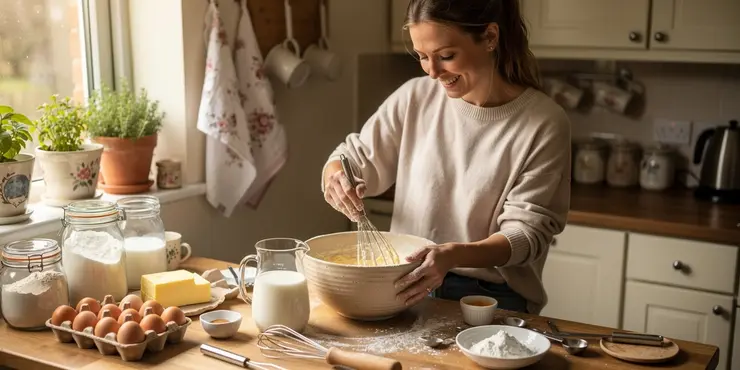
For a basic sponge cake, you'll need eggs, self-raising flour, caster sugar, and unsalted butter. Ensure all ingredients are at room temperature for best results.
Consider adding vanilla extract or other flavourings for an interesting twist. Your choice of ingredients will greatly impact the flavour and texture of your cake.
Preparing Your Baking Tools
A good cake needs the right tools. Gather a mixing bowl, wooden spoon, and electric whisk.
Choose a suitable cake tin based on the size and shape of the cake. Grease and line the tin to prevent sticking.
Having your tools ready beforehand saves time and makes the baking process smoother. Ensure everything is clean and dry.
Mixing the Batter
Begin by creaming the butter and sugar together until light and fluffy. This step is vital for a well-risen cake.
Gradually add the eggs, mixing well after each addition. This helps incorporate air for a light texture.
Fold in the flour gently to keep the mixture airy. A metal spoon works well to avoid knocking out the air.
Baking the Cake
Preheat your oven to the suitable temperature before placing the cake inside. An even temperature ensures consistent baking.
Once the oven is preheated, pour the batter into the prepared tin. Smooth the top with a spatula.
Bake the cake until golden brown and a skewer inserted into the centre comes out clean. Avoid opening the oven door frequently during baking.
Cooling and Decorating
Once baked, remove the cake from the oven and allow it to cool in the tin for a few minutes. This sets the structure.
Transfer the cake to a wire rack to cool completely. This prevents sogginess and retains the cake's texture.
Decorate with icing, fresh fruit, or sprinkles once the cake is cool. Let your creativity shine for a beautiful finish.
Serving Suggestions
Cut the cake into slices and serve with tea or coffee for a traditional British treat. A well-baked cake is perfect for any occasion.
Pair it with custard or whipped cream for added indulgence. Enjoy experimenting with different flavours and decorations.
Whether for a special event or a cosy afternoon, cake brings joy and warmth to any gathering.
Choosing Ingredients
When you make a cake, picking the right ingredients is very important. Start by choosing good flour, sugar, and butter.
For a simple cake, you will need eggs, self-raising flour, caster sugar, and unsalted butter. Make sure all your ingredients are at room temperature for the best cake.
You can add vanilla or other flavours to make the cake taste special. The ingredients you choose will change how your cake tastes and feels.
Preparing Your Baking Tools
To make a good cake, you need the right tools. Get a mixing bowl, a wooden spoon, and an electric mixer.
Pick the right cake tin based on how big you want your cake to be. Put some grease in the tin to stop the cake from sticking.
Having all your tools ready will save time and make baking your cake easier. Make sure everything is clean and dry.
Mixing the Batter
Start by mixing the butter and sugar together until it looks light and fluffy. This helps the cake to rise well.
Add the eggs one at a time. Mix well each time you add an egg. This puts air in the mixture and helps the cake be light.
Gently add the flour to keep the mixture airy. Use a metal spoon to mix it so you don't lose the air.
Baking the Cake
Turn on your oven to the right temperature before you put the cake in. A steady heat helps the cake bake evenly.
When the oven is hot, pour the cake batter into the tin. Make the top smooth with a spatula.
Bake the cake until it is golden brown. A skewer poked in the middle should come out clean. Don't open the oven door too much while baking.
Cooling and Decorating
When the cake is done, take it out of the oven. Let it cool in the tin for a few minutes to set.
Move the cake to a wire rack to cool completely. This keeps the cake from getting soggy.
Decorate the cake with icing, fresh fruit, or sprinkles when it is cool. Use your imagination to make it look nice.
Serving Suggestions
Cut the cake into slices and serve with tea or coffee. It's a lovely treat for everyone.
You can also have it with custard or whipped cream. Try different flavours and decorations for fun.
Cake is great for special times or a relaxing afternoon. It brings happiness to any gathering.
Frequently Asked Questions
You will need flour, sugar, eggs, butter, milk, baking powder, and vanilla extract to make a basic cake.
Preheat your oven to 350°F (175°C) before starting to mix your cake ingredients.
To ensure a moist cake, use the correct proportions of wet to dry ingredients and avoid overbaking the cake.
You can use applesauce, mashed bananas, yogurt, or commercially available egg replacers as a substitute for eggs.
Yes, you can substitute margarine for butter in cake recipes, although it might affect the flavor slightly.
Most cakes should be baked for about 25-35 minutes, but always refer to your specific recipe for exact baking time.
Your cake is done when a toothpick inserted into the center comes out clean or with a few moist crumbs.
Cake flour is best for a tender and soft cake, but all-purpose flour can also be used for good results.
Use a spoon to fluff the flour, spoon it into your measuring cup, and level it off with a knife for accurate measurement.
Overbeating the batter, opening the oven door too early, or an incorrect oven temperature can cause a cake to sink.
Store the cake in an airtight container at room temperature for a few days or in the fridge for longer shelf life.
Yes, oil can be used instead of butter. It often results in a moister cake but will change the texture slightly.
Baking powder acts as a leavening agent to help the cake rise and become fluffy.
Yes, you can use baking soda with an acidic ingredient like vinegar or lemon juice as an alternative.
Use plant-based substitutes like flax eggs, almond milk, and coconut oil instead of animal products.
Overbaking, too much flour, or not enough fat can cause a cake to become dry.
Yes, you can use a microwave, pressure cooker, or stovetop methods to bake a cake without an oven.
A cake should cool completely, which can take 1-2 hours, before frosting to prevent the frosting from melting.
If the batter is too thick, gradually add a tablespoon of milk or water until you reach the desired consistency.
Yes, you can freeze a fully cooled cake by wrapping it tightly in plastic wrap and aluminum foil, then storing it in the freezer.
To make a simple cake, you need these: flour, sugar, eggs, butter, milk, baking powder, and vanilla.
Turn on your oven and set it to 350°F (175°C) before you start mixing your cake ingredients.
To keep your cake nice and moist, use the right amount of wet and dry stuff. Make sure you don't bake it for too long.
You can use applesauce, mashed bananas, yogurt, or special egg replacers from the store instead of eggs.
Yes, you can use margarine instead of butter when making a cake. It might taste a little bit different.
Most cakes need to be baked for 25 to 35 minutes. It is best to look at your recipe to know the exact time.
Your cake is ready when you poke the middle with a toothpick and it comes out clean or with a few tiny crumbs.
Cake flour makes cakes soft and tender. You can also use all-purpose flour to make tasty cakes.
Use a spoon to mix the flour. Then, use the spoon to fill your cup. Make the top flat with a knife so you have the right amount.
There are a few reasons why a cake can sink.
Mixing the batter too much can make it sink.
Opening the oven door too soon can make it sink.
If the oven is too hot or too cold, the cake can sink.
To help with reading, try using a ruler or a finger to follow along with the words.
Keep the cake in a box or container that closes tightly. You can leave it on the counter for a few days. If you want the cake to last longer, put it in the fridge.
Yes, you can use oil instead of butter. It makes the cake stay wet, but the cake might feel a bit different when you eat it.
Baking powder helps cakes rise and become light and fluffy.
Yes, you can use baking soda with something sour like vinegar or lemon juice instead.
Try using plant-based options like flax eggs, almond milk, and coconut oil instead of animal products.
If you bake a cake for too long, add too much flour, or not enough butter or oil, the cake can end up dry.
To help, you can use these tips:
- Follow the recipe closely.
- Check the cake often while it bakes.
- Use a timer to avoid overbaking.
- Measure flour carefully.
- Add enough butter or oil to keep it moist.
Yes, you can bake a cake without an oven. You can use a microwave, a pressure cooker, or cook it on the stove.
Wait for the cake to cool down all the way. This takes about 1 to 2 hours. If the cake is still warm, the frosting will melt.
If the mix is too thick, slowly add a spoonful of milk or water. Keep adding until it is just right.
Yes, you can freeze a cake after it has cooled down. First, wrap the cake tightly in plastic wrap. Then, wrap it again with aluminum foil. After that, put it in the freezer.

Ergsy Search Results
This website offers general information and is not a substitute for professional advice.
Always seek guidance from qualified professionals.
If you have any medical concerns or need urgent help, contact a healthcare professional or emergency services immediately.
Some of this content was generated with AI assistance. We've done our best to keep it accurate, helpful, and human-friendly.
- Ergsy carefully checks the information in the videos we provide here.
- Videos shown by Youtube after a video has completed, have NOT been reviewed by ERGSY.
- To view, click the arrow in centre of video.
- Most of the videos you find here will have subtitles and/or closed captions available.
- You may need to turn these on, and choose your preferred language.
- Go to the video you'd like to watch.
- If closed captions (CC) are available, settings will be visible on the bottom right of the video player.
- To turn on Captions, click settings.
- To turn off Captions, click settings again.