
Speak To An Expert
Get clear, personalised advice for your situation.
Jot down a few questions to make the most of your conversation.
What is an NHS colic massage demonstration?
An NHS colic massage demonstration is a guided session that shows parents and carers how to use gentle tummy massage techniques for a baby who seems unsettled or gassy. It is usually offered as part of wider infant feeding, midwifery, or health visiting advice.
The aim is to help soothe babies and support families with a practical calming method they can try at home. It is not a cure for colic, but it may help some babies feel more comfortable.
Why it may be helpful
Colic can be distressing for both babies and parents, especially when crying seems to happen for no clear reason. A massage demonstration gives carers a chance to learn safe techniques that may ease wind and promote relaxation.
The session can also reassure parents that they are not alone and that unsettled crying is common in young babies. NHS staff can explain what is normal, what to watch for, and when to seek further advice.
What happens during the demonstration?
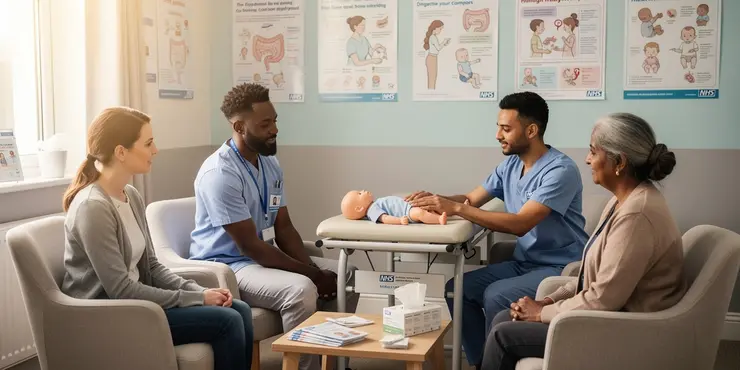
During the demonstration, a midwife, health visitor, or trained practitioner will usually show simple strokes on a doll or model, and sometimes on the baby if appropriate. They will explain how to use light pressure and slow movements on the tummy.
Parents are often guided through a few basic techniques, such as clockwise circles, “I Love You” strokes, or gentle knee flexing to help relieve trapped wind. The practitioner may also discuss the best time to try massage, usually when the baby is calm and settled.
Safety and when to avoid massage
Massage should always be gentle and never forced. If a baby is upset, hungry, very sleepy, unwell, or has a swollen tummy, massage may not be suitable at that time.
NHS staff may advise avoiding massage if there are concerns about infection, vomiting, fever, or any unexplained symptoms. Parents should seek medical advice promptly if the baby seems very unwell or is not feeding properly.
What else may help with colic?
A massage demonstration is often just one part of a broader approach. NHS staff may also suggest winding the baby well after feeds, checking feeding position, and keeping a diary of crying patterns to spot triggers.
Some families find that rocking, white noise, skin-to-skin contact, or a calm environment also helps. If colic persists or parents are worried, they should speak to their GP, health visitor, or midwife for further support.
Frequently Asked Questions
NHS colic massage demonstration is a guided teaching session that shows caregivers gentle massage techniques intended to help soothe a baby with colic-like discomfort, alongside advice on positioning, calming strategies, and when to seek further medical support.
NHS colic massage demonstration is usually suitable for parents, carers, and other primary caregivers of babies who are experiencing wind, fussiness, or colic symptoms, although availability and eligibility can vary by local NHS service.
NHS colic massage demonstration is typically booked through a health visitor, GP surgery, children’s centre, or local NHS parent support service, depending on what is offered in your area.
NHS colic massage demonstration usually includes a practitioner explaining the purpose of infant massage, demonstrating safe hand movements on a doll or baby model, and allowing caregivers to practice with guidance.
NHS colic massage demonstration can be safe when performed gently and appropriately, but newborns should be handled carefully and any concerns about feeding, weight gain, pain, or illness should be discussed with a clinician first.
NHS colic massage demonstration may help some babies relax, pass wind, and settle more easily, but it is not guaranteed to reduce crying because crying can have many causes beyond colic.
NHS colic massage demonstration often teaches gentle tummy strokes, leg movements that support wind relief, calming touch, and how to notice signs that the baby is comfortable or needs a break.
NHS colic massage demonstration usually requires little or nothing beyond a comfortable outfit for the baby, nappies, feeds, and any items your local service asks you to bring, such as a towel or blanket.
NHS colic massage demonstration sessions often last between 20 and 60 minutes, though the exact length depends on the setting, the group size, and whether there is time for questions.
NHS colic massage demonstration is designed to teach techniques that caregivers may continue at home, provided they follow the guidance given and stop if the baby seems uncomfortable or distressed.
NHS colic massage demonstration techniques should not be used if the baby has a fever, vomiting, a swollen or hard abdomen, severe distress, a rash, or any symptoms that suggest urgent medical review is needed.
NHS colic massage demonstration does not replace medical advice; it is a supportive educational tool and caregivers should contact a health professional if symptoms are severe, persistent, or unusual.
NHS colic massage demonstration may be suitable for some premature babies, but caregivers should check with a health visitor, neonatal team, or GP to make sure the baby is ready for massage techniques.
NHS colic massage demonstration may be available online in some areas through recorded videos, live classes, or virtual appointments, depending on local NHS resources and service delivery.
NHS colic massage demonstration may be helping if the baby appears calmer, passes wind more easily, settles after the massage, or shows less tension, although responses can vary from one baby to another.
NHS colic massage demonstration techniques are usually used gently and briefly as advised by the practitioner, often when the baby is calm and receptive, rather than when the baby is extremely upset.
NHS colic massage demonstration can often be used alongside feeding support, burping, soothing routines, and advice from a clinician, but any medicine or supplement should be discussed with a health professional first.
NHS colic massage demonstration is generally delivered by trained NHS staff such as health visitors, midwives, infant feeding advisors, or other practitioners with relevant baby care and parent support training.
If your baby seems more distressed after NHS colic massage demonstration, stop the massage, comfort the baby, and seek medical advice if symptoms continue or if there are any warning signs such as fever, vomiting, or breathing problems.
NHS colic massage demonstration availability depends on local services, so you can check with your health visitor, GP practice, maternity team, children’s centre, or local NHS website for current options.

Ergsy Search Results
This website offers general information and is not a substitute for professional advice.
Always seek guidance from qualified professionals.
If you have any medical concerns or need urgent help, contact a healthcare professional or emergency services immediately.
Some of this content was generated with AI assistance. We've done our best to keep it accurate, helpful, and human-friendly.
- Ergsy carefully checks the information in the videos we provide here.
- Videos shown by Youtube after a video has completed, have NOT been reviewed by ERGSY.
- To view, click the arrow in centre of video.
- Most of the videos you find here will have subtitles and/or closed captions available.
- You may need to turn these on, and choose your preferred language.
- Go to the video you'd like to watch.
- If closed captions (CC) are available, settings will be visible on the bottom right of the video player.
- To turn on Captions, click settings.
- To turn off Captions, click settings again.