
Speak To An Expert
Get clear, personalised advice for your situation.
Jot down a few questions to make the most of your conversation.
What is a colic massage demonstration?
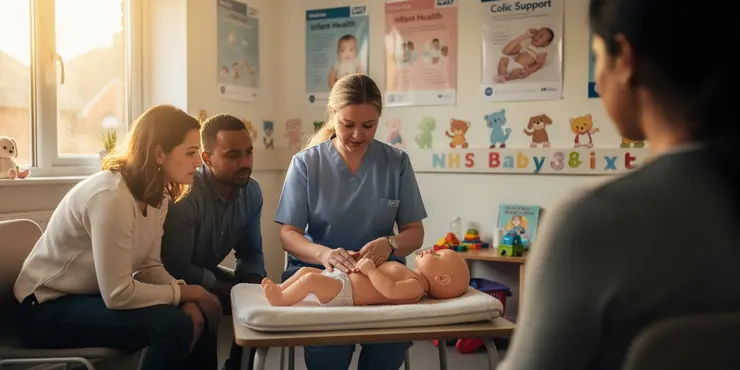
An NHS colic massage demonstration is a simple teaching session that shows parents and carers how to massage a baby’s tummy safely. The aim is to help soothe discomfort that may be linked to trapped wind, mild digestive upset, or general fussiness.
These demonstrations are usually given by trained health professionals, such as health visitors, midwives, or infant feeding teams. They are designed to be calm, practical, and easy to follow at home.
Why it may help
Colic can be upsetting for both babies and families. A gentle massage may help a baby relax, bring comfort, and encourage movement in the tummy and bowels.
It is important to understand that massage does not “cure” colic. However, many parents find it useful as part of a wider comfort routine, alongside burping, carrying, soothing sounds, and feeding support.
What happens in the demonstration
During the demonstration, the practitioner will usually explain when massage is appropriate and when it should be avoided. They may first check whether the baby is settled, alert, and happy to be handled.
The demonstration often includes slow, gentle strokes on the tummy, legs, and feet. Parents are shown how much pressure to use, where to place their hands, and how to watch for signs that the baby wants to stop.
Safety and when not to massage
Colic massage should always be gentle and never forceful. If a baby seems distressed, has a fever, is vomiting, has a swollen tummy, or seems unwell, massage should not be used as a substitute for medical advice.
If you are unsure whether your baby’s symptoms are normal, speak to your health visitor, GP, or NHS 111. This is especially important if crying is very intense, changes suddenly, or is accompanied by other worrying signs.
How parents can use the advice at home
After the demonstration, parents are often encouraged to practise the techniques during a quiet time of day. It can help to keep the room warm, wash your hands, and use a little baby-safe oil if advised.
Some families find it useful to build massage into a regular routine, such as after a bath or before sleep. The key is to stay gentle, responsive, and guided by the baby’s cues.
Getting support through the NHS
If you think your baby may benefit from a colic massage demonstration, ask your health visitor or GP surgery about local NHS support. Some areas also offer infant feeding clinics, parent groups, or family support services.
Getting reassurance and practical advice can make a big difference in the early weeks. Even small changes can help parents feel more confident while they work out what soothes their baby best.
Frequently Asked Questions
NHS colic massage demonstration is a guided teaching session that shows parents or carers gentle tummy massage techniques that may help soothe a baby with colic. It is usually focused on comfort measures, safe positioning, and when to seek further advice.
NHS colic massage demonstration is typically aimed at parents, carers, and guardians of babies who are experiencing colic or wind-related discomfort. Availability may vary by local NHS service, health visiting team, or community clinic.
You can usually access NHS colic massage demonstration through your health visitor, GP, midwife, children’s centre, or local NHS community service. In some areas it may be offered as part of postnatal support or infant feeding support.
During NHS colic massage demonstration, a clinician or trained practitioner explains the technique, shows hand placement and pressure, and discusses how to read the baby’s cues. The session may also include safety advice and other ways to comfort a colicky baby.
NHS colic massage demonstration is generally focused on very gentle techniques, but any massage for a newborn should be approached carefully and only when the baby is settled and comfortable. If your baby is premature, unwell, or has a medical condition, ask a health professional first.
NHS colic massage demonstration may help some babies feel more relaxed and may reduce crying for some families, but it does not work for every baby. Colic often improves over time, and massage is usually one of several comfort strategies.
An NHS colic massage demonstration often lasts between 15 and 30 minutes, though this can vary by service. Some sessions are one-to-one, while others are included in broader parent support groups.
A referral is not always needed for NHS colic massage demonstration, but local access rules differ. In many areas you can self-refer through a health visitor, community clinic, or family support service.
For NHS colic massage demonstration, it is helpful to bring your baby’s usual changing items, a blanket or muslin, and any questions you want to ask. If asked by the service, also bring information about your baby’s feeding, sleeping, or symptoms.
Yes, the purpose of NHS colic massage demonstration is usually to help you learn a technique you can safely try at home. You should only use the steps shown and stop if your baby becomes distressed or if a health professional advises otherwise.
NHS colic massage demonstration may not be suitable if your baby has a fever, persistent vomiting, a swollen abdomen, blood in the stool, breathing problems, or seems unwell. In those cases, seek medical advice promptly before trying massage.
NHS colic massage demonstration can often be used alongside other comfort measures such as winding, feeding support, soothing routines, and advice from a health visitor. If your baby is on any treatment or has ongoing symptoms, check with a clinician.
NHS colic massage demonstration is based on gentle soothing techniques that may help some families, but evidence for colic relief is mixed. The main benefit may be supporting parents with practical, non-drug comfort strategies.
Yes, NHS colic massage demonstration often welcomes partners, grandparents, or other carers who are involved in looking after the baby. This can help everyone learn the same technique and support the baby consistently.
If your baby seems more upset after trying techniques from NHS colic massage demonstration, stop the massage and comfort your baby in another way. If crying is severe, persistent, or associated with other symptoms, contact a health professional.
NHS colic massage demonstration usually does not require special equipment. A warm, calm space and clean hands are usually enough, along with a blanket or towel to keep the baby comfortable.
How often you use the technique from NHS colic massage demonstration depends on your baby’s response and the advice you were given. It is generally best to use gentle short sessions when your baby is calm and receptive.
NHS colic massage demonstration may be used to help soothe babies with trapped wind or tummy discomfort, as well as some babies described as having colic. It is not a cure, but it may be part of a wider comfort routine.
You can usually find NHS colic massage demonstration support through your local health visiting team, GP practice, children’s centre, maternity service, or community nursing service. Your local NHS website may also list infant support services.
You should seek medical advice if your baby has red-flag symptoms such as fever, poor feeding, lethargy, breathing difficulties, vomiting that is forceful or green, a rash, or blood in the stool. NHS colic massage demonstration is for comfort and should not replace medical assessment when symptoms are concerning.

Ergsy Search Results
This website offers general information and is not a substitute for professional advice.
Always seek guidance from qualified professionals.
If you have any medical concerns or need urgent help, contact a healthcare professional or emergency services immediately.
Some of this content was generated with AI assistance. We've done our best to keep it accurate, helpful, and human-friendly.
- Ergsy carefully checks the information in the videos we provide here.
- Videos shown by Youtube after a video has completed, have NOT been reviewed by ERGSY.
- To view, click the arrow in centre of video.
- Most of the videos you find here will have subtitles and/or closed captions available.
- You may need to turn these on, and choose your preferred language.
- Go to the video you'd like to watch.
- If closed captions (CC) are available, settings will be visible on the bottom right of the video player.
- To turn on Captions, click settings.
- To turn off Captions, click settings again.