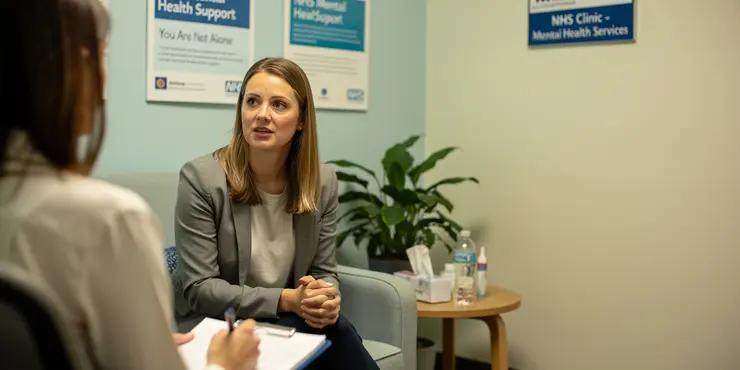

Speak To An Expert
Get clear, personalised advice for your situation.
Jot down a few questions to make the most of your conversation.
What self-harm means
Self-harm is when someone deliberately hurts themselves as a way of coping with difficult feelings, thoughts or situations. It can happen to people of any age, and it may be linked to stress, anxiety, depression, abuse, trauma or other struggles.
It is important to remember that self-harm is usually a sign that someone needs support, not judgement. Even if the person says they do not want to die, self-harm can still be serious and should be taken seriously.
How to talk about self-harm
If you are worried about someone, choose a calm and private time to talk. Speak gently, listen without interrupting and try to stay open and non-judgemental.
It can help to use simple language such as, “I’ve noticed you seem to be having a hard time, and I’m concerned about you.” Avoid reacting with shock, anger or blame, as this may make the person less likely to talk.
You do not need to have all the answers. The most important thing is to show that you care and that you are willing to listen.
What to say and what to avoid
Ask how the person is feeling and what support would help them most. You can also ask if they have thoughts of ending their life, because asking this directly does not put the idea into someone’s head.
Try to avoid making comments such as “you’re just attention seeking” or “you have no reason to feel like that.” These responses can feel dismissive and may stop the person from opening up in future.
Instead, say that you are glad they told you and that support is available. Let them know they do not have to deal with it alone.
Getting help and support
Encourage the person to speak to a GP, mental health service, school or college support staff, or a trusted adult. If they are a child or young person, involving a parent, carer or safeguarding lead may also be important.
If there is immediate danger, or if the person has seriously injured themselves, call 999 or go to A&E. If they are at risk of suicide, urgent help is needed straight away.
For confidential support in the UK, they can contact Samaritans on 116 123 any time, day or night. The NHS website also has advice on self-harm and where to find further help.
Looking after yourself too
Supporting someone who self-harms can feel upsetting and overwhelming. It is okay to seek support for yourself as well, especially if you are trying to help a friend or family member.
You can be supportive without taking full responsibility for their recovery. Encourage professional help, keep checking in, and remember that change may take time.
Frequently Asked Questions
Self-harm talking support NHS usually refers to talking therapies, advice, and mental health support available through the NHS for people who self-harm or are struggling with self-harm urges. It can help you explore what is behind the self-harm, find safer coping strategies, and build a support plan with a trained professional.
Many people who self-harm, have thoughts of self-harm, or are concerned about their relationship with self-harm can access self-harm talking support NHS. Eligibility depends on local services and your level of need, but you do not have to wait until things are severe to ask for help.
You can usually get a referral for self-harm talking support NHS through your GP, a mental health team, or by contacting local NHS talking therapies or community mental health services directly if self-referral is available. If you are unsure, your GP surgery can tell you the local route.
In some areas, yes. Some NHS talking therapies and mental health services allow self-referral for self-harm talking support NHS, while others require a referral from a GP or another professional. Check your local NHS website or call your GP practice to confirm.
Self-harm talking support NHS may include approaches such as cognitive behavioural therapy, problem-solving therapy, counselling, emotional regulation work, and other talking therapies. The exact option depends on your needs, local service availability, and what the clinician thinks will help most.
Waiting times for self-harm talking support NHS vary by area and by how urgent your situation is. Some people are seen quickly, while others may wait longer. If you feel at immediate risk, you should seek urgent help rather than waiting for a routine appointment.
At your first self-harm talking support NHS appointment, a clinician will usually ask about your mental health, what is happening around the self-harm, your safety, and what support you want. They may work with you to make a plan and decide on the most suitable kind of therapy.
Yes, self-harm talking support NHS is generally confidential, but there are limits if a clinician believes you or someone else is at serious risk of harm. In that situation, they may need to share information with other professionals to help keep people safe.
Yes, children and young people may be able to access self-harm talking support NHS through GP referral, school-based services, CAMHS, or local youth mental health services. The exact pathway depends on age, local provision, and how urgent the concerns are.
Yes, adults can access self-harm talking support NHS through GP services, NHS talking therapies, community mental health teams, or crisis services if needed. The right service depends on how severe the self-harm is and whether there are other mental health needs.
If you have urgent thoughts of self-harm and need self-harm talking support NHS now, contact urgent NHS mental health support, call 111, go to A&E, or contact emergency services if you are in immediate danger. Do not wait for a routine talking therapy appointment if you feel unsafe.
Yes, self-harm talking support NHS often focuses on coping strategies such as grounding, distraction, emotion regulation, safety planning, and identifying triggers. A therapist or mental health worker can help you find safer alternatives that fit your situation.
Yes, self-harm talking support NHS can still help even if you are not ready to stop completely. Support can focus on understanding your self-harm, reducing harm, improving safety, and gradually building other ways to cope at a pace that feels manageable.
Not always. Many people receive self-harm talking support NHS from therapists, counsellors, or mental health practitioners rather than a psychiatrist. A psychiatrist may be involved if there are complex mental health needs, medication questions, or higher-risk concerns.
Yes, self-harm talking support NHS may include family involvement if you want it and if it is appropriate. For children and young people, families are often involved more directly, while for adults the level of family involvement depends on consent and the care plan.
If self-harm talking support NHS does not feel enough, tell your clinician as soon as possible so they can review your support. You may need a different therapy, more frequent appointments, crisis support, or a referral to a more specialist mental health service.
Self-harm talking support NHS is usually free at the point of use. The NHS generally does not charge for these mental health services, although you may still have ordinary costs such as travel to appointments.
In many areas, yes. Some self-harm talking support NHS services offer online, video, or phone appointments, especially for talking therapies and follow-up support. Availability varies by local service and your personal needs.
For self-harm talking support NHS appointments, it can help to note when self-harm happens, what triggers it, what helps, and any questions you want to ask. Bringing this information can make it easier to discuss your needs and create a useful support plan.
You can find local self-harm talking support NHS services by checking your local NHS website, speaking to your GP, contacting NHS 111, or searching for NHS talking therapies and community mental health services in your area. If you feel at immediate risk, seek urgent help straight away.

Ergsy Search Results
This website offers general information and is not a substitute for professional advice.
Always seek guidance from qualified professionals.
If you have any medical concerns or need urgent help, contact a healthcare professional or emergency services immediately.
Some of this content was generated with AI assistance. We've done our best to keep it accurate, helpful, and human-friendly.
- Ergsy carefully checks the information in the videos we provide here.
- Videos shown by Youtube after a video has completed, have NOT been reviewed by ERGSY.
- To view, click the arrow in centre of video.
- Most of the videos you find here will have subtitles and/or closed captions available.
- You may need to turn these on, and choose your preferred language.
- Go to the video you'd like to watch.
- If closed captions (CC) are available, settings will be visible on the bottom right of the video player.
- To turn on Captions, click settings.
- To turn off Captions, click settings again.