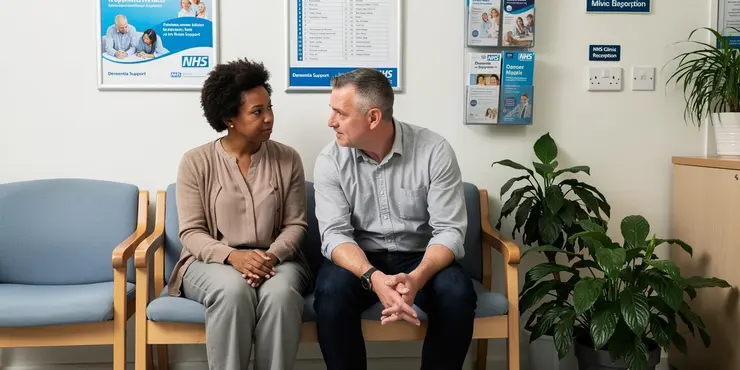

Speak To An Expert
Get clear, personalised advice for your situation.
Jot down a few questions to make the most of your conversation.
Is there a cure for dementia?
At present, there is no cure for dementia. Dementia is an umbrella term for a group of symptoms caused by diseases such as Alzheimer’s disease, vascular dementia, Lewy body dementia and frontotemporal dementia. These conditions damage the brain in different ways, so treatment can be complex.
For many families in the UK, this can feel discouraging. However, a diagnosis does not mean there is nothing that can be done. Care, support and treatment can still make a real difference to a person’s quality of life.
What treatments are available?
There are medicines that may help with some symptoms, especially in Alzheimer’s disease. These do not cure dementia, but they can sometimes improve memory, thinking or daily functioning for a period of time. Doctors may also prescribe medicines to help with anxiety, depression or sleep problems.
Supportive care is just as important. This may include help from memory clinics, occupational therapists, physiotherapists, social workers and dementia nurses. In the UK, NHS services and local councils can help arrange support at home and advice for carers.
Can dementia be prevented?
Not all cases of dementia can be prevented, especially when age and genetics play a part. But research suggests that some lifestyle factors may reduce the risk or delay the onset of symptoms. These include staying physically active, not smoking, limiting alcohol and managing blood pressure.
Looking after hearing, sleep and mental wellbeing may also help. Keeping socially active and challenging the brain with reading, puzzles or learning can be beneficial too. While these steps are not a guarantee, they support overall brain health.
What is the latest research?
Research into dementia is moving forward quickly. Scientists are studying new drugs that may slow the disease process rather than just ease symptoms. Some treatments are already being tested or used in other countries, but access in the UK is still limited and depends on approval and NHS availability.
There is also progress in early diagnosis, blood tests and understanding the causes of different types of dementia. This gives hope that future treatments may be more targeted and effective. Even so, a universal cure is not yet available.
Where to get help in the UK
If you are worried about memory problems, speak to a GP. They can check for treatable causes such as vitamin deficiency, thyroid problems or medication side effects, and refer you for further assessment if needed. Early support can make planning and treatment easier.
Organisations such as Alzheimer’s Society and Dementia UK offer guidance, helplines and practical advice. If you are caring for someone with dementia, support is available for you too. Getting help early can improve day-to-day life for both the person affected and their family.
Frequently Asked Questions
At present, there is no proven cure that can reverse or eliminate all forms of dementia. Research is ongoing, and current care focuses on slowing decline, treating symptoms, and improving quality of life.
No widely accepted cure for dementia is available today. Some causes of dementia can be treated or partially reversed, but most common types, such as Alzheimer’s disease, do not yet have a cure.
A true cure would need to stop or reverse the disease process. While some treatments can improve symptoms or address underlying causes, they usually do not fully restore lost memory.
Dementia has many causes and often involves complex brain changes, which makes a single cure difficult. Different types of dementia may need different treatments or prevention strategies.
Yes, researchers are studying drugs, antibodies, gene therapies, lifestyle interventions, and early diagnosis tools. Some treatments may slow progression, but a definitive dementia cure has not been established.
Lifestyle changes are not a cure for dementia, but they may help reduce risk, support brain health, and improve day-to-day function. Common recommendations include exercise, sleep, blood pressure control, and a healthy diet.
No supplement has been proven to cure dementia. Some supplements may be recommended if a deficiency is present, but they should not be viewed as a replacement for medical care.
Stem cell therapy is being studied, but it is not a proven dementia cure. It remains experimental and should only be considered within legitimate clinical research settings.
Current medications can help manage symptoms or slow decline in some cases, but they are not a cure for dementia. They may support cognition, behavior, or daily functioning for a period of time.
Early diagnosis can help people access treatments sooner, plan care, and manage reversible causes. It may improve outcomes, but it does not guarantee a cure.
Alzheimer’s disease is the most common cause of dementia, and no cure is currently available. Ongoing research aims to develop disease-modifying treatments that may eventually change that.
Some causes and contributing factors of vascular dementia, such as stroke risk factors, can be treated to slow progression. However, there is no universal cure for vascular dementia.
There is currently no cure for Lewy body dementia. Treatment focuses on symptom control, safety, and managing movement, sleep, and cognitive changes.
No cure exists for frontotemporal dementia at this time. Research is ongoing, but current care focuses on support, symptom management, and family counseling.
Clinical trials may give people access to promising therapies before they are widely available. They do not guarantee a cure, but they are essential for testing possible treatments.
A cure would remove the disease or stop it permanently, while treatment aims to reduce symptoms, slow progression, or address underlying causes. Most available options today are treatments, not cures.
Managing risk factors may lower the chance of developing dementia or delay its onset, but it does not equal a cure. Important factors include hearing loss, smoking, diabetes, hypertension, and inactivity.
Herbal medicine is not a proven dementia cure. Some products may interact with medications or cause side effects, so they should be discussed with a healthcare professional.
Gene therapy is a promising research area for some inherited conditions and may one day help certain forms of dementia. It is not currently an approved dementia cure.
While waiting for better treatments, focus on medical evaluation, symptom management, safety, caregiver support, and brain-healthy habits. A clinician can help create a plan tailored to the person’s needs.

Ergsy Search Results
This website offers general information and is not a substitute for professional advice.
Always seek guidance from qualified professionals.
If you have any medical concerns or need urgent help, contact a healthcare professional or emergency services immediately.
Some of this content was generated with AI assistance. We've done our best to keep it accurate, helpful, and human-friendly.
- Ergsy carefully checks the information in the videos we provide here.
- Videos shown by Youtube after a video has completed, have NOT been reviewed by ERGSY.
- To view, click the arrow in centre of video.
- Most of the videos you find here will have subtitles and/or closed captions available.
- You may need to turn these on, and choose your preferred language.
- Go to the video you'd like to watch.
- If closed captions (CC) are available, settings will be visible on the bottom right of the video player.
- To turn on Captions, click settings.
- To turn off Captions, click settings again.