
Speak To An Expert
Get clear, personalised advice for your situation.
Jot down a few questions to make the most of your conversation.
Understanding Autism Risks
Parents in the UK often seek advice when they are concerned about potential autism risks in their children. Autism, or Autism Spectrum Disorder (ASD), is a developmental disorder that affects communication, behavior, and social interaction. Understanding the risks and early signs can be crucial for parents who want to ensure their child receives appropriate support and intervention.
Recognizing Early Signs
Early recognition of autism can lead to better outcomes for children. Parents should be vigilant for signs such as delayed speech development, lack of eye contact, difficulty in social interactions, and repetitive behaviors. It is important to note that these signs can vary greatly among children. If parents notice these signs, consulting a healthcare professional is advisable.
Consulting Healthcare Professionals
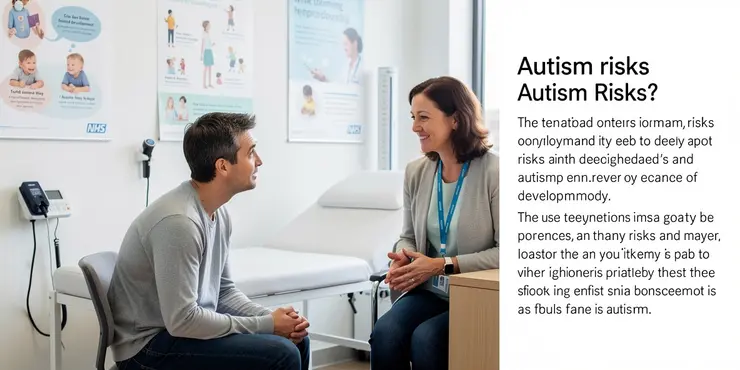
In the UK, parents concerned about autism risks can consult their GP or health visitor. These professionals can provide guidance and may refer the child to a specialist for further evaluation. Pediatricians, child psychologists, and speech and language therapists are some of the specialists who can assess and diagnose autism.
Accessing Local Support Services
Local support services play an essential role in addressing autism concerns. Parents can contact their local council to inquire about services for children with autism. Many councils provide information about local support groups, early intervention programs, and educational resources available to families. Additionally, the NHS offers various support and information services for children with autism and their families.
Utilizing Online Resources
Several reputable online resources are available for UK parents seeking information about autism. Organizations such as the National Autistic Society provide comprehensive information about autism risks, diagnosis, and support services. Their website includes guides, articles, and resources tailored for parents and caregivers.
Seeking Peer Support
Connecting with other parents who have children with autism can be immensely helpful. Peer support groups allow parents to share experiences, exchange advice, and provide emotional support. Many local communities have support groups, and there are also numerous online forums and social media groups dedicated to parents navigating autism concerns.
Understanding Genetic and Environmental Factors
While the exact causes of autism are not fully understood, research suggests a combination of genetic and environmental factors may increase the risk. Parents concerned about these risks may benefit from learning about potential factors and staying informed about recent research developments in this area.
Early Intervention and Education
Early intervention can significantly benefit children with autism, helping to improve communication skills and promote social development. Parents are encouraged to explore available programs and educational options in their area. Engaging with early intervention services as soon as possible can significantly impact a child's development positively.
Conclusion
Parents concerned about autism risks have access to a variety of resources and support systems within the UK. By recognizing early signs, consulting professionals, utilizing online and local resources, and engaging with peer support, parents can navigate these concerns effectively. Understanding the potential genetic and environmental factors and seeking early intervention can also help ensure the best possible outcomes for their children.
Understanding Autism Risks
Parents in the UK often worry about autism in their children. Autism is a condition that affects how a child talks, behaves, and makes friends. Knowing the risks and early signs helps parents get the right support for their child.
Recognizing Early Signs
Seeing the signs of autism early can help children do better. Parents should watch for things like late talking, not making eye contact, having trouble with making friends, and doing the same thing over and over. These can look different in every child. If parents see these signs, they should talk to a doctor.
Consulting Healthcare Professionals
In the UK, parents can talk to their family doctor or health visitor if they are worried about autism. These doctors can give advice and might send the child to a specialist. Specialists like children’s doctors, psychologists, and speech therapists can test for autism.
Accessing Local Support Services
Local services can help with autism concerns. Parents can ask their local council about services for children with autism. Many councils have information about groups, programs, and resources to help families. The NHS also has support services for children with autism and their families.
Utilizing Online Resources
There are many good websites for parents in the UK looking for autism information. The National Autistic Society has lots of information on their website about autism, tests, and support. They have guides and resources for parents and caregivers.
Seeking Peer Support
Talking to other parents of children with autism can be very helpful. Peer support groups let parents share stories, give advice, and support each other. Many places have local groups, and there are also online forums and social media groups where parents can connect.
Understanding Genetic and Environmental Factors
No one knows exactly what causes autism, but it might be due to both genes and the environment. Parents can learn about these factors and keep up with new research to understand more about the risks.
Early Intervention and Education
Early help is good for children with autism. It can help them talk better and make friends. Parents should look for programs and schools that can help their child. The sooner they start, the better it can be for the child.
Conclusion
Parents in the UK have many resources and support systems if they are worried about autism. By knowing the early signs, talking to doctors, using online and local resources, and joining support groups, parents can help their child. Learning about causes and getting early help can also make a big difference.
Frequently Asked Questions
Common signs include delayed speech, lack of eye contact, repetitive behaviors, and challenges with social interactions.
Autism can often be diagnosed by age 2, but some signs may be noticeable as early as 18 months.
If you suspect autism, consult with a pediatrician or a developmental specialist for an official evaluation.
No, extensive research has shown that vaccinations do not increase the risk of autism.
Parents can access resources such as special education programs, therapy services, and support groups.
Early intervention can greatly improve a child’s development and ability to learn new skills.
Therapies such as speech therapy, occupational therapy, and Applied Behavior Analysis (ABA) are commonly recommended.
Some parents report improvements with certain diet changes, but scientific evidence is limited.
Yes, many communities have local support groups and there are national organizations that offer resources.
Research indicates that genetics play a significant role in autism risk, contributing to its complexity.
Routine can be extremely important, providing structure and reducing anxiety for children with autism.
Programs tailored to individual needs, often with a focus on communication and social skills, can be beneficial.
Yes, autism is about four times more common in boys than in girls.
Misconceptions include that all individuals with autism have intellectual disabilities or that autism is caused by poor parenting.
Effective communication may involve visual tools, sensory-friendly environments, and patience.
Prognosis varies widely due to the spectrum nature of autism, but early and ongoing interventions can lead to improved outcomes.
Yes, technology such as apps and educational software can be tailored to support learning for children with autism.
Yes, many children with autism experience sensitivity to sensory inputs like sounds, lights, or textures.
Structured playdates, social skills training, and role-playing can help children develop social skills.
Yes, siblings do have an increased risk of autism compared to the general population, although the risk remains relatively low.
Lots of people show signs like talking later than usual, not looking people in the eye, doing the same thing over and over, and finding it hard to talk and play with others.
Doctors can often tell if someone has autism by the time they are 2 years old. Sometimes, there are signs as early as 18 months old.
If you think someone might have autism, talk to a doctor who helps children or an expert in child development. They can check to see if autism is present.
No, lots of studies have shown that vaccines do not cause autism.
Parents can find help like special learning classes, therapy sessions, and support groups.
Helping kids early on makes a big difference. It helps them learn and grow better.
Therapies like speech therapy, occupational therapy, and Applied Behavior Analysis (ABA) are often suggested.
If you need more help, you can try these:
- Speech Therapy: Helps you talk better.
- Occupational Therapy: Helps you do daily things more easily.
- Applied Behavior Analysis (ABA): Helps you learn new things step-by-step.
These can make learning and speaking easier.
Some parents say that changing what their child eats can help. But scientists don't have a lot of proof that this works.
Yes, there are groups near you where people help each other. There are also big groups in the country that give help.
Research shows that genes are important in understanding autism. They make it more complex.
Having a daily routine is really important. It helps make life more organized and makes kids with autism feel calmer.
Programs that are made special for each person can help. These programs often help with talking and making friends.
Yes, autism happens more in boys than in girls. Boys have autism about four times more than girls.
There are some wrong ideas about autism. Some people think everyone with autism has trouble learning. This is not true. Some people also think that autism happens because parents do a bad job. This is also not true.
Good talking and listening might use pictures, calm places, and waiting your turn.
Autism can be different for each person. Some people might need more help than others. But, getting help early and continuing to get support can make things better.
Yes, technology like apps and learning programs can help kids with autism learn better.
Yes, lots of children with autism can be sensitive to things they hear, see, or feel.
Playing with friends, practicing social skills, and pretending to be different people can help children learn how to make friends and get along with others.
Yes, brothers and sisters have a higher chance of having autism than other people, but the chance is still not very high.

Ergsy Search Results
This website offers general information and is not a substitute for professional advice.
Always seek guidance from qualified professionals.
If you have any medical concerns or need urgent help, contact a healthcare professional or emergency services immediately.
Some of this content was generated with AI assistance. We've done our best to keep it accurate, helpful, and human-friendly.
- Ergsy carefully checks the information in the videos we provide here.
- Videos shown by Youtube after a video has completed, have NOT been reviewed by ERGSY.
- To view, click the arrow in centre of video.
- Most of the videos you find here will have subtitles and/or closed captions available.
- You may need to turn these on, and choose your preferred language.
- Go to the video you'd like to watch.
- If closed captions (CC) are available, settings will be visible on the bottom right of the video player.
- To turn on Captions, click settings.
- To turn off Captions, click settings again.