
Get Answers
Understanding the Limitations of Self-Testing for Eyes
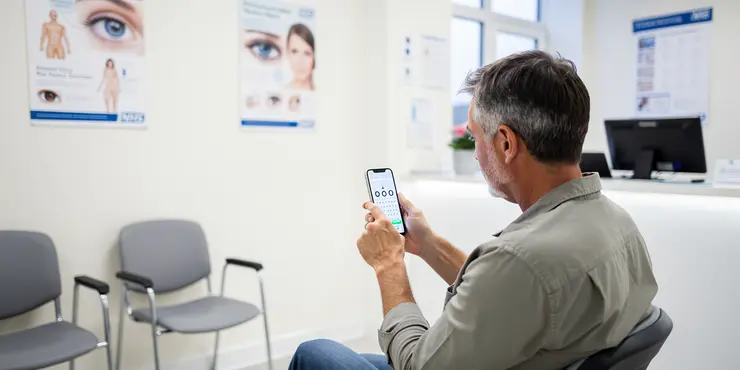
As digital health tools become increasingly popular, many individuals in the UK are turning to self-testing methods to monitor their eye health. While these tests offer convenience, they come with several limitations that must be understood to ensure optimal eye care. Here, we explore the main drawbacks of relying solely on self-testing for assessing eye health.
Accuracy and Reliability
Self-testing tools for eyes, such as online vision tests and mobile apps, often lack the precision and accuracy of professional examinations. The environment in which self-tests are conducted can vary greatly, and factors like lighting conditions, screen resolution, and the quality of the testing device can significantly influence results. Moreover, without standardization across devices and platforms, the reliability of these tests can be inconsistent, leading to potential misinterpretations of one’s visual health.
Comprehensive Assessment Limitations
Professional eye exams conducted by optometrists or ophthalmologists encompass a wide range of assessments, including visual acuity, eye health evaluations, and checks for underlying conditions like glaucoma or cataracts. Self-tests usually focus on specific aspects, such as visual acuity, and may not detect symptoms of more complex issues. Consequently, relying solely on self-testing could result in missed diagnoses of serious eye conditions that require professional intervention.
Lack of Expertise and Guidance
Self-testing does not offer the expert interpretation and advice that come with a professional eye examination. Optometrists provide tailored advice based on the comprehensive results of various tests, addressing individual eye health needs and lifestyle factors. Without professional guidance, individuals may not fully understand test outcomes or the necessary steps for treatment and preventive care, potentially leading to inappropriate self-management of any detected issues.
Delay in Professional Consultation
Another significant limitation of self-testing is the possibility of delaying professional medical consultation. Individuals may become reassured by imperfect self-test results and postpone or forego a necessary visit to an eye care professional. This delay could exacerbate untreated conditions, diminishing the effectiveness of treatments when they are eventually sought.
Psychological and Emotional Impact
Relying solely on self-test results can lead to anxiety and stress, particularly if users misinterpret the outcomes or encounter unexpected findings. The absence of immediate professional reassurance can exacerbate these anxieties, leading individuals to unnecessary worry or even incorrect self-diagnosis and treatment attempts.
Conclusion
Self-testing for eyes can serve as a convenient preliminary step in monitoring vision but should not replace professional eye care. Understanding these limitations emphasizes the importance of regular comprehensive eye examinations with qualified professionals to ensure accurate diagnosis, effective treatment, and overall visual health maintenance.
Understanding Self-Testing for Eyes
Many people in the UK use self-testing to check their eyes. These tests can be easy to use, but they have some problems. It is important to know these problems so you can take good care of your eyes. Let's look at the main problems with self-testing for eyes.
Problems with Test Accuracy
Self-tests for eyes, like online tests and apps, are not as accurate as going to an eye doctor. The results can change depending on things like light, screen quality, and the device you use. Because of these changes, the test results may not always be right. This can lead to misunderstandings about your eye health.
Limits of Self-Testing
Eye doctors do many kinds of tests to check your eyes. They check how well you see and look for health problems like glaucoma or cataracts. Self-tests usually only check one thing, like how well you see. They might miss other important problems. Relying only on self-tests can mean you miss serious eye issues that need a doctor.
No Expert Help
Using self-tests means you don't get advice from an eye doctor. Eye doctors can give you advice based on many tests. They can help you based on your individual needs. Without this advice, you might not understand your test results completely. You might also not know what to do next or how to take care of your eyes properly.
Waiting Too Long to See a Doctor
If you only use self-tests, you might wait too long to see an eye doctor. If you think the self-test is enough, you might not visit the doctor when you need to. Waiting too long can make eye problems worse and treatments less effective later on.
Stress and Worry
Relying only on self-tests can make you worried and stressed. You might not understand the results or find something unexpected. Without a doctor to explain things, you might worry too much or try to fix things on your own, which can be wrong or unhelpful.
Conclusion
Self-tests for eyes are a simple start for checking your vision. But they should not replace seeing an eye doctor. Knowing these limits shows how important it is to have regular eye exams with a professional. This will help make sure you get the right diagnosis, treatment, and keep your eyes healthy.
Frequently Asked Questions
Self-testing may not detect all eye conditions and cannot replace a comprehensive eye examination by a professional.
No, self-testing cannot accurately diagnose eye diseases; it can only identify potential issues that require professional evaluation.
Yes, relying on self-testing might delay professional diagnosis and treatment, potentially worsening eye conditions.
The technology used in self-testing is improving, but it is not as reliable as professional equipment used by eye specialists.
Self-eye tests can produce inaccuracies due to lighting conditions, user error, or poor understanding of the testing process.
No, self-testing is limited and may not detect certain vision problems such as subtle refractive errors or early signs of eye diseases.
Self-eye tests cannot replace regular eye exams because they lack the comprehensive assessments and expertise provided by eye care professionals.
No, self-testing results are not always conclusive and should be verified by an eye care professional for accurate diagnosis.
If a self-test indicates a potential eye issue, it is important to consult an eye care professional for further examination and guidance.
Self-testing cannot determine the precise prescription needed for corrective lenses; a professional eye exam is necessary for accurate results.
Self-testing may provide some insight but is not suitable for monitoring existing eye conditions that require professional oversight.
Regardless of self-testing, regular professional eye exams are recommended every 1-2 years, or more often if advised by an eye doctor.
Most self-tests do not adequately assess peripheral vision, which can be crucial for diagnosing certain eye conditions.
Yes, self-testing could lead to overconfidence in eye health, potentially causing individuals to overlook the need for regular professional check-ups.
While self-tests may seem cost-effective, they cannot replace the value of comprehensive exams, which helps prevent long-term eye health costs.
Children may not perform self-tests accurately due to limited understanding and should have their eyes checked by professionals.
People with a history of eye problems should rely on professional care rather than self-testing for their eye health management.
Self-tests often miss features such as detailed retinal health, intraocular pressure, and early cataract development.
Self-tests are not a one-size-fits-all solution and may not adapt well to the needs of all age groups, particularly young children and the elderly.
Some self-tests provide instructions, but improper use due to lack of professional guidance can lead to unreliable results.
Checking your eyes by yourself might not find all eye problems. It's important to visit an eye doctor to check your eyes properly.
No, you can't tell if you have an eye disease by testing yourself. You can only see if something might be wrong. If you feel something might be wrong, you should go to a doctor.
Yes, testing your eyes by yourself can make it take longer to see a doctor. This might make eye problems worse.
Self-testing technology is getting better. But it's not as good as the tools that eye doctors use.
Testing your own eyes might not be right because of bad lighting, mistakes, or not knowing how to do the test properly.
No, testing your eyes by yourself does not always work. It might miss some eye problems like small changes in how you see things or early signs of eye sickness.
For better help, see an eye doctor. They have special tools to check your eyes.
You can also try using a magnifying glass or reading glasses to help you see better.
Remember to take breaks when you look at screens for a long time. Blink often to keep your eyes comfy.
Doing your own eye test at home is not as good as going to the eye doctor. The eye doctor can check your eyes in a much better way because they know a lot about eyes.
No, self-test results are not always correct. It is important to see an eye doctor to find out for sure.
If a simple eye test shows there might be a problem with your eyes, it's important to see an eye doctor to check it out and give advice. You can use tools like colored overlays to help with reading, or audiobooks to listen to stories instead of reading them.
You cannot find out the right glasses or contact lens strength by testing your eyes yourself. You need to see an eye doctor to know what you need for your eyes.
Testing your own eyes at home can give you some ideas, but it is not enough to check eye problems that need a doctor's help.
It is important to have your eyes checked by an eye doctor regularly. This should happen every 1-2 years. Your eye doctor might tell you to come in more often if needed.
Most eye tests you can do yourself don't check how well you can see things at the sides. This is important because it can help find some eye problems.
Trying to check your own eyes can make you think your eyes are okay. But you might miss something important. So, it's important to still see an eye doctor regularly.
Doing eye tests yourself might seem cheaper, but it's important to have full eye exams by a professional. This can help keep your eyes healthy and save money in the long run.
Kids might not do eye tests right because they don’t know how. It’s better to let an eye doctor check their eyes.
If you have had eye problems before, it is important to go to a doctor. They can take care of your eyes. Do not try to check your eyes by yourself.
Eye tests you do at home might not show important things. They might not see if your eye is healthy inside or if the pressure in your eye is too high. They also might not find early signs of a cloudy lens in your eye.
Self-tests are not perfect for everyone. They might not work well for young children or older people.
Some test kits come with instructions. But if you don't use them properly, you might get wrong results. It's important to follow the steps carefully.

Ergsy Search Results
This website offers general information and is not a substitute for professional advice.
Always seek guidance from qualified professionals.
If you have any medical concerns or need urgent help, contact a healthcare professional or emergency services immediately.
Some of this content was generated with AI assistance. We've done our best to keep it accurate, helpful, and human-friendly.
- Ergsy carefully checks the information in the videos we provide here.
- Videos shown by Youtube after a video has completed, have NOT been reviewed by ERGSY.
- To view, click the arrow in centre of video.
- Most of the videos you find here will have subtitles and/or closed captions available.
- You may need to turn these on, and choose your preferred language.
- Go to the video you'd like to watch.
- If closed captions (CC) are available, settings will be visible on the bottom right of the video player.
- To turn on Captions, click settings.
- To turn off Captions, click settings again.