
Get Answers
What is methanol poisoning?
Methanol is a toxic type of alcohol sometimes found in products such as antifreeze, screen wash, industrial solvents and illegally produced spirits. It is not safe to drink.
Methanol poisoning happens when someone swallows, breathes in, or is exposed to enough methanol for it to cause harm. Even a small amount can be dangerous.
Early symptoms
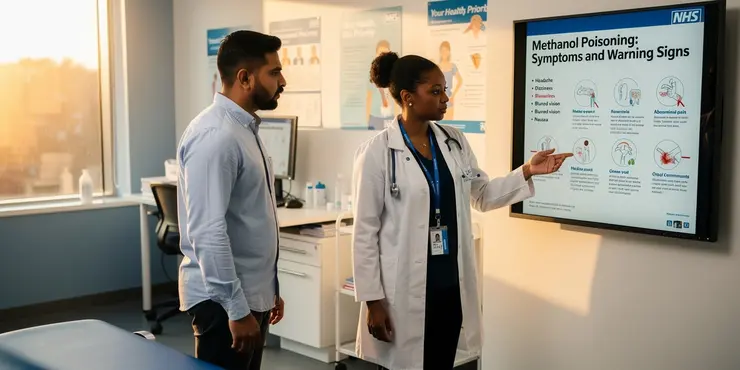
The first symptoms may seem like ordinary drunkenness or a bad hangover. A person may feel sick, dizzy, sleepy, or confused.
They may also have a headache, vomiting, stomach pain, or feel generally unwell. These symptoms can appear within a few hours, but sometimes they are delayed.
Eye and vision symptoms
One of the most important warning signs is problems with vision. A person may complain that their sight is blurred, dim, or “snowy”.
They may see flashing lights, have double vision, or find it hard to focus. In severe cases, methanol poisoning can cause permanent vision loss.
More serious symptoms
As poisoning gets worse, breathing may become fast and deep. This can happen because the body is trying to correct a dangerous acid build-up in the blood.
Other serious signs include drowsiness, severe confusion, seizures, collapse, and coma. Without treatment, methanol poisoning can be life-threatening.
When to get urgent help
If methanol poisoning is suspected, call 999 immediately. Do not wait for symptoms to get worse.
Also get urgent medical help if someone has drunk an unknown alcohol, a home-made spirit, or a product not meant for drinking. In the UK, you can also contact NHS 111 for advice, but emergency symptoms need 999.
What to do while waiting for help
Do not make the person sick unless told to do so by medical professionals. Keep them awake if possible and do not let them drink more alcohol.
If the person becomes unconscious, place them in the recovery position if it is safe to do so. Bring any container, bottle, or product label with you if they go to hospital.
Frequently Asked Questions
Early methanol poisoning symptoms can include headache, dizziness, nausea, vomiting, weakness, and abdominal pain. These symptoms may start several hours after exposure and can seem similar to alcohol intoxication or a stomach illness.
Severe methanol poisoning symptoms can include blurry vision, trouble seeing, confusion, rapid breathing, seizures, and loss of consciousness. Vision changes are especially concerning because methanol can damage the optic nerve and cause permanent blindness.
Methanol poisoning symptoms often appear 6 to 24 hours after exposure, but they can be delayed longer if ethanol was also consumed. The delay can make methanol poisoning difficult to recognize early.
Yes, methanol poisoning symptoms can initially resemble alcohol intoxication, such as dizziness, nausea, and poor coordination. However, methanol poisoning is more likely to cause vision problems, severe acidosis, and worsening illness after the initial symptoms.
Eye-related methanol poisoning symptoms include blurred vision, double vision, sensitivity to light, reduced visual clarity, and a sensation of looking through a fog. In severe cases, vision may rapidly worsen or be lost.
Yes, methanol poisoning symptoms commonly include stomach problems such as nausea, vomiting, abdominal pain, and poor appetite. These symptoms may occur before more dangerous neurological or vision-related signs.
Yes, methanol poisoning symptoms can include rapid, deep breathing as the body tries to correct acid buildup in the blood. This is a medical emergency and may indicate severe poisoning.
Yes, methanol poisoning symptoms can affect the brain and nervous system by causing headache, confusion, sleepiness, agitation, seizures, and coma. These symptoms can become life-threatening quickly.
No, methanol poisoning symptoms do not always happen right away. Symptoms may be delayed for many hours, especially if other alcohol was consumed, because ethanol can temporarily slow methanol metabolism.
Emergency methanol poisoning symptoms include vision changes, confusion, seizures, trouble breathing, collapse, and loss of consciousness. Any suspected methanol exposure with symptoms requires immediate emergency care.
Yes, methanol poisoning symptoms can begin mildly with nausea, dizziness, or headache and then worsen dramatically as toxic acids build up. A person may seem to improve briefly before becoming much sicker.
Yes, methanol poisoning symptoms can include fatigue, weakness, and general malaise. These nonspecific symptoms can make the condition easy to miss without a clear exposure history.
Yes, severe methanol poisoning symptoms can damage the optic nerves and retina, leading to permanent blindness. Prompt treatment is critical to reduce the risk of lasting vision loss.
Yes, methanol poisoning symptoms can resemble a severe hangover, with headache, nausea, vomiting, and dizziness. Unlike a hangover, methanol poisoning can progress to blindness, coma, and death.
After drinking homemade or unregulated alcohol, methanol poisoning symptoms to watch for include nausea, vomiting, headache, dizziness, blurred vision, confusion, and rapid breathing. Any of these symptoms after suspect alcohol exposure should be treated seriously.
Yes, methanol poisoning symptoms can include seizures, especially in severe cases with major acid buildup or brain involvement. Seizures are a medical emergency.
Yes, methanol poisoning symptoms can include a fast heart rate as the body responds to stress, dehydration, or severe illness. A fast heart rate may occur along with rapid breathing and confusion.
Methanol poisoning symptoms are diagnosed by combining the exposure history, physical symptoms, blood tests, and sometimes eye examination. Doctors may check blood acidity, electrolytes, anion gap, osmolar gap, and methanol levels if available.
Someone should seek emergency help immediately if methanol poisoning symptoms are suspected after drinking unknown, homemade, or contaminated alcohol. Vision changes, confusion, vomiting, rapid breathing, or seizures require urgent medical attention.
Yes, methanol poisoning symptoms can often be treated more effectively if caught early. Treatment may include antidotes, supportive care, correction of acid buildup, and sometimes dialysis to remove methanol and toxic metabolites.

Ergsy Search Results
This website offers general information and is not a substitute for professional advice.
Always seek guidance from qualified professionals.
If you have any medical concerns or need urgent help, contact a healthcare professional or emergency services immediately.
Some of this content was generated with AI assistance. We've done our best to keep it accurate, helpful, and human-friendly.
- Ergsy carefully checks the information in the videos we provide here.
- Videos shown by Youtube after a video has completed, have NOT been reviewed by ERGSY.
- To view, click the arrow in centre of video.
- Most of the videos you find here will have subtitles and/or closed captions available.
- You may need to turn these on, and choose your preferred language.
- Go to the video you'd like to watch.
- If closed captions (CC) are available, settings will be visible on the bottom right of the video player.
- To turn on Captions, click settings.
- To turn off Captions, click settings again.