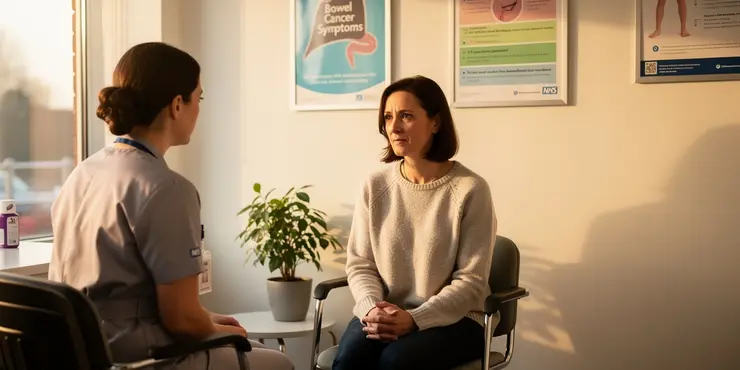

Speak To An Expert
Get clear, personalised advice for your situation.
Jot down a few questions to make the most of your conversation.
What is Bowel Cancer?
Bowel cancer, also known as colorectal cancer, is a type of cancer that starts in the large bowel, which includes the colon and rectum. It is one of the most common types of cancer affecting individuals in the UK. Bowel cancer mainly develops from pre-cancerous growths called polyps, which, if not detected and removed, can turn cancerous over time.
Symptoms of Bowel Cancer
Bowel cancer symptoms can be subtle and not necessarily indicate cancer. However, symptoms to watch for include persistent changes in bowel habits such as more frequent, loose stools, or constipation, abdominal pain, and unexplained weight loss. Blood in the stool without any obvious reason, like hemorrhoids, should also be considered a red flag. Early detection significantly increases the chances of successful treatment.
Causes and Risk Factors
The exact cause of bowel cancer is not fully understood. However, several factors may increase the risk of developing the disease. These include age, with the majority of cases occurring in people over 60, a diet high in red and processed meats and low in fiber, obesity, lack of physical activity, and excessive alcohol consumption. Genetic predisposition also plays a role, with a family history of bowel cancer being a significant risk factor. Medical conditions such as inflammatory bowel diseases, including Crohn's disease and ulcerative colitis, further increase the risk.
Diagnosis and Screening
Early diagnosis of bowel cancer significantly improves treatment outcomes. The UK has a bowel cancer screening programme that invites individuals aged 60 to 74 to complete a home testing kit every two years, known as the faecal immunochemical test (FIT). If the results suggest possible cancer, a follow-up colonoscopy is usually needed for a more accurate diagnosis. Other diagnostic methods can include blood tests, CT scans, and MRI.
Treatment Options
Treatment for bowel cancer often depends on the location and size of the tumor, as well as whether it has spread. Common treatments include surgery to remove the cancerous section of the bowel, chemotherapy, and radiotherapy. Biological therapies that use the body's immune system to fight cancer are also being developed and used in some advanced cases.
Prevention
While not all cases of bowel cancer can be prevented, individuals can reduce their risk by making certain lifestyle changes. Eating a healthy diet rich in fruits, vegetables, and whole grains while limiting red and processed meats is beneficial. Regular exercise, maintaining a healthy weight, reducing alcohol consumption, and avoiding smoking can also lower the risk. Taking part in the NHS bowel cancer screening programme is an essential step in prevention and early detection.
What is Bowel Cancer?
Bowel cancer is a kind of cancer that starts in the large bowel. The large bowel includes the colon and rectum. It is very common in the UK. Bowel cancer often starts from small growths called polyps. If polyps are not found and taken out, they can turn into cancer over time.
Symptoms of Bowel Cancer
Symptoms can be small and do not always mean cancer. But you should look out for changes in bowel habits, like more frequent or loose stools, constipation, tummy pain, and losing weight without knowing why. Blood in your poo without any clear reason, like piles, is a serious sign. Finding cancer early makes it much easier to treat well.
Causes and Risk Factors
We do not fully know what causes bowel cancer. But some things can make it more likely, like being over 60. Eating a lot of red and processed meat and not enough fiber can also increase risk. Other things like being very overweight, not exercising, drinking a lot of alcohol, and having bowel diseases like Crohn's disease or ulcerative colitis can raise the risk too. Having someone in the family with bowel cancer can make it more likely for you as well.
Diagnosis and Screening
Finding bowel cancer early makes treatment work better. In the UK, people aged 60 to 74 are asked to do a home test every two years. This is called the faecal immunochemical test (FIT). If the test shows signs of cancer, a detailed look inside the bowel called a colonoscopy is usually done. Other ways to find cancer include blood tests, CT scans, and MRI scans.
Treatment Options
The treatment depends on where the cancer is and how big it is. Common treatments include surgery to remove the cancer, chemotherapy, and radiotherapy. Some advanced cases use new treatments that help the body’s immune system fight cancer.
Prevention
Not all bowel cancer can be stopped, but you can lower your risk. Eat healthy foods like fruits, vegetables, and whole grains and try to eat less red and processed meat. Exercise often, keep a healthy weight, drink less alcohol, and do not smoke. Joining the NHS bowel cancer screening programme is very important to help prevent and find cancer early.
Frequently Asked Questions
Bowel cancer, also known as colorectal cancer, is a type of cancer that begins in the large bowel, which includes the colon and rectum.
Common symptoms include changes in bowel habits, blood in the stool, abdominal pain, weakness, and unexplained weight loss.
Diagnosis often involves a combination of a physical examination, colonoscopy, imaging tests, and biopsy.
Risk factors include age, family history, a diet high in red or processed meat, smoking, alcohol, and certain inherited conditions.
While it can't always be prevented, reducing risk factors like maintaining a healthy diet, regular exercise, and routine screening can help.
Treatment depends on the stage and may include surgery, chemotherapy, radiation therapy, or a combination of these.
Some bowel cancers are hereditary, often linked to conditions like Lynch syndrome or familial adenomatous polyposis (FAP).
Survival rates vary depending on the stage at diagnosis, with early-stage detection having a much higher survival rate.
Bowel cancer is one of the most common types of cancer worldwide, particularly in developed countries.
A colonoscopy is a procedure that uses a long, flexible camera to inspect the inside of the colon and rectum for cancer signs.
Yes, there are several screening methods, including stool tests, colonoscopies, and sigmoidoscopies, to detect early signs of cancer.
A diet high in red and processed meats and low in fiber is associated with an increased risk of developing bowel cancer.
Yes, if not detected early, bowel cancer can metastasize to other organs, such as the liver and lungs.
Polyps are growths on the inner lining of the colon or rectum, some of which can develop into cancer over time.
Staging is based on the size of the tumor, whether it has spread to lymph nodes, and whether it has metastasized to other body parts.
Colon cancer occurs in the colon (large intestine), while rectal cancer occurs in the rectum, the last part of the digestive tract.
Having a family history of bowel cancer or certain inherited syndromes increases an individual's risk of developing the disease.
Lifestyle changes such as increasing physical activity, maintaining a healthy weight, reducing alcohol consumption, and quitting smoking can lower the risk.
Side effects vary by treatment but can include fatigue, nausea, bowel changes, and increased risk of infection, especially with chemotherapy.
Support comes from healthcare professionals, cancer support groups, counseling services, and community organizations.
Bowel cancer is also called colorectal cancer. It starts in the large bowel. The large bowel has two parts: the colon and the rectum.
Signs something might be wrong: your poo habits change, you see blood in your poo, your tummy hurts, you feel tired, and you lose weight without trying.
To find out what is wrong, doctors often do a few things. They look at your body, use a camera to see inside your tummy, take pictures of the inside of your body, and sometimes take a small piece of tissue to look at it more closely.
If it's hard to understand these things, you can ask the doctor to explain them using simpler words. It can help to have a family member or friend with you to ask questions. Drawing pictures or using videos can also help you see what happens during these tests.
Things that can increase risk are:
- Getting older
- Family members who have had it
- Eating a lot of red or processed meat
- Smoking
- Drinking alcohol
- Certain health conditions passed down from parents
If something is hard to understand, you can use pictures or talk to someone who can explain it to you. It's always okay to ask for help.
You can't always stop it from happening, but there are things you can do to lower the chance. Eating healthy foods, exercising often, and going for regular check-ups with your doctor can help.
How the doctor helps you depends on how bad the disease is. They might do an operation, give you medicine to fight the disease, use special rays to kill bad cells, or a mix of these. It can help to talk to someone you trust, use pictures to understand better, or ask lots of questions if you need to.
Sometimes bowel cancer runs in families. This can happen because of things like Lynch syndrome or a condition called FAP.
How long people live depends on when the cancer is found. If doctors find it early, people are much more likely to live longer.
Bowel cancer is a kind of cancer that many people get. It often happens in countries that are more developed.
A colonoscopy is a test. A doctor uses a long, bendy camera to look inside the large intestine and bottom. They check for signs of cancer.
Yes, there are different ways to check for cancer early. You can use poop tests, colonoscopies, or sigmoidoscopies. These tests help find signs of cancer early.
Eating a lot of red meat and foods like hot dogs or bacon and not enough fiber can make it more likely to get bowel cancer.
To help understand this, you can use tools like talking devices that read text out loud. Try reading with a family member or friend who can explain words you don't know.
Yes, if doctors do not find bowel cancer early, it can spread to other parts of the body like the liver and lungs.
Polyps are small bumps inside the colon or rectum. Sometimes, polyps can change and become cancer.
Staging tells us about the cancer. It looks at:
- How big the tumor is.
- If the cancer has moved to the lymph nodes.
- If the cancer has spread to other parts of the body.
Colon cancer happens in the colon. The colon is a big part of the body's pathway for food.
Rectal cancer happens in the rectum. The rectum is the last bit of the food pathway in our body.
If your family members have had bowel cancer, or if you have certain genes from your family, you might have a higher chance of getting this illness.
There are some changes you can make to stay healthy. Try to move your body more and keep a healthy weight. It is also good to drink less alcohol and stop smoking. These changes can help make you healthier.
Different treatments can cause different side effects. These can include feeling very tired, feeling sick to your stomach, changes in how often you go to the bathroom, and getting infections more easily. This is especially true with a treatment called chemotherapy.
Help comes from doctors, nurse, groups for people with cancer, talking services, and local community groups.

Ergsy Search Results
This website offers general information and is not a substitute for professional advice.
Always seek guidance from qualified professionals.
If you have any medical concerns or need urgent help, contact a healthcare professional or emergency services immediately.
Some of this content was generated with AI assistance. We've done our best to keep it accurate, helpful, and human-friendly.
- Ergsy carefully checks the information in the videos we provide here.
- Videos shown by Youtube after a video has completed, have NOT been reviewed by ERGSY.
- To view, click the arrow in centre of video.
- Most of the videos you find here will have subtitles and/or closed captions available.
- You may need to turn these on, and choose your preferred language.
- Go to the video you'd like to watch.
- If closed captions (CC) are available, settings will be visible on the bottom right of the video player.
- To turn on Captions, click settings.
- To turn off Captions, click settings again.