
Get Answers
What happens after you submit a complaint
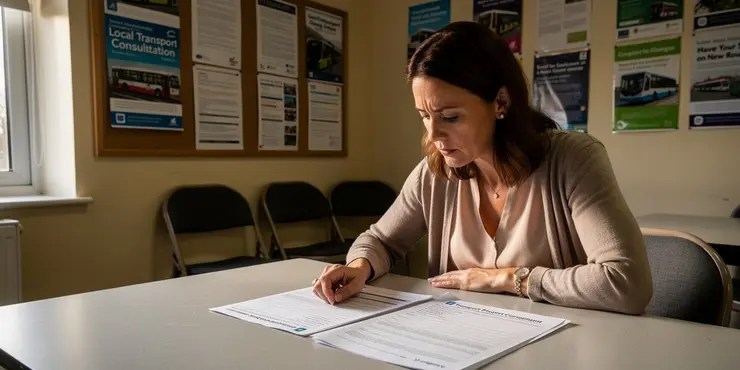
After you submit a complaint about a delayed or changed transport project, it is usually logged by the organisation responsible. This could be a local council, Transport for London, Network Rail, National Highways, or a private operator.
You should normally receive an acknowledgement first. This confirms that your complaint has been received and gives you a reference number, which you can use if you need to follow it up.
How your complaint is reviewed
The organisation will look at the details you provided and check the facts against the project timetable or change notice. They may review planning documents, progress reports, contractor updates, and communications sent to the public.
If your complaint is about a delay, they may explain the reason, such as funding issues, planning problems, weather, utility works, or contractor delays. If the project changed, they may set out what was altered and why the decision was made.
What response you may get
You may receive a straightforward explanation, an apology, or both. In some cases, the organisation may also outline what it is doing to reduce disruption or improve communication in future.
If your complaint raises a wider issue, it may be passed to a different team for investigation. For example, a customer services team may refer it to project managers, engineers, or a complaints escalation unit.
Timescales and follow-up
Most organisations aim to respond within a set timescale, often around 10 to 20 working days. If the issue is complex, they may need longer and should usually tell you why.
If you do not hear back, you can contact them using your reference number. Keep a record of all emails, letters, and dates of any phone calls, as this can help if you need to escalate the complaint.
What to do if you are not satisfied
If you are unhappy with the response, you can usually ask for the complaint to be reviewed again. Many public bodies have a two-stage complaints process, with a final response at the end of the internal review.
After that, you may be able to go to an independent body such as the Local Government and Social Care Ombudsman, the Housing Ombudsman, or the Parliamentary and Health Service Ombudsman, depending on the organisation involved.
Why complaints matter
Complaints help transport bodies understand how delays and changes affect passengers, residents, and businesses. They can highlight poor communication, accessibility problems, missed deadlines, and the impact on local journeys.
Even if your complaint does not lead to an immediate change, it can still influence how a project is managed. Clear feedback from the public can improve planning, communication, and accountability in future transport work.
Frequently Asked Questions
The delayed or changed transport project complaint process is the formal way to raise concerns when a transport project is late, altered, or materially different from what was originally announced. It usually lets affected people submit details, supporting evidence, and a requested remedy.
Anyone directly affected by the delayed or changed transport project complaint process project may be able to submit a complaint, depending on the rules that apply. This can include residents, businesses, commuters, landowners, and other stakeholders.
You usually start the delayed or changed transport project complaint process by finding the responsible authority or project office, completing the complaint form, and providing a clear description of the delay or change. Include dates, locations, and any documents that support your concern.
The delayed or changed transport project complaint process typically requires your contact details, the project name, the nature of the delay or change, when you noticed it, how you are affected, and any evidence such as notices, emails, photos, or project updates.
You should submit a delayed or changed transport project complaint process complaint to the authority responsible for the project, such as the transport agency, contractor liaison team, or designated complaints office. The project website or public notice usually explains the correct submission channel.
For the delayed or changed transport project complaint process, include any evidence that shows the original commitment and the current issue. Helpful items include schedules, public announcements, letters, screenshots, photos, site observations, and records of meetings or calls.
The delayed or changed transport project complaint process can take anywhere from a few days to several weeks or longer, depending on the complexity of the issue and the number of complaints received. More complex cases may require investigation or review by multiple teams.
In most cases, yes. After submitting a delayed or changed transport project complaint process complaint, you should receive an acknowledgment or reference number confirming that the complaint was received and is being reviewed.
Yes, many systems allow an appeal or review request within the delayed or changed transport project complaint process if you believe the decision was incorrect or incomplete. The appeal usually needs to be filed within a specific time limit and may require additional information.
Possible remedies in the delayed or changed transport project complaint process may include an explanation, corrective action, revised timelines, mitigation measures, compensation where applicable, or a commitment to improve communication about the project.
Some delayed or changed transport project complaint process systems allow anonymous complaints, but anonymous submissions may limit follow-up and the ability to investigate fully. If anonymity is allowed, check whether you can still receive updates through a reference number.
If the delayed or changed transport project complaint process issue is urgent, contact the project office or emergency reporting line immediately rather than waiting for the standard complaint route. Urgent concerns may include safety risks, access problems, or major service disruption.
You can usually track a delayed or changed transport project complaint process complaint using a reference number, online portal, email updates, or direct contact with the complaints team. Keep a copy of your submission and any response messages.
If you do not get a response to the delayed or changed transport project complaint process, follow up with the complaints office, quote your reference number, and ask for a status update. If the delay continues, you may be able to escalate the matter to a supervisor or oversight body.
Yes, most delayed or changed transport project complaint process systems have an escalation path if the issue is not resolved at the first stage. Escalation may go to a manager, ombudsman, regulator, or public accountability office, depending on the project and jurisdiction.
The delayed or changed transport project complaint process is usually free to use, especially when it is part of a public transport project or government service. If any fee applies, it should be clearly stated before you submit the complaint.
Yes, a group can often submit a joint delayed or changed transport project complaint process complaint if multiple people are affected by the same delay or change. Group complaints can help show the wider impact and may carry more weight.
If the delayed or changed transport project complaint process concern affects accessibility, clearly explain how the delay or change impacts mobility, safety, or equal access. Include details about ramps, pathways, signage, stop locations, step-free access, or other accessibility features.
Yes, communication issues are a valid part of the delayed or changed transport project complaint process if the project team failed to provide timely, accurate, or clear updates. You can describe what was missing, when it was missing, and how it affected you.
After the delayed or changed transport project complaint process is resolved, you should receive a final response explaining the outcome, any actions taken, and whether any further review is available. Keep the records in case the issue reappears or you need to refer to the decision later.

Ergsy Search Results
This website offers general information and is not a substitute for professional advice.
Always seek guidance from qualified professionals.
If you have any medical concerns or need urgent help, contact a healthcare professional or emergency services immediately.
Some of this content was generated with AI assistance. We've done our best to keep it accurate, helpful, and human-friendly.
- Ergsy carefully checks the information in the videos we provide here.
- Videos shown by Youtube after a video has completed, have NOT been reviewed by ERGSY.
- To view, click the arrow in centre of video.
- Most of the videos you find here will have subtitles and/or closed captions available.
- You may need to turn these on, and choose your preferred language.
- Go to the video you'd like to watch.
- If closed captions (CC) are available, settings will be visible on the bottom right of the video player.
- To turn on Captions, click settings.
- To turn off Captions, click settings again.