
Speak To An Expert
Get clear, personalised advice for your situation.
Jot down a few questions to make the most of your conversation.
What is high blood pressure in children?
High blood pressure, also called hypertension, means the force of blood pushing against the walls of the arteries is higher than it should be. In children, this is not as common as in adults, but it can still happen. It may affect a child’s health now and increase their risk of problems later in life.
Blood pressure in children is different from blood pressure in adults. Doctors do not use one fixed number for all children, because normal levels vary with age, sex and height. A reading is usually compared with standard charts to see whether it is high for that child.
Why high blood pressure matters
High blood pressure often has no obvious symptoms, which means it can go unnoticed. A child may feel completely well even if their blood pressure is higher than normal. That is why it is sometimes found during a routine check-up or when a doctor is looking into another health issue.
If high blood pressure is not treated, it can put extra strain on the heart and blood vessels. Over time, this may increase the chance of damage to organs such as the heart, kidneys and brain. Early diagnosis and treatment can help reduce these risks.
What can cause it?
In some children, high blood pressure is linked to another health condition. Kidney problems are a common cause, as are certain hormone conditions and some medicines. Being overweight can also raise the risk.
In older children and teenagers, lifestyle factors may play a part as well. These can include a diet high in salt, low levels of physical activity and too much screen time. Family history can also increase the chance of developing high blood pressure.
Signs and symptoms
Most children with high blood pressure do not have clear symptoms. When symptoms do happen, they can be vague and easy to miss. A child may seem tired, have headaches or feel dizzy, but these signs do not always mean blood pressure is the cause.
Severe high blood pressure can sometimes cause more noticeable problems. These may include blurred vision, chest pain, shortness of breath or vomiting. If a child has sudden or worrying symptoms, they should be assessed promptly by a healthcare professional.
How it is found and treated
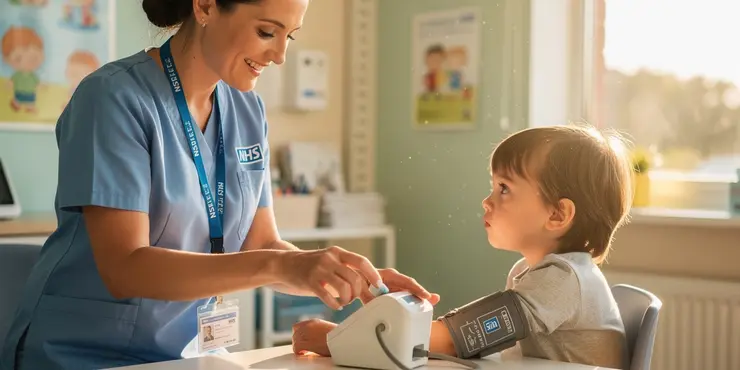
Blood pressure is measured with a cuff, usually at a GP surgery, clinic or hospital. If a reading is high, it will normally be checked again on more than one occasion to confirm the result. Doctors may also arrange tests to look for an underlying cause.
Treatment depends on the reason for the high blood pressure and how high it is. Some children need changes to diet, activity and weight, while others may need medicine. A GP or paediatric specialist can advise on the best next steps for each child.
Frequently Asked Questions
High blood pressure in children, also called pediatric hypertension, is when a child’s blood pressure is higher than expected for their age, sex, and height. It can be temporary or ongoing, and it may need medical evaluation because it can affect the heart, kidneys, and blood vessels over time.
High blood pressure in children can be caused by primary hypertension, which is often linked to family history, excess weight, poor diet, and low activity, or secondary hypertension, which is due to another medical condition such as kidney disease, hormonal disorders, sleep apnea, or certain medicines.
High blood pressure in children often causes no symptoms, which is why it can be missed. When symptoms do occur, they may include headaches, dizziness, blurred vision, nosebleeds, fatigue, or chest pain, but these are not specific and should be evaluated by a clinician.
High blood pressure in children is diagnosed by measuring blood pressure with the right cuff size and comparing the results to age-, sex-, and height-based percentiles. A child usually needs elevated readings on multiple visits before a diagnosis is made, and additional tests may be done to look for an underlying cause.
A child should be checked for high blood pressure in children during routine health visits, and more often if they have risk factors such as obesity, kidney disease, diabetes, a family history of hypertension, or are taking medicines that can raise blood pressure.
Children at higher risk for high blood pressure in children include those with obesity, a family history of hypertension, chronic kidney disease, diabetes, sleep apnea, premature birth, or certain endocrine and heart conditions. Some children also develop it because of lifestyle factors or medication effects.
Treatment for high blood pressure in children depends on the cause and severity. It may include healthy lifestyle changes such as improving diet, increasing physical activity, and managing weight, as well as medicines if blood pressure remains high or if there is an underlying condition or organ risk.
Yes, diet can help with high blood pressure in children. Reducing sodium, eating more fruits, vegetables, whole grains, and low-fat dairy, and limiting sugary drinks and highly processed foods can support healthier blood pressure, especially when combined with other lifestyle changes.
Regular physical activity can help lower blood pressure in children by improving heart health, supporting a healthy weight, and reducing stress. Age-appropriate exercise such as active play, sports, walking, or biking is usually encouraged unless a doctor advises otherwise.
Yes, obesity can contribute to high blood pressure in children by increasing the workload on the heart and affecting blood vessel function. Weight management through healthy eating, physical activity, and family-based habits can improve blood pressure and overall health.
Yes, high blood pressure in children can run in families. A family history of hypertension increases the likelihood that a child may develop high blood pressure, especially when combined with lifestyle factors such as poor diet, low activity, or excess weight.
High blood pressure in children can be dangerous if it is severe or goes untreated, because it may damage the heart, kidneys, brain, and blood vessels over time. Early diagnosis and treatment can greatly reduce the risk of long-term complications.
Tests for high blood pressure in children may include urine tests, blood tests, kidney imaging, an ultrasound of the heart, or sleep studies depending on the child’s history and exam. These tests help determine whether there is an underlying cause or any organ effect.
Stress can temporarily raise blood pressure in children, but it is usually not the sole cause of persistent high blood pressure in children. Ongoing elevated readings should be evaluated to rule out medical causes and to assess overall risk factors.
Medicines for high blood pressure in children may include ACE inhibitors, ARBs, calcium channel blockers, beta blockers, or diuretics, depending on the child’s condition and the cause of hypertension. A doctor chooses the medicine based on age, blood pressure level, and other health issues.
Parents can monitor high blood pressure in children at home with a validated pediatric blood pressure cuff and guidance from a healthcare professional. Readings should be taken calmly, at the right cuff size, and recorded for review, but home monitoring does not replace medical evaluation.
Some cases of high blood pressure in children may be prevented or reduced by supporting a healthy weight, limiting sodium, encouraging regular exercise, avoiding tobacco exposure, and treating conditions like sleep apnea or kidney disease early. Not all cases are preventable, especially those caused by underlying medical problems.
High blood pressure in children is an emergency if it is very high or occurs with severe symptoms such as chest pain, trouble breathing, seizures, confusion, fainting, severe headache, or vision changes. Immediate medical attention is needed because this can signal a hypertensive crisis.
High blood pressure in children can affect school and daily life if it causes symptoms, requires frequent medical visits, or is linked to another condition that affects energy or concentration. Most children can continue normal activities with proper treatment and follow-up.
The outlook for high blood pressure in children is often good when it is found early and managed well. Many children improve with lifestyle changes, and some need medicine or treatment of an underlying condition to keep blood pressure in a safe range and protect long-term health.

Ergsy Search Results
This website offers general information and is not a substitute for professional advice.
Always seek guidance from qualified professionals.
If you have any medical concerns or need urgent help, contact a healthcare professional or emergency services immediately.
Some of this content was generated with AI assistance. We've done our best to keep it accurate, helpful, and human-friendly.
- Ergsy carefully checks the information in the videos we provide here.
- Videos shown by Youtube after a video has completed, have NOT been reviewed by ERGSY.
- To view, click the arrow in centre of video.
- Most of the videos you find here will have subtitles and/or closed captions available.
- You may need to turn these on, and choose your preferred language.
- Go to the video you'd like to watch.
- If closed captions (CC) are available, settings will be visible on the bottom right of the video player.
- To turn on Captions, click settings.
- To turn off Captions, click settings again.