
Get Answers
Basic hygiene expectations
When dogs are brought into shops, cafes, or on public transport, the main hygiene rule is to keep them clean, controlled, and not disruptive to other people. A dog should be well-groomed, free from strong odours, and in good health before going out in public. Owners are also expected to carry out regular flea and worm treatments.
It is important to prevent dogs from coming into contact with food areas, counters, and serving equipment. In many places, dogs are allowed only in customer areas and not in kitchens or food preparation zones. Staff may refuse entry if a dog appears unclean or likely to cause a hygiene issue.
Shops and cafes
In shops and cafes, the biggest concern is contamination. Dogs should not be allowed onto tables, chairs, worktops, or into display areas where food is stored or served. Owners should keep dogs on a lead and close to them so they do not sniff products or disturb other customers.
If a dog has mud on its paws or is shedding heavily, owners should clean it up before entering. Bringing a towel or wipes can help reduce mess, especially in wet weather. Any accident, such as drool, vomit, or toileting, should be dealt with immediately and reported to staff.
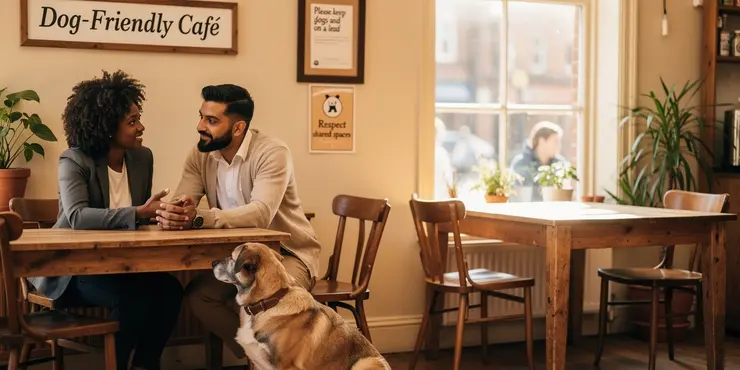
Cafes often have their own rules about whether dogs are welcome indoors or only outside. Even where dogs are allowed, owners should not let them sit on furniture unless the venue clearly permits it. Good hygiene also means making sure the dog does not beg for food or lick plates and cutlery.
Public transport
On buses, trains, and the Tube, dogs should be kept under control so they do not dirty seats, floors, or walkways. A lead is usually expected, and a muzzle may be required in some situations, especially for larger dogs or if transport staff ask for one. Owners should avoid placing dogs on seats unless the operator specifically allows it.
If the dog is wet, muddy, or has been in a dirty area, it should be dried off before travel. Travelling with a towel can help keep seats and other passengers clean. Owners should also be ready to move if the dog is causing an issue for allergies, space, or cleanliness.
Many transport operators ask owners to take responsibility for any mess made by their dog. If a dog toilets on a platform or vehicle, it should be cleaned up straight away where possible and reported to staff. Keeping the dog calm and settled helps reduce the risk of accidents and makes travel more pleasant for everyone.
Being considerate to others
Hygiene rules are not only about dirt and germs. They also include being considerate of people with allergies, religious concerns, fears of dogs, or a desire to avoid contact with animals. Owners should always ask before allowing a dog to approach anyone.
In practice, the best rule is simple: if a dog is clean, well-behaved, and under control, it is far less likely to cause a problem. Responsible owners should check venue policies first and be ready to leave if asked. That helps keep public spaces safe, tidy, and welcoming for everyone.
Frequently Asked Questions
Basic hygiene rules bringing dogs into shops cafes public transport usually include keeping the dog clean, leashed or restrained, under control at all times, and away from food prep areas. Owners should clean up any mess immediately, prevent barking or disruptive behavior, and follow venue-specific policies and local regulations.
Anyone bringing a dog into shops cafes public transport must follow the hygiene rules, including pet owners, handlers, and sometimes service-animal handlers where applicable. Businesses and transport operators may also have their own posted requirements that must be respected.
Dogs are only allowed where local laws, business policies, or transport rules permit them. Hygiene rules bringing dogs into shops cafes public transport generally require that the dog does not create contamination, nuisance, or safety risks, and some places may prohibit dogs entirely except for assistance animals.
Cleanliness requirements typically include a clean coat, no strong odor, current flea and parasite control, and no visible dirt, saliva, or waste on the dog. Owners should also carry waste bags, wipes, or other supplies to handle accidents quickly and hygienically.
In many places, dogs should not sit on dining seats, tables, or shared public transport seats unless specifically permitted and protected by a clean barrier. Hygiene rules bringing dogs into shops cafes public transport usually aim to prevent fur, drool, and contamination of surfaces used by other people.
If your dog has an accident, clean it up immediately using appropriate cleaning materials and notify staff if required. Hygiene rules bringing dogs into shops cafes public transport expect owners to dispose of waste properly and disinfect contaminated areas when necessary.
Yes, food hygiene restrictions are a major part of these rules. Dogs are commonly prohibited from food preparation areas, kitchens, and sometimes indoor dining spaces, because hygiene rules bringing dogs into shops cafes public transport are designed to reduce contamination risks around food and drinks.
Usually yes. Dogs often need to be leashed, harnessed, or carried in an approved carrier depending on the setting. Hygiene rules bringing dogs into shops cafes public transport use these controls to prevent contact with surfaces, people, and food areas.
Owners are expected to control barking, whining, jumping, and other disruptive behavior. Hygiene rules bringing dogs into shops cafes public transport often include behavior standards because noise and agitation can affect safety, comfort, and the overall hygiene of shared spaces.
Some businesses and transport systems impose size, breed, or carrier-based restrictions, while others do not. Hygiene rules bringing dogs into shops cafes public transport are usually about cleanliness and control, but local policies may add limits for safety or space reasons.
Depending on the location, you may need vaccination records, proof of licensing, or documentation for assistance animals. Hygiene rules bringing dogs into shops cafes public transport do not always require paperwork, but having health and vaccination records available can help if asked.
Puppies can follow the rules if they are healthy, clean, vaccinated as required, and able to remain under control. Because young dogs may be more likely to have accidents or carry infection risks, hygiene rules bringing dogs into shops cafes public transport may be stricter for them.
Dogs should generally be brushed, bathed as needed, and free of excessive shedding, dirt, and mud before entering shared spaces. Hygiene rules bringing dogs into shops cafes public transport focus on reducing allergens, odor, and contamination from fur and dander.
Yes, service dogs may be treated differently under disability and access laws, but hygiene expectations still apply. Hygiene rules bringing dogs into shops cafes public transport usually require service dogs to be under control, clean, and not causing a sanitation problem.
In crowded settings, the rules usually require the dog to stay close to the handler, avoid blocking aisles, and not contact other passengers unless appropriate. Hygiene rules bringing dogs into shops cafes public transport are meant to keep shared spaces sanitary and safe for everyone.
Yes, owners should carry waste bags and dispose of feces, urine cleanup materials, and other waste in designated bins or as instructed. Proper disposal is a key part of hygiene rules bringing dogs into shops cafes public transport to prevent odors and disease spread.
Often yes, but only if the area allows dogs and the animal remains controlled and away from food-contact surfaces. Hygiene rules bringing dogs into shops cafes public transport still apply outdoors, including leash control, waste cleanup, and respectful distance from others.
Penalties can include being asked to leave, refusal of service, cleaning charges, fines, or transport removal depending on the rules and local law. Repeated violations of hygiene rules bringing dogs into shops cafes public transport may also lead to bans from the premises or service.
Owners can prepare by grooming the dog, packing waste bags and wipes, checking venue policies, ensuring vaccinations are current, and training the dog to stay calm. Good preparation helps meet hygiene rules bringing dogs into shops cafes public transport and reduces the chance of problems.
Official guidance is usually available from local health authorities, transport operators, municipal regulations, and the individual shop or cafe policy. Hygiene rules bringing dogs into shops cafes public transport may vary by location, so checking the specific rules in advance is the safest approach.

Ergsy Search Results
This website offers general information and is not a substitute for professional advice.
Always seek guidance from qualified professionals.
If you have any medical concerns or need urgent help, contact a healthcare professional or emergency services immediately.
Some of this content was generated with AI assistance. We've done our best to keep it accurate, helpful, and human-friendly.
- Ergsy carefully checks the information in the videos we provide here.
- Videos shown by Youtube after a video has completed, have NOT been reviewed by ERGSY.
- To view, click the arrow in centre of video.
- Most of the videos you find here will have subtitles and/or closed captions available.
- You may need to turn these on, and choose your preferred language.
- Go to the video you'd like to watch.
- If closed captions (CC) are available, settings will be visible on the bottom right of the video player.
- To turn on Captions, click settings.
- To turn off Captions, click settings again.