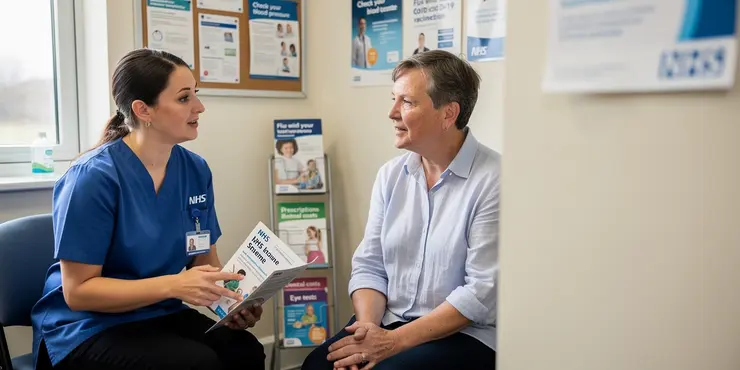

Speak To An Expert
Get clear, personalised advice for your situation.
Jot down a few questions to make the most of your conversation.
What is the NHS Low Income Scheme?
The NHS Low Income Scheme (LIS) is a financial assistance program offered by the National Health Service (NHS) to help individuals and families on low incomes afford health-related costs in the United Kingdom. The scheme is designed to ensure that everyone has access to necessary healthcare services without facing financial barriers, regardless of their income levels.
Eligibility Criteria
The NHS Low Income Scheme is primarily targeted at individuals with low incomes, including students, pensioners, and those receiving certain state benefits. Eligibility is determined based on a means test that assesses a person's income, savings, and living situation. It is important to note that even if you do not qualify for free NHS services, you might still be eligible for partial help with healthcare costs through this scheme.
Types of Assistance Provided
The NHS Low Income Scheme covers a variety of health-related costs. These include NHS prescriptions, dental treatment, sight tests, glasses or contact lenses, travel expenses to receive NHS treatment, and NHS wigs and fabric supports. Depending on your assessed level of need, you may qualify for either full help (HC2 certificate) or partial help (HC3 certificate) with these expenses.
How to Apply
To apply for the NHS Low Income Scheme, individuals must complete the HC1 form, which is available from various locations, including NHS hospitals, GP surgeries, and jobcentres. The form can also be downloaded from the NHS Business Services Authority website. Once completed, the form should be sent to the address provided, and applicants will typically receive a decision within a few weeks.
Understanding the Certificates
After applying, applicants may receive either an HC2 certificate for full help or an HC3 certificate for partial help. The HC2 certificate covers all healthcare costs listed under the scheme, while the HC3 certificate provides assistance based on an applicant's specific financial situation, usually resulting in reduced costs rather than completely free services. It's important for recipients to keep these certificates safe and present them when required to claim help with healthcare costs.
Duration and Renewal
The certificates issued under the NHS Low Income Scheme are typically valid for periods ranging from six months to five years, depending on individual circumstances. It is crucial to apply for a renewal if your financial situation remains unchanged and you continue to require assistance. Applications for renewal should be submitted before the expiration date to maintain access to aid.
Conclusion
The NHS Low Income Scheme plays a vital role in ensuring healthcare accessibility for individuals and families with limited financial resources in the UK. By providing support with various healthcare costs, the scheme helps alleviate the financial burden associated with medical needs, allowing people to prioritize their health and well-being.
What is the NHS Low Income Scheme?
The NHS Low Income Scheme helps people in the UK who do not earn much money. It is a program that pays for health costs. This way, everyone can go to the doctor or get medicine without worrying about money.
Who Can Get Help?
This help is for people who do not have much money. This can include students, older people, and people who get certain money from the government. To see if you can get help, they look at how much money you earn and have saved. Even if you do not get free services, you might still get some help with healthcare costs.
What Help Can You Get?
The scheme can help pay for things like medicine from the doctor, dental work, eye tests, glasses or contacts, travel for NHS treatment, and NHS wigs and supports. You can get full help with an HC2 certificate or some help with an HC3 certificate.
How to Apply
You must fill out an HC1 form to apply. You can get this form from NHS hospitals, GP surgeries, or jobcentres. You can also download it online from the NHS website. Fill it out and send it to the given address. You will know if you can get help in a few weeks.
Understanding the Certificates
After applying, you will get an HC2 or HC3 certificate. An HC2 means you get all healthcare costs covered. An HC3 means you get some costs covered depending on your money situation. Keep your certificate safe and show it when you ask for help with your health costs.
How Long Does It Last?
The help certificate can last between six months and five years. If your money situation stays the same and you need help, apply for a new certificate before the old one runs out.
Conclusion
The NHS Low Income Scheme is important for helping people with little money. It pays for health costs so people do not have to worry and can focus on staying healthy.
If you find forms or reading hard, ask someone to help you. Using tools like a computer reader can also make reading easier.
Frequently Asked Questions
The NHS Low Income Scheme provides financial assistance for healthcare costs to individuals and families on a low income.
Eligibility depends on your income, savings, and investments. Students, pensioners, and those on certain benefits might qualify.
You can apply by filling out the HC1 form, available online or at some NHS facilities.
It covers NHS prescriptions, dental treatments, eye care, and travel costs to receive NHS treatment.
Yes, the scheme is available in England, Wales, and Scotland.
Income is assessed based on your weekly earnings, minus eligible deductions like rent and childcare costs.
Yes, students can apply and may qualify depending on their income and circumstances.
The HC2 certificate grants full help with healthcare costs for qualifying individuals.
The HC2 provides full help, while the HC3 offers partial help with healthcare costs.
It typically takes up to four weeks to process an application.
Certificates are valid for a limited time, so you'll need to reapply periodically if your circumstances remain unchanged.
You should report any change in circumstances to ensure your eligibility remains valid.
Eligibility is generally limited to UK residents, but certain exemptions may apply depending on immigration status.
The HC1 form can be found online on the NHS website or obtained from NHS service providers.
Yes, the scheme covers travel costs for necessary NHS treatments.
You need to provide recent payslips, benefit letters, and bank statements as proof of income.
Reapplication is typically necessary when your current certificate expires or if your circumstances change.
Yes, pensioners on a low income may qualify for assistance through the scheme.
Yes, it covers NHS prescription charges for those eligible.
No, applying for the scheme is free of charge.
The NHS Low Income Scheme helps people who do not have much money. It gives money to help pay for health care.
To see if you can get help, we look at your money, savings, and things you own. Students, older people, and people getting certain help from the government might be able to get it.
You can get the HC1 form online or at some NHS places. Fill it out to apply.
This helps pay for medicine from the doctor, going to the dentist, getting your eyes checked, and travel costs when seeing a doctor.
Yes, you can use the plan in England, Wales, and Scotland.
We look at how much money you make each week. Then, we take away costs like rent and childcare. What is left is your income.
Yes, students can apply. They might get it if they do not earn much money or if they have special situations.
The HC2 certificate gives people free help with their healthcare costs if they qualify.
The HC2 gives you all the help you need with health costs.
The HC3 gives you some help with health costs.
It usually takes about four weeks to finish your application.
Certificates last for a certain time. You have to ask for a new one when it runs out. Even if nothing has changed, you still have to ask again.
It's important to tell someone if things change for you. This helps to make sure you still get what you need.
Most people who live in the UK can be eligible, but there are some special rules for people from other countries.
You can find the HC1 form on the NHS website. You can also get it from NHS service places like hospitals or clinics.
Yes, the plan pays for travel if you need to go to the doctor or hospital for an NHS treatment.
You need to show your most recent payslips, letters about any benefits you get, and bank statements to prove how much money you make.
You might need to apply again if your certificate runs out or if things in your life change.
If you don't have much money, you can get help through the scheme, even if you are a pensioner.
Yes, it helps pay for NHS medicine costs if you can get help.
No, it does not cost any money to apply for the scheme.

Ergsy Search Results
This website offers general information and is not a substitute for professional advice.
Always seek guidance from qualified professionals.
If you have any medical concerns or need urgent help, contact a healthcare professional or emergency services immediately.
Some of this content was generated with AI assistance. We've done our best to keep it accurate, helpful, and human-friendly.
- Ergsy carefully checks the information in the videos we provide here.
- Videos shown by Youtube after a video has completed, have NOT been reviewed by ERGSY.
- To view, click the arrow in centre of video.
- Most of the videos you find here will have subtitles and/or closed captions available.
- You may need to turn these on, and choose your preferred language.
- Go to the video you'd like to watch.
- If closed captions (CC) are available, settings will be visible on the bottom right of the video player.
- To turn on Captions, click settings.
- To turn off Captions, click settings again.