
Speak To An Expert
Get clear, personalised advice for your situation.
Jot down a few questions to make the most of your conversation.
Introduction
Methanol, a type of alcohol, is widely used in various industries and can pose significant health risks if not handled properly. In the UK, certain professions face higher risks of methanol exposure due to the nature of their work. Understanding which professions are at risk can help in implementing safety measures and ensuring proper occupational health standards.
Chemical Manufacturing
Professionals working in chemical manufacturing are at a higher risk of methanol exposure. Methanol serves as a crucial feedstock for producing formaldehyde, acetic acid, and other chemicals. Workers in production plants, as well as those involved in the transportation and storage of methanol, are routinely exposed to this chemical. Strict protocols and protective gear are essential to mitigate the risks.
Pharmaceuticals
The pharmaceutical industry often uses methanol as a solvent in the synthesis of vitamins and hormones. Laboratory technicians, researchers, and production staff in pharmaceutical plants may come into contact with methanol during processing and handling. Proper ventilation, personal protective equipment (PPE), and training are vital to protect these workers from exposure.
Automotive
Methanol is a component of various automotive products such as antifreeze and windshield washer fluids. Mechanics and maintenance personnel are at risk when handling these products, especially if spills occur or if products are used in poorly ventilated areas. Implementing safety guidelines and ensuring the use of PPE helps in reducing exposure risks in the automotive sector.
Paint and Coatings Industry
Methanol is frequently used as a solvent in the production of paints, varnishes, and coatings. Workers applying these products or involved in their manufacture can be exposed to methanol fumes. Safety measures, including the use of respiratory protection and ensuring adequate ventilation, are critical in minimizing health risks for individuals in this industry.
Energy Sector
In the push for alternative energy sources, methanol has gained attention as a potential fuel. Workers in biofuel production and those involved in experimenting with methanol-fueled engines face exposure risks. Comprehensive training programs and strict adherence to safety standards are essential to protect these workers.
Laboratories
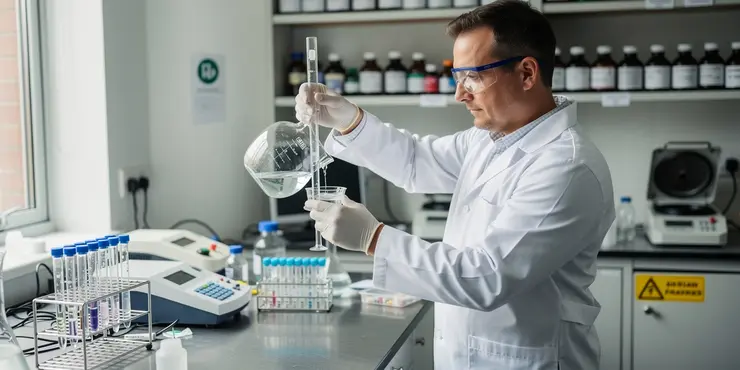
Researchers and laboratory technicians who regularly work with methanol for experiments and analyses are at risk. Proper handling procedures, storage guidelines, and emergency protocols are necessary to keep laboratory environments safe.
Conclusion
Various professions in the UK are at risk of methanol exposure due to the chemical's widespread usage. Implementing safety measures, providing adequate training, and ensuring the use of appropriate protective equipment are crucial steps to safeguard the health of workers across these industries. Awareness and proactive management can significantly reduce the risks associated with methanol exposure.
Frequently Asked Questions
Methanol exposure high-risk professions are jobs with regular contact with methanol-containing liquids, vapors, or contaminated materials. They are considered high risk because methanol can be absorbed through inhalation, skin contact, or ingestion and can cause serious poisoning, including vision loss and metabolic acidosis.
Common methanol exposure high-risk professions include laboratory workers, industrial painters, printing workers, chemical plant operators, fuel handlers, windshield washer fluid handlers, manufacturing staff, and workers involved in solvent use, cleaning, or product formulation.
Workers in methanol exposure high-risk professions should watch for headache, dizziness, nausea, vomiting, abdominal pain, blurred vision, confusion, shortness of breath, and unusual fatigue. Symptoms can be delayed, so any suspected exposure should be treated seriously.
Methanol exposure high-risk professions can reduce inhalation exposure by improving ventilation, using closed systems, minimizing open containers, wearing appropriate respiratory protection when required, and following workplace exposure control procedures.
Methanol exposure high-risk professions can reduce skin contact by using chemical-resistant gloves, protective clothing, splash-resistant eyewear, and safe handling practices. Workers should also promptly remove contaminated clothing and wash exposed skin with soap and water.
Methanol exposure is especially dangerous in methanol exposure high-risk professions because methanol is toxic even in relatively small amounts and may not cause immediate severe symptoms. Delayed treatment can lead to blindness, organ damage, or death.
Recommended personal protective equipment for methanol exposure high-risk professions often includes chemical-resistant gloves, protective clothing, eye protection, face shields when splash risk exists, and respiratory protection if engineering controls are not enough. The exact PPE depends on the task and workplace assessment.
After a spill or splash, methanol exposure high-risk professions should follow site emergency procedures, move to fresh air if inhalation occurred, remove contaminated clothing, rinse exposed skin or eyes with water, and seek urgent medical evaluation. Large spills should be controlled only by trained personnel.
Methanol exposure high-risk professions identify unsafe concentrations through workplace air monitoring, exposure assessments, product labeling, safety data sheets, and industrial hygiene reviews. Monitoring helps determine whether controls and PPE are adequate.
Workers in methanol exposure high-risk professions need training on methanol hazards, exposure routes, symptoms of poisoning, safe handling, PPE use, spill response, emergency first aid, and how to read labels and safety data sheets.
Within methanol exposure high-risk professions, workers are at greater risk if they handle methanol frequently, work in poorly ventilated areas, use inadequate PPE, have long shifts, or perform tasks with splash, vapor, or spill hazards. New workers may also be at higher risk due to limited experience.
A health surveillance program for methanol exposure high-risk professions should include exposure history, symptom checks, vision assessment when appropriate, documentation of incidents, and prompt medical evaluation after suspected overexposure. Workplace medical monitoring should be guided by occupational health professionals.
Methanol exposure high-risk professions can prevent accidental ingestion by never using food containers for chemicals, banning eating and drinking in work areas, labeling all containers clearly, washing hands before breaks, and storing methanol securely away from food and beverages.
After suspected methanol ingestion in methanol exposure high-risk professions, emergency medical help should be called immediately. Do not induce vomiting unless instructed by professionals. Provide information about the product, the amount involved, and the time of exposure if known.
Long-term health effects associated with methanol exposure high-risk professions can include permanent vision damage, neurological injury, and complications from severe poisoning. Repeated low-level exposure may also cause ongoing irritation and other health concerns depending on the circumstances.
Ventilation helps workers in methanol exposure high-risk professions by reducing airborne methanol levels, dispersing vapors, and limiting inhalation exposure. Local exhaust ventilation and properly designed process enclosures are often more effective than general room ventilation alone.
The most effective workplace controls for methanol exposure high-risk professions are elimination or substitution where possible, closed handling systems, local exhaust ventilation, spill containment, exposure monitoring, and clear procedures for safe storage and transfer.
Methanol containers in methanol exposure high-risk professions should be stored in tightly sealed, clearly labeled containers in cool, well-ventilated areas away from heat, ignition sources, and incompatible chemicals. Secondary containment is recommended where spills are possible.
Workers in methanol exposure high-risk professions should seek medical attention immediately after any suspected significant exposure, especially if symptoms appear or if exposure occurred by inhalation, skin absorption, eye contact, or ingestion. Because symptoms may be delayed, waiting can be dangerous.
Employers can improve safety for methanol exposure high-risk professions by conducting risk assessments, providing training and PPE, maintaining ventilation and spill controls, enforcing hygiene practices, monitoring exposure, and ensuring rapid access to emergency response and occupational health support.

Ergsy Search Results
This website offers general information and is not a substitute for professional advice.
Always seek guidance from qualified professionals.
If you have any medical concerns or need urgent help, contact a healthcare professional or emergency services immediately.
Some of this content was generated with AI assistance. We've done our best to keep it accurate, helpful, and human-friendly.
- Ergsy carefully checks the information in the videos we provide here.
- Videos shown by Youtube after a video has completed, have NOT been reviewed by ERGSY.
- To view, click the arrow in centre of video.
- Most of the videos you find here will have subtitles and/or closed captions available.
- You may need to turn these on, and choose your preferred language.
- Go to the video you'd like to watch.
- If closed captions (CC) are available, settings will be visible on the bottom right of the video player.
- To turn on Captions, click settings.
- To turn off Captions, click settings again.