
Speak To An Expert
Get clear, personalised advice for your situation.
Jot down a few questions to make the most of your conversation.
Why volunteers matter in safety compliance
Volunteers are often the backbone of community sports groups in the UK. They help make sessions run smoothly, support players, and keep activities welcoming and organised.
They also play a big part in safety compliance. From checking equipment to managing attendance, volunteers often carry out the day-to-day actions that help a club meet its legal and practical safety responsibilities.
Everyday safety tasks volunteers may handle
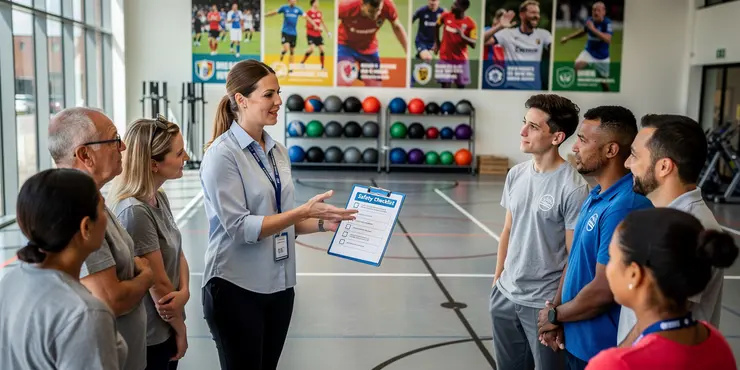
Many volunteers help with risk checks before training or matches. This can include inspecting pitches, goals, nets, changing areas, and first aid supplies.
They may also help control access, supervise children, or make sure participants follow club rules. In some clubs, volunteers record incidents, report hazards, and pass concerns to committee members or coaches.
These tasks may seem small, but they are important. Regular attention to detail helps prevent accidents and makes it easier for the club to show that it is taking safety seriously.
Training, guidance and clear boundaries
Volunteers are not expected to know everything from the start. Good clubs give clear induction, simple written procedures, and role-specific training so people understand what they need to do.
This is especially important for safeguarding, first aid, and emergency response. Volunteers should know who to contact, what to record, and when to escalate a concern.
Clear boundaries also help reduce risk. Volunteers should understand the limits of their role so they do not take on tasks that need formal qualifications or specialist oversight.
Supporting safeguarding and inclusive practice
Safety compliance is not only about physical hazards. Volunteers often help create a culture where children and vulnerable adults feel safe, respected, and included.
They may help spot signs of concern, challenge poor behaviour, and ensure codes of conduct are followed. This can be vital in community sport, where trusted adults are often the first to notice problems.
Volunteers can also support accessibility and inclusion by helping make sessions suitable for people with different needs. A well-managed club is safer when everyone feels able to speak up and take part.
Why clubs must support their volunteers
Volunteers can only help maintain safety if they are properly supported. Clubs should provide supervision, up-to-date policies, and regular reminders about procedures.
It is also important to keep communication open. Volunteers should feel confident reporting concerns without fear of blame, and clubs should act quickly when issues are raised.
When volunteers are valued and well informed, they become a major strength in community sports safety compliance. Their everyday actions help protect participants, visitors, and the club as a whole.
Frequently Asked Questions
Volunteer role community sports group safety compliance refers to the duties, checks, and procedures volunteers must follow to help keep participants safe and to meet legal, organizational, and sport-specific requirements. It matters because it reduces risk, protects children and adults, and helps the group operate responsibly.
Eligibility usually depends on age, reliability, willingness to complete required training, and passing any screening checks the group requires. Some roles may also require specific experience, certifications, or background verification depending on the level of contact with participants.
Required training often includes safeguarding, emergency procedures, first aid awareness, risk reporting, safe equipment use, and code-of-conduct expectations. The exact training depends on the sport, the age group served, and the policies of the community sports group.
Common checks may include identity verification, reference checks, criminal record screening, and child-safety or vulnerable-person screening where applicable. The requirements vary by country, region, and the organization’s policies.
It protects them by requiring supervision standards, reporting procedures, appropriate conduct, safe communication rules, and clear boundaries between volunteers and participants. These measures help prevent harm, reduce opportunities for misconduct, and ensure concerns are addressed quickly.
The volunteer should stop or limit the activity if needed, report the hazard immediately to the designated supervisor, and follow the group’s incident or maintenance reporting process. If the risk is urgent, the area should be made safe or closed until it is addressed.
Incident reporting should be prompt, factual, and documented using the group’s approved form or system. Volunteers should record what happened, who was involved, what action was taken, and who was notified, while avoiding speculation or blame.
Volunteers are typically expected to know how to summon help, identify when first aid is needed, and use basic first aid skills only within their training. More advanced treatment should be left to qualified responders unless the volunteer is specifically certified and authorized.
Supervision standards usually require appropriate adult-to-participant ratios, visibility of activities, and clear responsibility for each session. The specific standards depend on participant age, activity risk, venue layout, and organizational policy.
Training is often renewed annually or whenever policies, laws, or role responsibilities change. Some certifications, such as first aid, may need renewal on a different schedule set by the certifying body or the sports group.
A code of conduct usually covers respectful behavior, appropriate communication, confidentiality, boundaries, anti-bullying expectations, and safe decision-making. Volunteers are expected to follow all sport, club, and venue rules as part of that conduct.
Volunteers should know the evacuation routes, assembly points, who leads the evacuation, and how to account for participants. In an emergency, they should follow the plan, stay calm, guide participants to safety, and report any missing or injured individuals.
Depending on the activity, volunteers may need high-visibility clothing, gloves, sturdy footwear, weather-appropriate gear, or other sport-specific protective items. The required equipment should be identified in the group’s risk assessment and safety procedures.
It should ensure that safety procedures, supervision, communication, and venue arrangements are suitable for participants with different abilities, needs, and backgrounds. Volunteers should follow reasonable adjustments and report any accessibility barriers that may create safety risks.
Volunteers should only share participant information with authorized people who need it for safeguarding, safety, or administrative reasons. Sensitive details must be protected and handled according to privacy rules and the organization’s policies.
Volunteers may be asked to check the venue before use for hazards such as broken equipment, unsafe surfaces, poor lighting, or blocked exits. Any issues should be reported and, if necessary, the activity should be delayed or modified until the venue is safe.
Volunteers should only perform tasks they are trained and authorized to do, and they should escalate concerns beyond their authority to the designated leader or safety officer. They should not make decisions that conflict with medical advice, safeguarding procedures, or organizational policy.
Volunteers should monitor weather forecasts, follow heat, lightning, cold, or air-quality guidance, and adjust sessions when conditions become unsafe. They should have a clear plan for postponement, sheltering, hydration, and participant communication.
Recordkeeping may include attendance logs, training completion, incident reports, risk assessments, equipment checks, and maintenance records. Accurate records help demonstrate compliance, support investigations, and improve future safety planning.
The group can review incidents, update policies, provide refresher training, collect volunteer feedback, and audit procedures regularly. Ongoing improvement helps identify gaps, strengthen prevention measures, and keep safety practices current.

Ergsy Search Results
This website offers general information and is not a substitute for professional advice.
Always seek guidance from qualified professionals.
If you have any medical concerns or need urgent help, contact a healthcare professional or emergency services immediately.
Some of this content was generated with AI assistance. We've done our best to keep it accurate, helpful, and human-friendly.
- Ergsy carefully checks the information in the videos we provide here.
- Videos shown by Youtube after a video has completed, have NOT been reviewed by ERGSY.
- To view, click the arrow in centre of video.
- Most of the videos you find here will have subtitles and/or closed captions available.
- You may need to turn these on, and choose your preferred language.
- Go to the video you'd like to watch.
- If closed captions (CC) are available, settings will be visible on the bottom right of the video player.
- To turn on Captions, click settings.
- To turn off Captions, click settings again.