
Speak To An Expert
Get clear, personalised advice for your situation.
Jot down a few questions to make the most of your conversation.
Introduction to the Role of a Juror
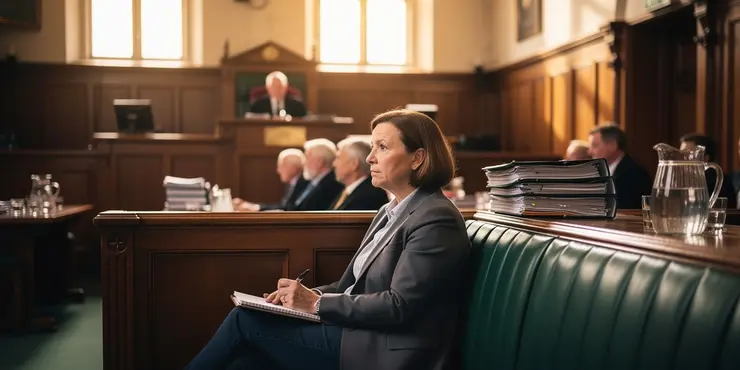
In the United Kingdom, the role of a juror is a crucial component of the legal system. Jurors are ordinary citizens who are called upon to participate in the administration of justice. They are tasked with reaching a verdict in criminal cases, ensuring that justice is served by fairly evaluating the evidence presented in court.
Selection and Eligibility
Juries in the UK are typically composed of 12 members. To be eligible for jury service, one must be between 18 and 75 years old, registered to vote, and have lived in the UK for at least five years since the age of 13. Certain individuals, such as those with a recent criminal conviction, may be disqualified from serving as jurors. Jurors are randomly selected from the electoral register, and it is a civic duty to attend when summoned.
Duties of a Juror
The primary duty of a juror is to listen to the evidence presented during a trial, including testimonies from witnesses, statements from the defence and prosecution, and other material evidence. Jurors must pay close attention to all proceedings, take notes if allowed, and follow instructions given by the judge. After all evidence has been presented, jurors retire to the deliberation room to discuss the case in private. Their responsibility is to collectively reach a verdict—either guilty or not guilty—based on the evidence and in accordance with the judge’s directions regarding the legal standards and definitions.
Confidentiality and Impartiality
An essential aspect of a juror’s role is maintaining confidentiality about the deliberations and details of the case. Jurors are prohibited from discussing the case with anyone outside of the jury, both during the trial and after it concludes. Impartiality is also critical, meaning jurors must make decisions based solely on the evidence presented in court, free from bias or outside influence.
Importance in the Justice System
Jurors bring a diverse cross-section of society into the courtroom and contribute to the fairness and transparency of the legal process. Their involvement helps uphold the defendant’s right to a fair trial, contributing to public confidence in the justice system. By relying on the judgment of peers rather than solely legal professionals, the jury system integrates a community perspective into legal decisions.
Conclusion
Being a juror is a significant responsibility and a fundamental part of civic duty in the UK. It empowers citizens to actively participate in the legal process, ensuring justice is both served and seen to be served. While the task requires attention, impartiality, and confidentiality, it provides the opportunity to contribute meaningfully to society and the maintenance of justice.
What Does a Juror Do?
In the UK, jurors are very important in the legal system. Jurors are regular people chosen to help make decisions in court cases. They listen to the facts and decide if someone is guilty or not guilty. This helps make sure justice is done fairly.
Who Can Be a Juror?
Usually, there are 12 jurors in a UK jury. To be a juror, you need to be between 18 and 75 years old and be on the voting list. You must have lived in the UK for at least five years since you turned 13. Some people can't be jurors, like if they have a recent criminal record. Jurors are picked randomly, and once chosen, you have to go when asked.
What Does a Juror Do During a Trial?
Jurors need to listen carefully to everything in a trial. This includes what witnesses say, and arguments from both sides in court. Jurors should focus, take notes if allowed, and follow what the judge says. After hearing everything, jurors talk about the case privately to decide if the person is guilty or not, based on what they heard.
Keeping Things Secret and Fair
Jurors must keep all discussions and details of the case secret. They can't talk about the case with people outside the jury, even after the trial is over. Jurors must also be fair and only use the information from the trial to make their decision, not any outside opinions.
Why Are Jurors Important?
Jurors bring different views from various parts of society into the courtroom. They help make sure the legal process is fair and clear. Jurors also ensure the person on trial gets a fair chance to be heard, which helps people trust the legal system. By using the views of regular people, the jury system adds a community outlook to legal choices.
What Being a Juror Means
Being a juror is a big responsibility and an important duty in the UK. It lets citizens take part in legal decisions and ensures justice is done. While being a juror means you must be attentive, fair, and secretive, it also means you are playing a crucial role in helping society and justice.
Frequently Asked Questions
A juror is a member of a jury, a group of people sworn to render a verdict in a legal case based on the evidence presented in court.
The role of a juror is to evaluate the evidence presented during a trial and render a fair and impartial verdict.
Jurors are typically selected from the general population through a random process and may undergo a selection process called 'voir dire' to determine their suitability.
Qualifications generally include being a citizen, of legal age, and residing in the jurisdiction. Exemptions or disqualifications can include a criminal history or certain occupations.
Jurors may receive a small daily stipend for their service, but this varies by jurisdiction.
Jury deliberation is the process by which jurors discuss the case privately to reach a verdict.
In many jurisdictions, jurors are allowed to take notes during the trial, but this is subject to the judge's instructions.
Jurors are prohibited from discussing the case with anyone outside the jury until a verdict is reached.
If a juror knows someone involved in the case, they must disclose this information during selection, and it may disqualify them from serving.
Yes, jurors can be excused for reasons such as personal hardship, bias, or conflicts of interest.
A hung jury occurs when the jurors cannot reach a unanimous decision, leading to a mistrial.
The length of jury duty can vary from a few days to several weeks, depending on the case's complexity.
Yes, jury service is a civic duty and mandatory, though certain exemptions or deferrals may be available.
In some jurisdictions, jurors may submit written questions to the judge, who decides if they can be answered in court.
An alternate juror serves as a backup and participates in the trial but does not deliberate unless a juror needs to be replaced.
A grand jury determines whether there is enough evidence to indict someone, while a trial jury determines guilt or innocence during a trial.
If a juror violates instructions, they may be removed, and the trial could be affected, potentially leading to a mistrial.
In high-profile cases, jurors may be sequestered to prevent outside influence, but this is relatively rare.
Jurors should base their decision solely on the evidence and the law, setting aside personal beliefs or biases.
Jurors should inform the judge if they do not understand legal instructions, as it is the judge's role to clarify any uncertainties.
A juror is a person who is part of a group called a jury. A jury listens to a court case and then decides what happened based on what they hear.
A juror is someone who listens to what happens in a court trial.
They look at all the information given to them.
They help decide if someone did something wrong or not.
It is important for a juror to be fair and not pick sides.
If you find reading hard, you can use tools like text-to-speech apps to help you.
These apps can read the words out loud for you.
Jurors are picked from the general public in a random way. There is a process called 'voir dire' to see if they are right for the job.
To qualify, you usually need to be a citizen, be old enough, and live in the area. You might not qualify if you have a criminal record or do some jobs.
When people are chosen to be on a jury, they might get a little bit of money each day. This money is different in each area.
Jury deliberation is when the people in the jury talk about the court case in private. They do this to decide if someone is guilty or not guilty.
Helpful tools or ideas: To make this easier, draw pictures of each step or use simple words to explain it. You can ask someone to help read it out loud, too.
In lots of places, people on a jury can write notes during a trial. But, they need to listen to the judge’s rules.
Jurors cannot talk about the case with people who are not on the jury until they decide the result.
If a person on the jury knows someone in the case, they must say so when chosen. This might mean they cannot be on the jury anymore.
Yes, jurors can be let go if they have personal problems, if they are not fair, or if they have a conflict.
A "hung jury" happens when the people deciding a case in court can't all agree on one answer. This means the trial has to stop without a decision.
Jury duty can last a short time or a long time. Sometimes it is only a few days. Other times, it can be a few weeks. It depends on how complicated the case is.
Yes, being on a jury is something everyone has to do. It's important to help in this way, but some people might not have to do it right now or at all. They might be able to wait or be excused for a good reason.
In some places, people on a jury can write down questions and give them to the judge. The judge then decides if their questions can be answered in court.
An alternate juror is like a helper. They watch the trial and listen to everything. But they only help decide if another juror can't do it anymore.
A grand jury decides if there is enough proof to accuse someone of a crime. A trial jury decides if someone is guilty or not guilty during a trial.
If a juror does not follow the rules, they might have to leave. This can change the trial and might mean starting over.
In big court cases, jurors might have to stay away from other people so they don’t get influenced. But this doesn’t happen very often.
Jurors should only think about the facts and the rules. They should not think about their own opinions or feelings.
If you do not understand what the judge tells you, you should let the judge know. The judge can explain it better for you.

Ergsy Search Results
This website offers general information and is not a substitute for professional advice.
Always seek guidance from qualified professionals.
If you have any medical concerns or need urgent help, contact a healthcare professional or emergency services immediately.
Some of this content was generated with AI assistance. We've done our best to keep it accurate, helpful, and human-friendly.
- Ergsy carefully checks the information in the videos we provide here.
- Videos shown by Youtube after a video has completed, have NOT been reviewed by ERGSY.
- To view, click the arrow in centre of video.
- Most of the videos you find here will have subtitles and/or closed captions available.
- You may need to turn these on, and choose your preferred language.
- Go to the video you'd like to watch.
- If closed captions (CC) are available, settings will be visible on the bottom right of the video player.
- To turn on Captions, click settings.
- To turn off Captions, click settings again.