
Get Answers
Understand the Legal Context
In the UK, privacy is a significant concern, and the use of security cameras is regulated under the Data Protection Act 2018. If a neighbor's security camera is pointed at your property, the first step is to familiarize yourself with the legal context. This law requires users of CCTV systems to ensure they respect the privacy rights of others. If the camera records or collects images beyond the user's property, it falls within the data protection laws, which mandate certain obligations, including the display of signs indicating video recording.
Communicate with Your Neighbor
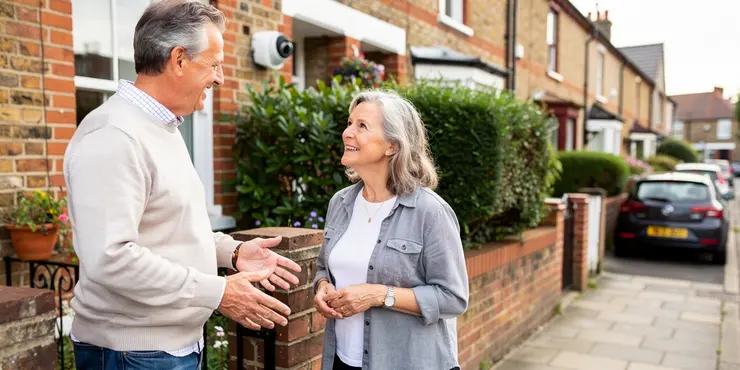
Approaching the situation calmly and diplomatically is essential. The first step should be to have a friendly conversation with your neighbor. There might be a legitimate reason for the camera's positioning, and your neighbor might not be aware of the issue. Express your concerns calmly and seek a resolution. They may be unaware of the intrusion and could be willing to adjust the camera angle or set privacy masks to restrict the recording area, which may solve the problem amicably.
Seek Mediation
If a direct conversation doesn’t resolve the issue, consider involving a neutral third party. Mediation services are available which can help facilitate discussions between you and your neighbor. Community mediation services often help resolve disputes without the need for formal legal action, promoting understanding and cooperation. This step not only aids in conflict resolution but also helps maintain a good relationship with your neighbor.
Consult Legal Advice
If the situation remains unresolved, it may be necessary to seek legal advice. Consulting with a legal expert can provide clarity on your rights and the steps you can take. A solicitor can advise whether your neighbor is in breach of the Data Protection Act or other privacy laws. Legal guidance can also help navigate any proceedings if formal action becomes necessary to protect your privacy.
Report to the ICO
If all else fails and you believe your data rights are being infringed, you can report the issue to the Information Commissioner's Office (ICO). The ICO is responsible for enforcing privacy laws in the UK. They can investigate your complaint and determine whether your neighbor is violating data protection laws. While the ICO does not resolve individual disputes, their involvement can prompt compliance and resolution of privacy concerns.
Maintain Evidence
Throughout the process, maintaining records of all communications and actions taken is crucial. Keep detailed notes of conversations, take photographs of the camera setup, and document any other relevant information. Should formal action become necessary, having a comprehensive record will support your claims and strengthen your case. Keeping evidence organized ensures that your complaint is well-founded and facilitates any potential investigations by authorities.
Understand the Rules
In the UK, keeping your personal space private is important. There are rules about using security cameras, like the Data Protection Act 2018. If your neighbor's camera points at your home, you should know these rules. People using cameras must respect others' privacy. If the camera sees more than their own space, they must follow certain rules. This includes putting up signs to say they are recording.
Talk to Your Neighbor
It’s important to stay calm and friendly. First, talk nicely to your neighbor. There might be a good reason for the camera's position. Your neighbor might not know it bothers you. Explain how you feel and try to find a solution together. They might not know about the problem and could change the camera’s angle or use privacy features to fix it.
Get Help from a Mediator
If talking doesn’t help, think about asking someone else to help. Mediators are people who help solve problems between neighbors. They help people talk and find an answer without going to court. This can help solve the problem and keep your relationship good.
Ask a Lawyer for Advice
If the problem still isn’t fixed, you might need to speak to a lawyer. They can tell you what your rights are and what you can do next. A lawyer can say if your neighbor is breaking the law about privacy. They can also help you know what to do if you need to take official action to protect your privacy.
Contact the ICO
If nothing else works and you think your privacy rights are being broken, you can contact the Information Commissioner's Office (ICO). The ICO helps make sure privacy rules are followed. They can look into your problem and see if your neighbor is breaking the law. The ICO won’t fix personal disagreements, but they can help make sure rules are followed.
Keep Records
It’s important to keep notes and pictures about what happens. Write down talks you have, take pictures of the camera, and keep any other useful information. If you need to take legal action, these records will help your case. Keeping everything organized makes sure your complaint is strong if someone needs to look into the problem.
Frequently Asked Questions
The first step is to communicate directly with your neighbor to discuss your concerns about their security camera.
Yes, take note of the camera's position, any possible intrusion into your property, and ideally take photographs for reference.
Approach the situation calmly and explain your privacy concerns, and see if they are willing to adjust the camera's angle.
It's generally best to try resolving the issue with your neighbor first, but if that fails, you may consider seeking legal advice.
You can consult local laws regarding privacy and surveillance, and potentially involve a mediator or attorney.
Yes, familiarize yourself with local and state laws regarding privacy and the use of surveillance cameras.
Stay calm and consider documenting the interaction; you may need to seek help from a mediator or legal authority.
You can use fences, plants, or other barriers on your property as long as they comply with local regulations.
Yes, mediation can help facilitate a constructive dialogue between you and your neighbor.
It's generally recommended to discuss the issue with your neighbor first before involving local authorities.
Document the camera's position, collect any communications between you and your neighbor, and keep a record of any disturbances.
Yes, if you have an HOA, they can sometimes help mediate disputes between neighbors.
This depends on local laws, but generally, recording on someone else's private property without consent can be illegal.
In shared spaces, the expectation of privacy is lower, but it's still worth discussing any concerns with your neighbor.
Yes, offering assistance can show goodwill and may lead to a mutually agreeable solution.
If you feel unsafe, do not confront your neighbor directly. Consider seeking help from local authorities.
Yes, keeping a log of the times and dates the camera appears to be directed at your property can support your claims.
Yes, you can consult with lawyers who specialize in privacy rights for guidance specific to your situation.
Install privacy screens, use curtains or blinds, and ensure personal areas are shielded from view as temporary measures.
Before involving others, try to resolve the issue directly with the camera's owner to maintain good neighbor relations.
First, talk to your neighbor. Tell them why you are worried about their camera.
Yes, watch where the camera is. See if it points at your home. It's a good idea to take pictures of the camera.
Stay calm. Talk to them about why you want privacy. Ask if they can change where the camera points.
First, try talking to your neighbor to fix the problem. If that doesn't work, you might want to ask a lawyer for help.
You can check the local rules about privacy and watching people. You might also want to talk to a person who helps solve problems between people or a lawyer.
Yes, learn about the laws where you live that talk about privacy and using cameras to watch people.
Stay calm. You can write down what happened. You might need to ask someone for help, like a mediator or the police.
You can put up fences, plant trees, or use other barriers on your land. Make sure they follow local rules.
Yes, talking with help from a mediator can help you and your neighbor have a good chat.
It’s a good idea to talk to your neighbor before asking for help from the local council.
Write down where the camera is. Save any notes or talks you have with your neighbor. Keep track of any times you were bothered by the camera.
Yes, if you live in a place with an HOA (Homeowners Association), they can help solve arguments between neighbors.
It’s usually against the law to record on someone else's property if they don’t say it's okay. But it can depend on local rules.
It might help to ask someone you trust about the rules where you live. You can also look up the laws on a computer or phone.
When you share a space, you can't keep everything private, but it's a good idea to talk to your neighbor if you're worried about something.
Yes, helping someone shows you are kind. It can help you both find a solution that you both like.
If you feel unsafe, do not talk to your neighbor by yourself. Ask for help from the police or people who can make you safe.
Yes, you can write down the days and times when the camera is pointing at your home. This can help show what is happening.
Yes, you can talk to special lawyers who know a lot about privacy rights to help you with your problem.
Put up screens to block what people can see. Use curtains or blinds on windows. Make sure areas where you want to be private are hidden as a quick fix.
Before you ask other people for help, try talking to the person who owns the camera. This can help keep things friendly with your neighbor.

Ergsy Search Results
This website offers general information and is not a substitute for professional advice.
Always seek guidance from qualified professionals.
If you have any medical concerns or need urgent help, contact a healthcare professional or emergency services immediately.
Some of this content was generated with AI assistance. We've done our best to keep it accurate, helpful, and human-friendly.
- Ergsy carefully checks the information in the videos we provide here.
- Videos shown by Youtube after a video has completed, have NOT been reviewed by ERGSY.
- To view, click the arrow in centre of video.
- Most of the videos you find here will have subtitles and/or closed captions available.
- You may need to turn these on, and choose your preferred language.
- Go to the video you'd like to watch.
- If closed captions (CC) are available, settings will be visible on the bottom right of the video player.
- To turn on Captions, click settings.
- To turn off Captions, click settings again.