
Speak To An Expert
Get clear, personalised advice for your situation.
Jot down a few questions to make the most of your conversation.
Understanding the Issue
In the UK, many residents use security cameras to protect their homes and deter crime. However, these cameras can sometimes cause disputes, especially if a neighbour feels that their privacy is being invaded. If you believe your neighbour's security camera is improperly positioned and intrudes on your privacy, there are steps you can take to address this issue.
Contact Your Neighbour
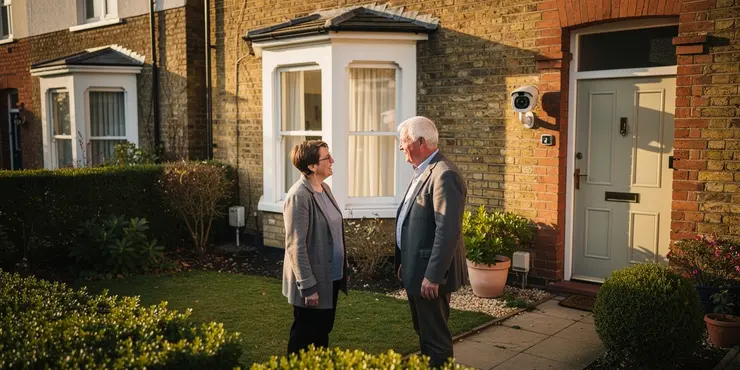
The first step is to communicate directly with your neighbour. Approach them politely and express your concerns about privacy. There might be a chance that they are not aware of the issue and will reposition the camera willingly. Ensure that the conversation remains respectful to avoid escalating the situation.
Review Legal Guidelines
It's important to understand the legal guidelines surrounding the use of security cameras. In the UK, the Information Commissioner's Office (ICO) provides rules regarding video surveillance under the Data Protection Act 2018. If the camera captures images beyond the boundaries of your neighbour's property, it must comply with data protection laws.
Seek Mediation
If initial discussions do not resolve the situation, consider seeking mediation. A neutral third party can help to facilitate a better understanding between you and your neighbour. Mediation services are often effective at reaching a compromise without the need for legal action. Many community and local councils offer such services.
Contact the ICO
If you believe that your neighbour's camera is breaching data protection laws, you can contact the Information Commissioner's Office. They can provide advice and, if necessary, investigate the situation. The ICO has the authority to enforce compliance with data protection law, which might result in a directive for your neighbour to adjust their camera.
Consult with Local Authorities
If the problem persists and you feel that other steps have failed, you can contact your local council or law enforcement for advice. They can guide you on further actions and, if deemed necessary, may intervene. Remember to provide them with any evidence gathered to support your claim, such as photos of the camera's position.
Legal Action
As a last resort, you may consider legal action. This step involves seeking legal advice to explore the possibility of a court order to have the camera repositioned. Legal proceedings can be lengthy and costly, so it's generally advised to exhaust all other avenues beforehand.
Conclusion
Dealing with a neighbour's intrusive security camera can be a delicate issue. It is best handled through direct communication and mediation whenever possible. Understanding the legal grounds and knowing the appropriate channels to seek help can empower you to address the matter effectively and amicably.
Understanding the Issue
In the UK, many people use security cameras to keep their homes safe. These cameras can help stop crime. But sometimes, cameras can make neighbours upset if they feel their privacy is invaded. If you think your neighbour's camera is pointing in the wrong place and you feel it invades your privacy, there are things you can do to fix this.
Contact Your Neighbour
The first thing to do is talk to your neighbour. Be polite and tell them about your privacy worries. They might not know it's a problem and could move the camera if you ask nicely. Make sure to keep the talk friendly so things don’t get worse.
Review Legal Guidelines
It's good to know the rules about using security cameras. In the UK, there are laws about video cameras. These laws say that if a camera sees more than just a neighbour’s property, it must follow data protection rules. This means it needs to be careful about what it records.
Seek Mediation
If talking doesn’t help, you can try mediation. This means having a person who isn’t involved help you both understand each other better. Mediation can help find an answer without going to court. Many communities have people who can help with this.
Contact the ICO
If you think your neighbour's camera breaks the law, you can talk to the Information Commissioner's Office (ICO). They can give advice and might look into the problem. The ICO can make sure the rules are followed and might tell your neighbour to move the camera.
Consult with Local Authorities
If the problem doesn’t go away, you can ask your local council or police for help. They can tell you what to do next and might be able to help in other ways. It's good to have proof, like pictures of where the camera is, to show them.
Legal Action
If nothing else works, you might think about legal action. This means talking to a lawyer about going to court to get the camera moved. Going to court can take a long time and cost a lot of money, so it's usually best to try everything else first.
Conclusion
Dealing with a neighbour's camera can be tricky. It’s usually best to talk it over and try to agree. Knowing the rules and who to ask for help can make solving the problem easier and keep everyone happy.
Frequently Asked Questions
The first step is to have a polite and respectful conversation with your neighbor expressing your concerns about privacy.
Yes, seeking legal advice from a lawyer with experience in privacy or property law can provide guidance on your rights and options.
If you live in a community governed by an HOA, you can contact them to see if there are any rules regarding security cameras and privacy.
If you feel comfortable, you can contact local law enforcement to explain the situation and see if they can offer any solutions or mediation.
Take photos or videos of the camera's positioning and keep a diary of any interactions with your neighbor concerning the issue.
Yes, installing privacy screens, fences, or planting tall shrubbery can help block the camera's view into your property.
Yes, mediation can be an effective way to resolve disputes when direct communication doesn't work. You can seek a professional mediator to assist.
Check your local laws on audio recording, as it may be illegal without consent. Report any illegal activities to the appropriate authorities.
No, disabling or damaging the neighbor's camera is not advisable as it could lead to legal consequences for you.
Privacy laws vary by location, but generally, cameras should not record areas where people have a reasonable expectation of privacy, like inside homes or fenced yards.
Yes, community mediation services can help both parties come to an agreeable solution with the help of a neutral party.
Yes, you can file a formal complaint with local authorities if you believe the security camera is violating your rights.
Yes, checking your property deed, neighborhood covenants, or local ordinances can provide information on regulations regarding security cameras.
Yes, gathering evidence such as photos, videos, and written records can support your claims when discussing the issue with authorities or a mediator.
A neighborhood watch or community group can assist by facilitating discussions or voicing privacy concerns as a collective group.
You can explore using motion-activated lights or signs on your property to alert your neighbor about the camera's positioning.
Yes, some local governments offer resources or ombudsman services to address neighborhood disputes, including security camera issues.
Ensure that any privacy-enhancing measures comply with local regulations and do not infringe on your neighbor’s property rights.
Installing your security camera can monitor your property, but ensure it doesn’t invade your neighbor’s privacy, leading to further disputes.
If multiple neighbors are affected, a group approach can be more persuasive. Consider drafting a collective letter expressing your concerns to the neighbor.
The first thing to do is talk nicely and kindly with your neighbor. Tell them how you feel about privacy.
Yes, talking to a lawyer who knows about privacy or property law can help you understand what you can do and what your rights are.
If you live in a neighborhood with a group that makes rules for homes, you can ask them if there are rules about using cameras and keeping things private.
If you feel okay, you can talk to the police nearby. Tell them what is happening. They might help fix the problem.
Take pictures or videos of where the camera is. Write down anything you talk about with your neighbor about it.
Yes, you can put up privacy screens, fences, or plant tall bushes to stop the camera from looking at your home.
Mediation can help solve problems when talking doesn't work. A mediator is a person who helps people talk and find a solution.
Make sure you know the rules about recording sounds in your area. Sometimes, it is not allowed unless you ask first. If you see someone breaking the law, tell the police or the right people who can help.
No, you should not break or turn off your neighbor's camera. If you do, you might get in trouble with the law.
Privacy laws are different in each place. But mostly, cameras should not record where people expect privacy. This means places like inside homes or backyards with fences.
Yes, community mediation services help people sort out problems. They do this with a person who is not taking sides.
Here are some tips that might help:
- Ask for help from an adult you trust to explain big words.
- Use a dictionary or an online tool to look up words you don't know.
- Read out loud to understand better.
You can tell the local authorities if you think a security camera is not respecting your rights. This means you can make a formal complaint.
Yes, you can find rules about security cameras by checking your property papers, neighborhood rules, or local laws.
Yes, it is good to collect things like photos, videos, and notes to help show your problems when talking to the people in charge or someone who helps solve problems.
A neighborhood watch or community group can help by talking about privacy concerns and sharing them together as a team.
You can use lights or signs that turn on when they sense movement. Put these on your property to let your neighbor know where the camera is pointing.
Yes, some local councils can help when neighbors argue. They have services to solve problems, including problems with security cameras.
Make sure you follow the rules about privacy where you live. Do not do anything that might cause problems for your neighbors.
Putting up a security camera helps you watch your home. Make sure it doesn’t point at your neighbor’s house. This way, you won’t upset them.
If many neighbors are worried, working together can be helpful. Try writing a simple letter with everyone to tell the neighbor about your worries.

Ergsy Search Results
This website offers general information and is not a substitute for professional advice.
Always seek guidance from qualified professionals.
If you have any medical concerns or need urgent help, contact a healthcare professional or emergency services immediately.
Some of this content was generated with AI assistance. We've done our best to keep it accurate, helpful, and human-friendly.
- Ergsy carefully checks the information in the videos we provide here.
- Videos shown by Youtube after a video has completed, have NOT been reviewed by ERGSY.
- To view, click the arrow in centre of video.
- Most of the videos you find here will have subtitles and/or closed captions available.
- You may need to turn these on, and choose your preferred language.
- Go to the video you'd like to watch.
- If closed captions (CC) are available, settings will be visible on the bottom right of the video player.
- To turn on Captions, click settings.
- To turn off Captions, click settings again.