
Speak To An Expert
Get clear, personalised advice for your situation.
Jot down a few questions to make the most of your conversation.
Why airport screening is used
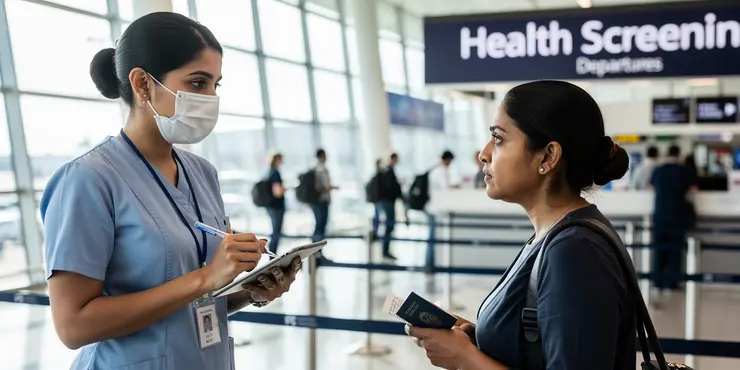
After travelling from an area with an active outbreak, some passengers may be checked on arrival to spot possible signs of infection early. This helps public health teams reduce the chance of a disease spreading further.
Screening is usually quick and focused on symptoms that could suggest someone is unwell. It does not always mean a person has the illness, but it may lead to further advice or testing.
Common symptoms staff may ask about
Staff may ask whether you have a fever, feel hot and shivery, or have recently had sweats. A raised temperature is often one of the first signs checked during outbreak screening.
They may also ask about a cough, sore throat, shortness of breath, or chest discomfort. These symptoms can point to a respiratory infection and are especially important if there has been recent travel.
Other common questions may cover headaches, muscle aches, tiredness, nausea, vomiting, or diarrhoea. Some outbreak-related illnesses can cause more general symptoms before anything more specific appears.
Other signs that may be checked
Screening may include looking for a rash, red eyes, or unusual swelling. Some infections cause visible changes that staff can spot or ask you about.
They may also ask if you have a runny nose, loss of smell, confusion, or dizziness. Depending on the outbreak, these signs can help staff decide whether you need extra assessment.
If the outbreak is linked to a disease spread by contact with blood or body fluids, staff may ask about bleeding, bruising, or feeling very weak. The exact symptoms checked depend on the illness being monitored.
What happens during screening
Screening often starts with questions about how you feel now and whether you have been unwell during travel. You may be asked when symptoms began and whether you were in close contact with anyone ill.
In some cases, staff may use a thermometer or take a brief visual look for obvious signs of illness. If something concerning is found, you may be referred for medical assessment or advised to self-isolate.
What to do if you feel unwell
If you develop symptoms after arriving in the UK, follow the advice given by border or public health staff. It is important to report symptoms early, even if they seem mild.
You should also check official NHS and UK government advice for the latest guidance on the specific outbreak. This will help you know whether you need testing, isolation, or medical care.
Frequently Asked Questions
Common symptoms that may prompt additional screening include fever, cough, shortness of breath, sore throat, runny nose, vomiting, diarrhea, rash, and unusual fatigue. The exact symptoms of concern depend on the outbreak and the policies in place at the airport.
Travelers arriving from or passing through an outbreak area may be screened, especially if they have symptoms, known exposure, or are arriving from locations under public health monitoring. Screening may apply to all passengers or only selected travelers depending on the situation.
Airport screening may include a temperature check, symptom questionnaire, health declaration, visual assessment, and sometimes referral for further evaluation. If symptoms are reported, you may be asked additional questions or directed to a health desk.
Symptoms after travel to an outbreak area can indicate a contagious infection that may spread to other travelers or the public. Early identification helps limit transmission and ensures you get appropriate medical guidance quickly.
Yes, if you report symptoms or are flagged during screening, your travel may be delayed while staff complete the required health checks. In some cases, you may be asked to isolate, seek medical care, or follow public health instructions before continuing.
If you have symptoms, report them honestly during screening and follow airport or public health instructions. You should also consider wearing a mask, avoiding close contact with others, and arranging medical advice if recommended.
Yes, if your symptoms suggest you may be contagious or if public health rules require it, you may be denied boarding. Policies vary by airline, airport, and destination, so medical clearance may be needed in some cases.
You may be asked for travel history, a health declaration, vaccination records, test results, or proof of medical clearance depending on the outbreak and destination rules. Requirements can change quickly, so check before you travel.
Airport screening can help identify some potentially ill travelers, but it cannot detect every infection because not all people with an illness have obvious symptoms. It is a public health tool, not a complete medical diagnosis.
Usually, symptom screening alone cannot reliably identify people who are infectious before symptoms start. Some outbreaks also use testing, exposure history, or other measures to reduce the chance of missing early cases.
Health information collected during screening is typically handled under privacy and public health rules, though the exact protections depend on local laws. Staff should only request information needed for health and safety purposes.
Before travel, review destination requirements, complete any forms in advance, and monitor your health for symptoms. Bring necessary documents, wear comfortable clothing for screening, and allow extra time at the airport.
Tell staff about any symptoms you have, any recent exposure to ill people, and your travel history to the outbreak area. Clear and truthful information helps them decide whether you need extra assessment or follow-up.
Yes, children may be screened if they are traveling from an outbreak area or if screening is applied to all passengers. A parent or guardian usually helps provide information and respond to questions on the child’s behalf.
Yes, vaccinated travelers may still be screened because vaccination does not always prevent infection or transmission. Screening decisions are based on current public health guidance, symptoms, exposure risk, and destination rules.
If you are cleared, continue to monitor your health and follow any instructions given by health officials. If symptoms worsen or new symptoms develop, seek medical advice and inform your airline or local health authority if required.
You should seek medical care promptly if you have severe symptoms, trouble breathing, chest pain, confusion, dehydration, or a high fever that does not improve. You should also seek care if airport or public health staff advise you to do so.
Yes, if you have symptoms or a known exposure, you may be instructed to isolate until you are assessed or until test results and public health guidance allow normal travel. Isolation rules vary based on the outbreak and local regulations.
Airport screening symptoms after travelling to an outbreak area is a quick public health check, while a medical diagnosis requires a clinician’s evaluation and possibly testing. Screening helps identify risk, but only a healthcare professional can diagnose an illness.
Official guidance is usually available from the airport, airline, destination health authority, national public health agency, or the World Health Organization. Check these sources close to departure because requirements can change rapidly.

Ergsy Search Results
This website offers general information and is not a substitute for professional advice.
Always seek guidance from qualified professionals.
If you have any medical concerns or need urgent help, contact a healthcare professional or emergency services immediately.
Some of this content was generated with AI assistance. We've done our best to keep it accurate, helpful, and human-friendly.
- Ergsy carefully checks the information in the videos we provide here.
- Videos shown by Youtube after a video has completed, have NOT been reviewed by ERGSY.
- To view, click the arrow in centre of video.
- Most of the videos you find here will have subtitles and/or closed captions available.
- You may need to turn these on, and choose your preferred language.
- Go to the video you'd like to watch.
- If closed captions (CC) are available, settings will be visible on the bottom right of the video player.
- To turn on Captions, click settings.
- To turn off Captions, click settings again.