
Speak To An Expert
Get clear, personalised advice for your situation.
Jot down a few questions to make the most of your conversation.
Education and basic skills
Many prisons in the UK offer education programmes to help inmates improve reading, writing and maths. These classes are often aimed at people who did not do well at school or who left education early.
In some prisons, inmates can work towards qualifications such as GCSEs, functional skills or even university-level study. Distance learning may also be available through approved providers.
Vocational training and work skills
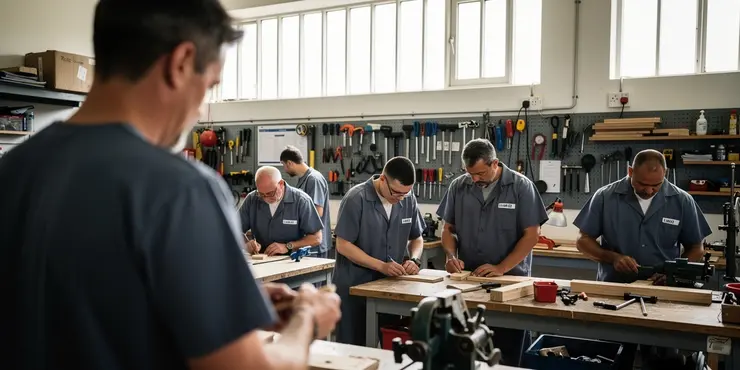
Prisons often provide practical training in trades such as catering, carpentry, painting and decorating, construction, and cleaning. These programmes are designed to help people gain useful skills for life after release.
Some inmates can also take part in workshops that mimic real workplaces. This can help them build habits like punctuality, teamwork and responsibility.
Behaviour and rehabilitation programmes
There are also programmes focused on reducing reoffending. These may cover anger management, thinking skills, domestic abuse, drug misuse or violent behaviour.
Such courses aim to help inmates understand their actions and make better choices in future. They are often part of a broader rehabilitation plan prepared with prison staff or probation services.
Substance misuse support
For inmates with problems involving drugs or alcohol, prisons may offer specialist treatment programmes. These can include one-to-one support, group sessions and recovery-focused courses.
Some prisons also work with external charities and health services. The aim is to support recovery and reduce the risk of relapse after release.
Faith, wellbeing and personal support
Prisons in the UK may provide faith-based groups, chaplaincy support and pastoral care. These services can offer comfort, guidance and a sense of routine to people in custody.
There are also programmes that support mental health and wellbeing. These may include counselling, peer support, mindfulness activities or schemes to help with grief and trauma.
Family and resettlement programmes
Some programmes help inmates maintain contact with family, especially where children are involved. Keeping relationships strong can be important for emotional support and successful reintegration.
Resettlement programmes prepare people for life after prison. They may include help with housing, job searching, managing money and finding local support services before release.
Frequently Asked Questions
Programs for inmates are structured services offered in correctional facilities to support education, job training, substance use treatment, mental health care, parenting, and reentry preparation.
Eligibility for programs for inmates usually depends on custody level, behavior, sentence length, security clearance, program availability, and any specific medical or legal requirements.
Inmates typically apply for programs for inmates by submitting a request form, speaking with their case manager, counselor, or education staff, or being referred through classification review.
Common programs for inmates include GED classes, vocational training, substance use treatment, anger management, parenting classes, faith-based services, and reentry planning.
Many programs for inmates are free to participants, although some facilities may charge small fees for optional materials, certification tests, or special services.
Yes, programs for inmates can help reduce recidivism by improving education, job readiness, decision-making, and support for successful reentry into the community.
Educational programs for inmates are classes that help participants improve literacy, earn a GED or high school equivalency, and prepare for college or further training.
Vocational programs for inmates teach job skills such as carpentry, welding, culinary arts, HVAC, computer basics, or other trades that can improve employment prospects after release.
Substance use programs for inmates provide counseling, group therapy, relapse prevention, and recovery support for people dealing with alcohol or drug dependence.
Mental health programs for inmates include counseling, psychiatric care, crisis support, and therapeutic groups designed to address depression, anxiety, trauma, and other conditions.
Parenting programs for inmates help participants strengthen family relationships, learn communication skills, and support children during incarceration and after release.
Some programs for inmates may count toward good time, earned credits, or parole readiness, depending on the facility rules, sentence structure, and local law.
Programs for inmates can last from a few weeks to many months, depending on the type of program, the course schedule, and the participant's needs and progress.
In many facilities, inmates can participate in multiple programs for inmates if their schedule, custody status, and program requirements allow it.
Not every correctional facility offers the same programs for inmates, since availability depends on staffing, funding, facility size, and security level.
Yes, many programs for inmates include faith-based services such as worship, study groups, chaplain support, and spiritual counseling.
Yes, reentry-focused programs for inmates can help with housing planning, employment preparation, IDs, benefits, transportation, and community support connections.
Many programs for inmates are voluntary, but some may be required as part of a sentence plan, disciplinary resolution, treatment order, or parole condition.
Programs for inmates are often evaluated by attendance, participation, skill progress, completion rates, behavior improvement, and post-release outcomes.
Families can learn about programs for inmates through the correctional facility website, inmate handbook, case managers, social workers, or the facility's public information office.

Ergsy Search Results
This website offers general information and is not a substitute for professional advice.
Always seek guidance from qualified professionals.
If you have any medical concerns or need urgent help, contact a healthcare professional or emergency services immediately.
Some of this content was generated with AI assistance. We've done our best to keep it accurate, helpful, and human-friendly.
- Ergsy carefully checks the information in the videos we provide here.
- Videos shown by Youtube after a video has completed, have NOT been reviewed by ERGSY.
- To view, click the arrow in centre of video.
- Most of the videos you find here will have subtitles and/or closed captions available.
- You may need to turn these on, and choose your preferred language.
- Go to the video you'd like to watch.
- If closed captions (CC) are available, settings will be visible on the bottom right of the video player.
- To turn on Captions, click settings.
- To turn off Captions, click settings again.