
Speak To An Expert
Get clear, personalised advice for your situation.
Jot down a few questions to make the most of your conversation.
Introduction
Methanol poisoning is a serious medical condition that can lead to severe visual disturbances among other health issues. Methanol, also known as wood alcohol, is a toxic substance that is found in various industrial and household products. When ingested, methanol is metabolized in the body to formaldehyde and formic acid, which are highly toxic compounds. One of the most concerning effects of methanol poisoning is its impact on vision, which can be both acute and long-lasting.
Causative Factors
Methanol itself is not directly harmful to the eyes, but its metabolites, particularly formic acid, cause significant damage. The optic nerve is particularly vulnerable to formic acid, leading to a range of visual disturbances. Methanol poisoning often occurs due to the consumption of adulterated alcoholic beverages or accidental ingestion of products containing methanol.
Common Visual Disturbances
Visual disturbances often begin with symptoms such as blurred vision and changes in colour perception. These initial signs can escalate rapidly, as formic acid accumulates in the body and damages the optic nerve. Affected individuals may experience clouded or dim vision, akin to "looking through a snowstorm" or having a "veil" over their eyes. Additionally, photophobia, or sensitivity to light, is a frequently reported symptom.
Severe Visual Impairment
As the poisoning progresses, more severe symptoms may develop. Patients can suffer from scotomas, which are blind spots in the visual field. In some cases, there is a complete loss of vision, leading to blindness, which can be temporary or permanent depending on the extent of nerve damage. If intervention is delayed, the damage may become irreversible, solidifying the critical need for prompt medical treatment.
Long-term Effects
Even after treatment, some individuals may continue to experience visual disturbances. Permanent damage to the optic nerve can result in lasting deficits, such as decreased visual acuity and persistent scotomas. These effects highlight the importance of early detection and treatment of methanol poisoning to mitigate long-term visual impairment.
Treatment and Prognosis
Treatment for methanol poisoning generally involves the administration of antidotes such as ethanol or fomepizole, which inhibit the formation of toxic metabolites. In severe cases, hemodialysis may be required to expedite the removal of methanol and formic acid from the body. With rapid and appropriate medical care, the prognosis improves significantly, although some visual impairment may still persist.
Conclusion
Visual disturbances are a critical component of methanol poisoning and underscore the poisonous nature of this compound. Understanding the types and progression of these visual symptoms is essential for healthcare providers and the public to ensure timely treatment and prevention of long-term complications. Public awareness around the dangers of methanol and the importance of seeking immediate medical care in case of exposure is vital to prevent permanent damage.
Introduction
Methanol poisoning is when a dangerous substance called methanol makes someone very sick. Methanol is also called wood alcohol. It is in some products at home and in factories. When someone drinks methanol, it changes inside the body. It turns into other dangerous things that can hurt you. One big problem with methanol poisoning is it can make it hard to see, and it can hurt your eyes for a long time.
What Causes Methanol Poisoning?
Methanol itself doesn’t hurt the eyes, but when the body changes it to formic acid, it can cause a lot of harm. Formic acid can damage the optic nerve, which is very important for seeing. People often get methanol poisoning by drinking fake alcoholic drinks or by accident when they use things that have methanol.
Problems with Seeing
At first, methanol poisoning might make things look blurry or change the way colors look. Things can get worse quickly because formic acid builds up and hurts the optic nerve. People might feel like they are looking through a snowstorm or there is a covering over their eyes. Bright lights might hurt their eyes too.
Serious Eye Problems
If things get worse, the person might have blind spots where they can’t see anything. Some people might lose all their vision, which means they might become blind. Sometimes this blindness goes away, but other times it doesn’t. Getting help fast is very important because if you wait too long, the damage might not be fixed.
Long-Term Eye Problems
Even after getting help, some people find out they still have trouble seeing. The optic nerve can stay damaged, making it hard to see clearly all the time. This shows how important it is to find and treat methanol poisoning early so people don’t have these long-lasting eye problems.
How to Help and What to Expect
Doctors treat methanol poisoning by giving special medicines like ethanol or fomepizole. These medicines stop more toxic stuff from forming. If someone is very sick, they might need a special treatment called hemodialysis to help clean their blood. Getting help fast makes the chance of getting better higher, but some people might still have some trouble seeing.
In the End
Methanol poisoning can really hurt a person’s vision. Knowing how these eye problems start and get worse can help doctors and everyone else understand why quick help is needed. It is important to learn about the dangers of methanol and why getting medical help right away can stop it from causing permanent harm to the eyes.
Frequently Asked Questions
Visual disturbances in methanol poisoning are eye-related symptoms caused by toxic effects of methanol and its metabolites on the optic nerve and retina. They can include blurred vision, reduced visual acuity, color vision changes, light sensitivity, and even complete vision loss.
Visual disturbances in methanol poisoning are caused by methanol being metabolized into toxic compounds, especially formic acid, which damages the optic nerve and interferes with normal retinal and brain visual processing.
Visual disturbances in methanol poisoning often appear after a delay of several hours to 24 hours or more, depending on the dose, whether alcohol was also consumed, and individual metabolism. Symptoms may worsen as toxic metabolites build up.
Early signs of visual disturbances in methanol poisoning may include blurred vision, difficulty focusing, seeing flashes or spots, eye pain, nausea with visual complaints, and a sensation of dimming or fogging of vision.
Yes, visual disturbances in methanol poisoning can lead to permanent blindness if the poisoning is severe or treatment is delayed. Prompt medical treatment greatly improves the chance of preserving vision.
Visual disturbances in methanol poisoning are diagnosed using a combination of exposure history, eye examination, blood tests showing metabolic acidosis, and tests for methanol levels when available. Doctors may also assess pupil responses, visual acuity, and optic nerve function.
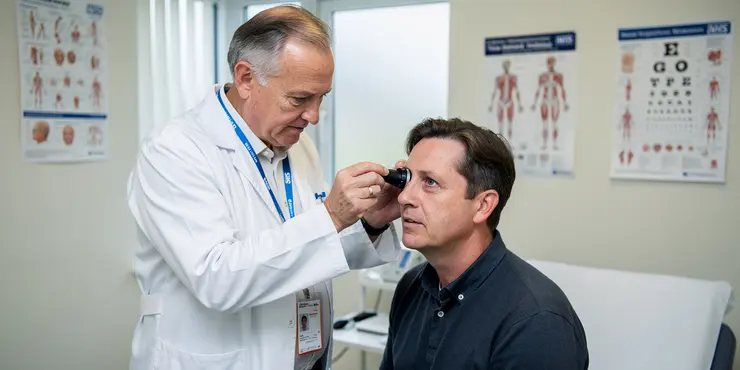
Eye exam findings in visual disturbances in methanol poisoning may include decreased visual acuity, sluggish or absent pupillary responses, optic disc swelling early on, and later optic nerve atrophy. Color vision testing may also be abnormal.
Treatment for visual disturbances in methanol poisoning includes urgent antidotal therapy such as fomepizole or ethanol, correction of acidosis, folinic acid or folic acid, and hemodialysis in severe cases. Supportive eye care and close monitoring are also important.
Yes, visual disturbances in methanol poisoning can improve after treatment, especially if therapy begins early. Some patients recover fully or partially, while others may have lasting vision problems depending on the severity and duration of poisoning.
In visual disturbances methanol poisoning, toxic metabolites damage the optic nerve by disrupting cellular energy production and causing nerve fiber injury. This can lead to swelling, impaired signal transmission, and eventual optic atrophy.
Besides visual disturbances, methanol poisoning can cause headache, dizziness, nausea, vomiting, abdominal pain, rapid breathing, confusion, weakness, and loss of consciousness. Severe cases can progress to seizures or coma.
Someone should seek emergency care immediately if visual disturbances in methanol poisoning are suspected, especially after possible ingestion of contaminated alcohol, solvents, or windshield washer fluid. Delays can increase the risk of blindness and death.
Yes, even relatively small amounts of methanol can cause visual disturbances in methanol poisoning, particularly if the methanol is concentrated or if treatment is delayed. The exact toxic dose varies based on the amount ingested and the person’s metabolism.
Visual disturbances in methanol poisoning may be reversible if recognized and treated early. However, prolonged exposure to toxic metabolites can cause irreversible optic nerve damage and permanent vision loss.
Evaluation of visual disturbances in methanol poisoning may include blood gas testing, electrolyte assessment, serum methanol testing if available, and ophthalmologic examination. Brain or orbital imaging is sometimes used to rule out other causes or assess complications.
Methanol poisoning is distinguished from other causes of visual disturbances by the exposure history, delayed onset after ingestion, metabolic acidosis with an elevated anion gap, and characteristic optic nerve involvement. Other toxic or neurologic causes may need to be excluded.
Complications of visual disturbances in methanol poisoning include optic neuropathy, optic atrophy, permanent blindness, brain injury, severe metabolic acidosis, and death. Early recognition and treatment are critical to prevent these outcomes.
Yes, visual disturbances in methanol poisoning can sometimes occur before severe systemic symptoms become obvious. A person may first notice blurred or dim vision while other signs are still mild or developing.
Follow-up after visual disturbances in methanol poisoning usually includes repeat eye examinations, visual acuity monitoring, and assessment for optic nerve damage. Long-term care may be needed if any persistent vision loss remains.
Visual disturbances in methanol poisoning can be prevented by avoiding unregulated alcohol or suspicious liquids, storing methanol-containing products safely, using proper industrial protection, and seeking immediate help if exposure is suspected.

Ergsy Search Results
This website offers general information and is not a substitute for professional advice.
Always seek guidance from qualified professionals.
If you have any medical concerns or need urgent help, contact a healthcare professional or emergency services immediately.
Some of this content was generated with AI assistance. We've done our best to keep it accurate, helpful, and human-friendly.
- Ergsy carefully checks the information in the videos we provide here.
- Videos shown by Youtube after a video has completed, have NOT been reviewed by ERGSY.
- To view, click the arrow in centre of video.
- Most of the videos you find here will have subtitles and/or closed captions available.
- You may need to turn these on, and choose your preferred language.
- Go to the video you'd like to watch.
- If closed captions (CC) are available, settings will be visible on the bottom right of the video player.
- To turn on Captions, click settings.
- To turn off Captions, click settings again.