
Speak To An Expert
Get clear, personalised advice for your situation.
Jot down a few questions to make the most of your conversation.
Understanding the NHS Low Income Scheme
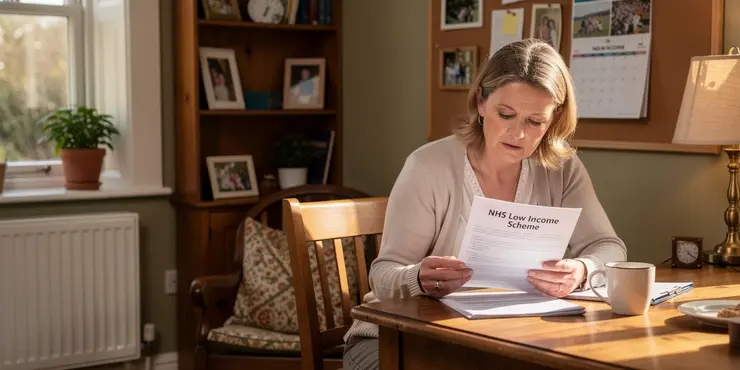
The National Health Service (NHS) in the United Kingdom provides a Low Income Scheme to assist individuals and families with healthcare costs. This scheme is particularly significant as it ensures healthcare is accessible to those who may be struggling financially. Eligibility for the NHS Low Income Scheme is determined by a range of factors, primarily focused on income, savings, and circumstances.
Eligibility Criteria
The NHS Low Income Scheme is designed for people who are not automatically entitled to free healthcare services, but who still require financial assistance. To be eligible, applicants must be residents of the UK, and their income and savings must be below a certain threshold. The scheme is primarily aimed at individuals who do not qualify for other forms of healthcare financial support, such as free prescriptions or dental care, through benefits like Universal Credit, Income Support or Jobseeker’s Allowance.
Income and Savings
One of the main criteria for eligibility is income. People with a low income can apply if their savings, investments, or property (excluding where they live) do not exceed defined limits. As of the latest update, these limits are set at £16,000 for individuals and £23,250 if the applicant lives permanently in a care home. For people who are part of a couple or have a family, both partners’ incomes and savings are taken into account. The NHS Business Services Authority, which administers the scheme, performs a means test on applicants to determine their eligibility based on these financial criteria.
Application Process
Applicants to the NHS Low Income Scheme need to complete an HC1 form. This form requires them to provide detailed information about their financial situation, including income, savings, and any benefits received. Those who qualify receive an HC2 certificate, which entitles them to full help with health costs, or an HC3 certificate, which offers partial help. These certificates cover costs such as NHS prescriptions, dental treatment, eye tests, and hospital travel expenses.
Other Considerations
Students, pensioners, and those who are unemployed may also qualify for the scheme, depending on their financial circumstances. It’s important for potential applicants to keep in mind that eligibility is reviewed regularly and that they must report any changes in their financial situation to the NHS Business Services Authority. The application process, while comprehensive, is designed to be accessible, and assistance is available for those who require help in completing their forms.
Conclusion
The NHS Low Income Scheme plays a critical role in ensuring that healthcare is accessible to those who need it most. By understanding the eligibility requirements and application process, individuals can determine if they qualify for financial support, thereby reducing the burden of healthcare costs and ensuring they receive necessary medical attention without undue financial stress.
Understanding the NHS Low Income Scheme
The NHS in the UK helps people with little money pay for healthcare. This help is called the "Low Income Scheme." It makes sure everyone can get healthcare, even if they don’t have much money. If you want this help, it depends on how much money and savings you have.
Can You Get This Help?
The NHS Low Income Scheme is for people who need money help to pay for healthcare. To get this, you must live in the UK. You cannot have too much money or savings. It's for people who can't get other free healthcare help, like free medicine or dental care, from things like Universal Credit or Income Support.
Money and Savings
To be eligible, your income needs to be low. Your savings, any investments, or other properties (except your home) must be below £16,000 if you live alone, or £23,250 if you live in a care home. If you are married or have a partner, their money and savings are also counted. The NHS checks your money situation to see if you can get help.
How to Apply
You need to fill out a form called HC1 to apply. This form asks questions about your money and any benefits you get. If you qualify, you get a HC2 or HC3 certificate. These certificates help pay for medicine, dentist visits, eye tests, and travel to the hospital.
Other Things to Know
Students, older people, and those without jobs might get help if they don’t have much money. You must tell the NHS if your money situation changes. The process to apply might seem big, but there is help if you need it to fill out the forms.
Conclusion
The NHS Low Income Scheme helps people with low income pay for healthcare. Knowing the rules and how to apply means you can find out if you can get this help. This makes healthcare easier to access and less stressful to pay for.
Frequently Asked Questions
The NHS Low Income Scheme provides financial support for medical costs for individuals or families with low income in the UK.
Anyone who lives in the UK and has savings, investments, or property (not their primary residence) valued at less than £16,000 can apply.
Yes, students can apply for the scheme if they meet the eligibility criteria related to income and savings.
No, you do not need to be receiving benefits to qualify for the scheme. It is based on income and savings.
Yes, pensioners can apply if they meet the income and savings criteria.
Generally, asylum seekers can apply if they satisfy the residency and income criteria.
Yes, the scheme can provide help with NHS dental costs.
Yes, part-time workers can apply if they meet the criteria related to income and savings.
All types of income, including wages, pensions, and certain benefits, are considered for eligibility.
Yes, people with disabilities can apply if they meet the income and savings requirements.
There is no specific age limit, but applicants must meet the other eligibility criteria.
Yes, families with children can apply if their household meets the income and savings criteria.
Yes, the scheme can help cover the cost of NHS prescriptions.
Having savings, investments, or property (excluding your primary residence) valued over £16,000 generally disqualifies you.
Yes, employed people can apply if they satisfy the income and savings criteria.
Yes, unemployed individuals can apply if they meet the eligible income and savings criteria.
Yes, self-employed people can apply as long as they meet the necessary criteria.
Yes, applicants generally need to be ordinarily resident in the UK to be eligible.
Not automatically, but receiving Income Support could mean you are likely to qualify due to low income.
New immigrants can apply if they are legally resident and meet the scheme's financial criteria.
The NHS Low Income Scheme helps people who don't have a lot of money pay for medical costs in the UK.
If you live in the UK and have money, investments, or property (not the home you live in) worth less than £16,000, you can apply.
Yes, students can join the plan if they have the right amount of money and savings.
No, you do not need to get benefits to join the plan. It depends on how much money you make and how much you have saved.
Yes, people who get a pension can apply if they have the right amount of money and savings.
People looking for a safe place to live can apply if they have lived in the country for a certain time and have a low income.
Yes, this program can help you pay for NHS dentist bills.
Yes, people who work part-time can apply if they have the right amount of money from their work and savings.
We count all kinds of money you get. This includes money from jobs, pensions, and some benefits, when checking if you can apply.
Yes, people with disabilities can apply if they have the right amount of money saved and earn the right amount of money.
There is no age limit. But people must still meet the other rules to apply.
Yes, families with children can apply if they don't earn too much money and don't have too much in savings.
Yes, the plan can help pay for NHS medicine costs.
If you have more than £16,000 in savings, investments, or property (not including your main home), you might not be able to get help.
Yes, people with jobs can apply if they make the right amount of money and have the right amount of savings.
Yes, people who don't have a job can apply if they have the right amount of money coming in and saved up.
Yes, people who work for themselves can apply if they meet the needed rules.
Yes, people who apply usually need to live in the UK to be allowed.
You might not get it right away. But if you get Income Support, you might qualify because your income is low.
New people who move to the country can apply if they live in the country legally and have enough money according to the rules.

Ergsy Search Results
This website offers general information and is not a substitute for professional advice.
Always seek guidance from qualified professionals.
If you have any medical concerns or need urgent help, contact a healthcare professional or emergency services immediately.
Some of this content was generated with AI assistance. We've done our best to keep it accurate, helpful, and human-friendly.
- Ergsy carefully checks the information in the videos we provide here.
- Videos shown by Youtube after a video has completed, have NOT been reviewed by ERGSY.
- To view, click the arrow in centre of video.
- Most of the videos you find here will have subtitles and/or closed captions available.
- You may need to turn these on, and choose your preferred language.
- Go to the video you'd like to watch.
- If closed captions (CC) are available, settings will be visible on the bottom right of the video player.
- To turn on Captions, click settings.
- To turn off Captions, click settings again.