
Get Answers
Introduction to the Issue
In recent years, the UK lost its measles elimination status, a significant public health setback. The World Health Organization (WHO) declared the UK measles-free in 2016. However, this status was revoked in 2019 due to rising cases.
Measles elimination signifies the absence of endemic measles transmission for at least 12 months. Losing this status highlights the challenges in maintaining public vaccination efforts. Understanding the factors behind this reversal is crucial for public health policy.
Decline in Vaccination Rates
One of the primary reasons for the loss of elimination status is declining vaccination rates. The MMR (measles, mumps, and rubella) vaccine coverage has fallen short of the 95% target. This level is necessary to achieve herd immunity.
Contributing to the decline is misinformation about vaccine safety. False claims regarding the MMR vaccine and autism have sown doubt, despite extensive scientific evidence confirming the vaccine's safety and efficacy.
Impact of Misinformation
Social media has exacerbated the spread of misinformation. Unverified and misleading information circulates quickly, reaching large audiences. This contributes to vaccine hesitancy among parents.
Public health officials face the challenge of countering misinformation with accurate data. There's a pressing need for effective communication strategies to restore public confidence in vaccines.
Role of Public Health Campaigns
Public health campaigns aim to increase awareness about the importance of vaccinations. They must address the misunderstandings and fears leading to the decline in vaccine uptake.
Effective campaigns should involve healthcare professionals, educators, and influential community leaders. Their roles are crucial in advocating for vaccination as a safe and necessary measure to protect public health.
Government and Healthcare Responses
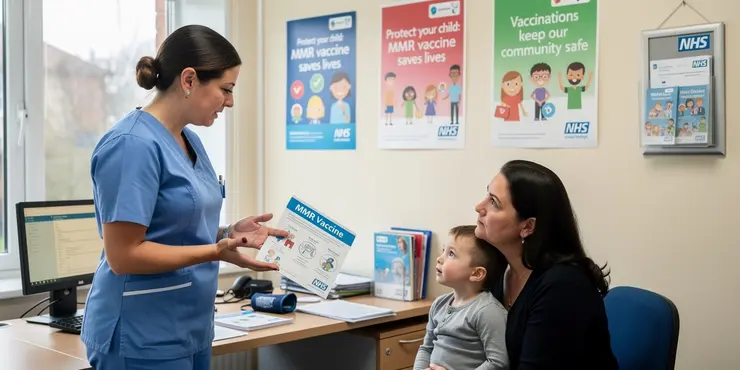
The UK government and health services are working to regain measles elimination status. This involves increasing vaccination rates through outreach and education efforts.
GPs and health clinics play a vital role in identifying and contacting individuals who missed vaccinations. Efforts are also underway to make vaccines more accessible and convenient for families.
The Way Forward
Regaining measles elimination status requires a sustained, multi-faceted approach. It involves combined efforts of the government, healthcare professionals, and communities.
Strengthening trust in vaccines, improving accessibility, and maintaining strong public health initiatives are key. These actions ensure that the UK can protect its population from measles and other preventable diseases.
Introduction to the Problem
In the past few years, the UK lost its status as a country where measles was no longer a problem. This is a big setback for public health. In 2016, the World Health Organization (WHO) said the UK was measles-free. But in 2019, this was taken away because more people got measles.
Being "measles-free" means there are no new cases spreading for at least a year. Losing this status shows it's hard to keep vaccination efforts strong. It's important to understand why this happened to help make better health decisions.
Drop in Vaccination Numbers
One main reason for losing the "measles-free" status is that fewer people are getting vaccines. Not enough children are getting the MMR vaccine, which protects against measles, mumps, and rubella. We need 95% of kids vaccinated to stop the spread of the disease.
False information about vaccines is making it worse. Some people wrongly say the MMR vaccine causes autism, even though scientists have shown it is safe.
Effect of Wrong Information
Social media spreads wrong information fast. Many people see this wrong information, and it makes some parents unsure about vaccines.
Health officials are trying to share true and accurate information to fight this. They need to find good ways to help people trust vaccines again.
Role of Health Campaigns
Health campaigns teach people why vaccines are important. They need to clear up any misunderstandings or fears about vaccines.
Doctors, teachers, and community leaders can help a lot. They can talk to people and explain why vaccines keep us safe and healthy.
Government and Health Services Actions
The UK government and health services want to stop the spread of measles again. They are working to get more people vaccinated through education.
Doctors and clinics are reaching out to families who missed vaccines. They are making it easier for families to get their shots.
Looking Ahead
To stop the spread of measles again, everyone needs to work together. The government, doctors, and communities must all help.
We need to trust vaccines, make them easy to get, and keep health programs strong. These steps will help the UK stay safe from measles and other diseases we can prevent.
Frequently Asked Questions
Losing measles elimination status means that the UK has continuous transmission of measles for more than 12 months, indicating the disease is no longer eliminated.
The UK lost its measles elimination status in August 2019.
The World Health Organization (WHO) is responsible for determining a country's measles elimination status.
It indicates that a country maintains high immunity levels to prevent the spread of measles and safeguards public health.
The main reasons were declining vaccination rates and subsequent outbreaks of measles.
Misinformation about the safety of vaccines, especially linked to the MMR vaccine, has led to vaccine hesitancy and reduced vaccination coverage.
The MMR vaccine is a combined vaccine that protects against measles, mumps, and rubella.
Children should receive the first dose of the MMR vaccine at around 12 to 13 months and a second dose before starting school, usually at 3 to 4 years old.
A vaccination coverage rate of 95% is necessary for herd immunity to prevent the spread of measles.
The MMR vaccination rate had fallen to around 87% in some areas, well below the 95% goal.
The UK government has launched campaigns to increase vaccination rates, address misinformation, and promote the benefits and safety of the MMR vaccine.
Vaccine hesitancy can lead to outbreaks of preventable diseases, posing risks to those who are too young or medically unable to be vaccinated, and can strain healthcare systems.
Yes, other countries have faced similar challenges due to vaccine hesitancy and misinformation, leading to decreases in vaccination rates and measles outbreaks.
Symptoms of measles include high fever, cough, runny nose, red eyes, and a characteristic red rash that usually starts on the face and spreads to the rest of the body.
Measles is extremely contagious; it can spread through coughing and sneezing and can remain infectious in the air for up to two hours.
Complications from measles can include ear infections, diarrhea, pneumonia, encephalitis, and even death.
Individuals should contact their healthcare provider immediately and avoid public places to prevent spreading the disease to others.
Yes, adults who have not been vaccinated or have no evidence of immunity should receive the MMR vaccine, especially if they are at higher risk such as healthcare workers or international travelers.
While natural infection does provide immunity, it poses significant health risks and is not a safe alternative to vaccination.
Healthcare providers play a crucial role by educating patients on the importance and safety of vaccines, dispelling myths, and encouraging vaccination.
If losing our measles elimination status happens, it means measles is spreading in the UK for over a year. This shows that measles is back.
In August 2019, the UK lost its status for getting rid of measles.
The World Health Organization (WHO) checks if a country has stopped measles for good.
The country keeps people safe from measles by making sure everyone stays healthy and protected. This helps stop measles from spreading and keeps everyone well.
The main reasons are fewer people getting vaccines and more people getting sick with measles.
Some people have shared wrong information about vaccines. This makes some people worried about getting vaccines. This has happened a lot with the MMR vaccine. Because of this, fewer people are getting vaccines.
If you find it hard to read, you can try listening to the words. You can also ask someone you trust to help explain it.
The MMR shot is a medicine that stops you from getting measles, mumps, and rubella. These are sicknesses you don't want.
To help understand better, you can use pictures or videos.
Kids need to get the first MMR shot when they are 12 to 13 months old. They get the second shot before they start school, usually when they are 3 to 4 years old.
We need 95% of people to get the measles shot to keep everyone safe. This helps stop the spread of measles.
The number of children getting the MMR vaccine had dropped to about 87% in some places. This is less than the goal of 95%.
The UK government is working hard to help more people get their vaccinations. They are telling people good and true information about vaccines and why it is important to get them. This is to help people understand that the MMR vaccine is safe and good for their health.
When people are unsure about vaccines, it can lead to more people getting sick from diseases we can usually stop. This can be dangerous for young kids or people who can't have vaccines because they are not strong enough.
It can also make doctors and hospitals very busy because more people are sick.
Try using pictures or videos to learn how vaccines work. Talking to your doctor or a nurse can help you find out more. Ask questions if you are unsure.
Yes, some other countries have had problems because people were worried about vaccines or heard wrong information. This made fewer people get vaccines and caused measles outbreaks.
Measles can cause:
- High fever (feeling very hot)
- Cough (a tickly throat)
- Runny nose (like when you have a cold)
- Red eyes (like when your eyes are sore)
- A red rash (spots) that starts on the face and moves to the body.
If you find reading hard, you can use audiobooks or text-to-speech apps that read texts out loud to you. Pictures or videos about measles can help you understand better too. Ask someone you trust to explain things if you need help.
Measles is very easy to catch. It can spread when someone coughs or sneezes. The virus can stay in the air for two hours and still make people sick.
Getting measles can cause other problems too. Some of these problems are ear infections, diarrhea (runny poo), and pneumonia (a lung infection). It can also cause encephalitis (swelling in the brain) and sometimes can be very serious, even causing death.
To help understand better, you can use pictures or videos about measles. Talking to someone you trust, like a doctor or a teacher, can also be helpful.
If you feel unwell, call your doctor right away. Stay at home and don't go to crowded places. This helps stop others from getting sick too.
Yes, grown-ups who haven't had the vaccine or don't know if they're safe should get the MMR shot. This is extra important for people like doctors, nurses, or those who travel to other countries a lot.
When you get sick, your body learns how to fight that sickness. This is called immunity. But getting sick can be very dangerous and make you feel very bad. Getting a shot, called a vaccination, is a safer way to help your body learn to fight sickness without getting very sick first.
Doctors and nurses help a lot by teaching people why vaccines are good and safe. They stop wrong ideas about vaccines and tell people why they should get vaccinated.

Ergsy Search Results
This website offers general information and is not a substitute for professional advice.
Always seek guidance from qualified professionals.
If you have any medical concerns or need urgent help, contact a healthcare professional or emergency services immediately.
Some of this content was generated with AI assistance. We've done our best to keep it accurate, helpful, and human-friendly.
- Ergsy carefully checks the information in the videos we provide here.
- Videos shown by Youtube after a video has completed, have NOT been reviewed by ERGSY.
- To view, click the arrow in centre of video.
- Most of the videos you find here will have subtitles and/or closed captions available.
- You may need to turn these on, and choose your preferred language.
- Go to the video you'd like to watch.
- If closed captions (CC) are available, settings will be visible on the bottom right of the video player.
- To turn on Captions, click settings.
- To turn off Captions, click settings again.