
Get Answers
Introduction to Eye Self-Testing
Self-testing your eyes can be an important part of maintaining eye health and vision quality. Many people in the UK may consider self-testing as a useful tool to identify potential issues early. While it is not a substitute for professional eye examinations, it can provide valuable insights into one’s eye health.
Monitoring Changes in Vision
As people age, vision naturally changes, and various conditions can affect eyesight. Regular self-testing can help individuals notice subtle changes in vision that they may not recognize day-to-day. Early detection of issues like blurry vision or difficulty focusing can prompt a visit to an optometrist, allowing for timely intervention and treatment.
Convenience and Accessibility
Self-testing offers a level of convenience and accessibility that traditional eye exams may not provide. With busy schedules, some individuals find it challenging to make regular visits to an optician. Eye self-tests, which can often be conducted at home using online tools or mobile apps, enable individuals to monitor their vision without needing an appointment.
Cost-Effectiveness
For some, cost can be a barrier to accessing routine eye care. Basic self-testing techniques can be a cost-effective way to keep track of eye health, especially for people who do not have immediate access to affordable eye care services. However, it is essential to remember that self-tests should not replace comprehensive eye exams conducted by professionals.
Detection of Eye Strain
In today’s digital age, prolonged screen time is common. People working from home or spending significant time on devices may experience eye strain, leading to discomfort and reduced productivity. Self-testing can help identify symptoms of digital eye strain, prompting users to take necessary breaks and apply the 20-20-20 rule, which encourages looking at something 20 feet away for 20 seconds every 20 minutes.
Understanding Specific Needs
Individuals with pre-existing vision conditions or who wear corrective lenses can benefit from routine self-testing to assess whether their prescriptions are still effective. Self-testing can reveal adjustments needed in glasses or contact lenses, ensuring that users continue to experience optimal vision without unnecessary strain.
Conclusion
Self-testing one’s eyes can be a valuable practice for maintaining good eye health and identifying vision changes that may require professional attention. It provides a convenient, accessible, and cost-effective way to keep track of eye health between professional visits. However, it is important to use self-testing to complement, not replace, regular eye examinations conducted by qualified optometrists or ophthalmologists. Always seek professional advice if you detect significant changes or have persistent concerns regarding your vision.
What is Eye Self-Testing?
Eye self-testing means checking your eyes yourself. It helps keep your eyes healthy. In the UK, many people find it helpful. Self-testing can show early signs of eye problems. But, it does not replace seeing an eye doctor.
Why Watch For Vision Changes?
As you get older, your eyes change. Self-tests can help you notice small changes in your sight. If you see blurry things or can't focus well, it's time to see an eye doctor. Seeing problems early means you can get help faster.
Easy and Accessible
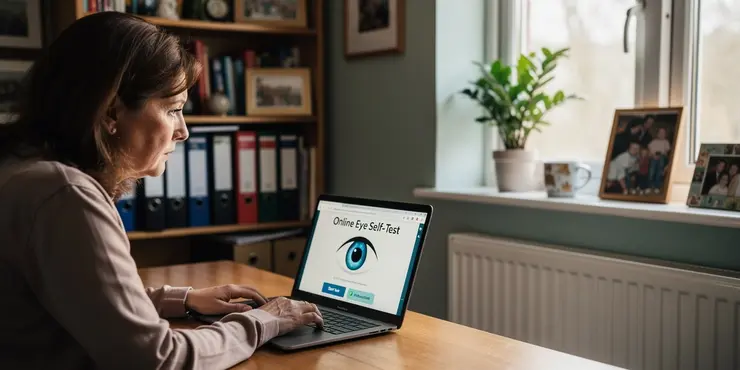
Eye self-testing is easy. You can do it at home. It helps when you are too busy to visit an eye doctor. You can use online tools or apps on your phone to check your vision.
Saves Money
Eye care costs money. Self-testing is a cheaper way to check your eyes. But remember, it's not a full exam. You still need to see an eye doctor sometimes.
Finding Eye Strain
We use screens a lot these days. Looking at phones or computers too long can tire your eyes. Self-tests can show if your eyes hurt from too much screen time. Try the 20-20-20 rule: every 20 minutes, look at something 20 feet away for 20 seconds.
Checking Your Glasses or Contacts
If you wear glasses or contacts, self-testing helps see if they still work well. It shows if you need a new pair, so you see clearly without hurting your eyes.
In Summary
Checking your eyes on your own is good for keeping them healthy. It helps find vision changes that might need a doctor. Self-testing is easy, cheap, and helps between doctor visits. But always go to an eye doctor if you notice big changes or are worried about your eyes.
Frequently Asked Questions
Self-testing your eyes can help identify vision problems early, allowing for timely professional intervention and treatment.
It is a good practice to self-test your eyes every few months, or whenever you notice changes in your vision.
No, self-testing does not replace a comprehensive eye exam by an optometrist or ophthalmologist, which is necessary for a complete evaluation of eye health.
Common signs include blurred vision, difficulty seeing at night, headaches, eye strain, or double vision.
Methods include online eye tests, mobile app tests, and at-home vision acuity charts.
Anyone experiencing changes in vision or people with a family history of eye diseases can benefit from self-testing.
While self-testing can indicate potential issues, it is not a substitute for diagnosing serious conditions like glaucoma or macular degeneration.
Online tests can give a preliminary assessment but should not be solely relied upon for serious or comprehensive testing.
A visual acuity test measures how well you can see letters or symbols from a specific distance and is a fundamental part of vision testing.
If a self-test indicates issues, schedule an appointment with an eye care professional for a thorough assessment.
Regular self-testing can monitor changes in vision, helping you manage conditions like myopia, hyperopia, or presbyopia.
As we age, the likelihood of developing vision issues increases, making regular testing more crucial.
You can use online color vision tests or apps that provide Ishihara plates for initial screening.
Self-testing can help identify symptoms like eye strain or fatigue associated with prolonged screen use.
Self-testing can be a useful tool for children to spot potential vision issues, but professional evaluation is crucial especially for young children.
Ensure good lighting, follow instructions carefully, and avoid testing when tired or stressed for accurate results.
Yes, changes in activities or screen time can affect vision, increasing the importance of regular self-assessment.
Documenting results in a journal or using apps that track vision changes over time can be useful.
A pinhole test can help differentiate between refractive errors and other types of vision problems by narrowing the light entering the eye.
Early detection can lead to more effective treatment and prevent further deterioration of vision.
Testing your eyes at home can help find problems with your vision early. This way, you can get help from a doctor and treatment quickly if you need it.
It is a smart idea to check your eyes every few months. You should also do this if your vision changes.
No, testing your eyes at home is not the same as having a full eye exam. An eye doctor needs to check your eyes to make sure they are healthy.
If you find it hard to read, you can:
- Use a ruler or your finger to help track the words.
- Ask someone to read with you.
- Try using audiobooks to listen to the information.
Some common signs are blurry vision, trouble seeing when it's dark, headaches, tired eyes, or seeing double.
You can test your eyes in these ways:
- Online eye tests.
- Using a mobile app.
- At home with a vision chart.
These methods can help you see how well your eyes work.
If your eyes change or if you have family members with eye problems, it is a good idea to check your eyes yourself.
Testing your eyes at home can show if something might be wrong. But it won't tell you for sure if you have a serious eye problem like glaucoma or macular degeneration.
Online tests can give you an idea, but you shouldn't only use them for important checks.
A vision test checks how well you can see letters or shapes from a certain distance. It is an important part of checking how good your eyesight is.
If your eye test shows a problem, you should book a visit to see an eye doctor. They will check your eyes very carefully.
Checking your eyes often can help you see how your vision is changing. This can help you handle problems like nearsightedness (where you can't see far away), farsightedness (where you can't see close up), or trouble seeing as you age.
Here are some helpful tips:
- Use magnifying glasses to see small letters or objects better.
- Try reading in good light to reduce strain on your eyes.
- Visit an eye doctor if you notice changes in your vision.
- Use large print books or other materials if you have difficulty with smaller text.
- There are apps and tools available that can help with testing your vision regularly.
As we get older, our eyes might not work as well. This means it's important to get our eyes checked often.
You can use online tests or apps to check how you see colors. They have special pictures called Ishihara plates that help test your color vision.
Testing yourself can help you find out if you have problems like tired eyes or feeling very tired after looking at screens for a long time.
Self-tests can help kids find problems with their eyesight. But it is very important to see a doctor, especially for young kids.
Make sure the lights are bright. Read and follow all the steps. Don’t do the test if you are tired or upset. This will help you get the right results.
Yes, doing different things or spending more time on screens can change how well we see. It is important to check our vision often.
Here are some tips to help:
- Take breaks from screens every 20 minutes. Look at something far away.
- Sit in good light when you read or use a screen.
- Make sure you have regular eye check-ups.
Writing down what you see in a notebook or using apps that help you keep track of how your sight changes can be helpful.
A pinhole test can help figure out if someone needs glasses or has a different eye problem. It does this by letting only a little bit of light into the eye.
If you find reading difficult, you can use magnifying glasses or ask someone to read with you. You can also use audiobooks to listen instead of reading.
Finding problems with your eyes early can help doctors give better treatment and stop your eyesight from getting worse.

Ergsy Search Results
This website offers general information and is not a substitute for professional advice.
Always seek guidance from qualified professionals.
If you have any medical concerns or need urgent help, contact a healthcare professional or emergency services immediately.
Some of this content was generated with AI assistance. We've done our best to keep it accurate, helpful, and human-friendly.
- Ergsy carefully checks the information in the videos we provide here.
- Videos shown by Youtube after a video has completed, have NOT been reviewed by ERGSY.
- To view, click the arrow in centre of video.
- Most of the videos you find here will have subtitles and/or closed captions available.
- You may need to turn these on, and choose your preferred language.
- Go to the video you'd like to watch.
- If closed captions (CC) are available, settings will be visible on the bottom right of the video player.
- To turn on Captions, click settings.
- To turn off Captions, click settings again.