
Speak To An Expert
Get clear, personalised advice for your situation.
Jot down a few questions to make the most of your conversation.
Understanding the Role of a Prison Officer
In the UK, a prison officer is a uniformed member of staff working in a prison environment. Their primary responsibilities include maintaining security and order, supervising inmates, and ensuring the safety of both prisoners and staff. Prison officers often work closely with other professionals such as healthcare providers, education staff, and probation officers to support the rehabilitation process of inmates. Understanding their role is crucial if you are visiting a prison or have a relative or friend who is incarcerated.
Reasons for Meeting a Prison Officer
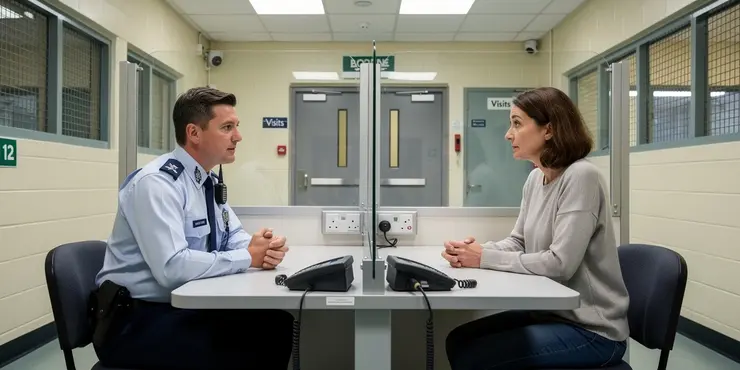
If you are visiting someone in prison, you may have the opportunity to interact with a prison officer. They play a vital role in maintaining the security of the institution and ensuring visits run smoothly and safely. You might meet with a prison officer upon arrival, during the processing and security check, or if there are any issues that need to be addressed during your visit. Additionally, prison officers may provide information about the procedures, regulations, and any changes in the visiting routine.
How to Prepare for Meeting a Prison Officer
When planning to visit a prison in the UK, it is important to know what to expect. You may be asked to provide identification and undergo a security check. It is advisable to be patient and cooperative, as prison officers are responsible for upholding strict security measures. Be respectful and polite when interacting with prison staff. If you have questions or concerns, don't hesitate to ask; prison officers are trained to assist visitors and provide necessary information regarding the prison’s procedures.
Interacting with a Prison Officer
Communication with a prison officer should be clear and respectful. Remember that their primary goal is to ensure the safety and security of the prison environment. If you have any concerns about your visit, such as the duration or frequency, prison officers can provide clarification. Additionally, they can inform you about any specific rules and conduct expected during visits, such as prohibited items or behaviors that could jeopardize security.
Challenges Faced by Prison Officers
Prison officers in the UK face numerous challenges due to the nature of their work environment. They often manage stressful situations and must maintain authority and professionalism under pressure. This includes dealing with conflicts between inmates, ensuring compliance with rules, and handling emergencies. Understanding these challenges can help you appreciate their role and the importance of following their instructions when visiting a prison.
Conclusion
Meeting with a prison officer in the UK is a likely part of visiting a prison. Their responsibilities are vital for the operation of the institution and ensuring the safety of everyone involved. By understanding their role, preparing appropriately, and respecting their duties, your visit can be a more positive experience. If you have questions, prison officers are a valuable resource to help you understand the environment and protocols of the prison system.
What Does a Prison Officer Do?
A prison officer works in a prison. They wear a uniform and help keep the place safe. They watch over the people in prison and make sure everyone follows the rules. Prison officers also work with doctors, teachers, and other helpers to support people in prison. This is important if you visit a prison or know someone in prison.
Why You Might Meet a Prison Officer
If you visit someone in prison, you might meet a prison officer. They help keep things safe during visits. You could see a prison officer when you arrive, during a security check, or if there is a problem. They can tell you what you need to know about visiting rules and if anything changes.
Getting Ready to Meet a Prison Officer
If you plan to visit a UK prison, it helps to know what to expect. You might need to show ID and go through security. It's important to be patient and follow the rules. Be polite when talking to prison officers. If you have questions, don’t be afraid to ask. They can help you understand what to do.
Talking with a Prison Officer
When speaking with a prison officer, be clear and respectful. They work to keep the prison safe. If you are unsure about something, like how long you can visit, they can explain it to you. They also tell you the do's and don'ts during your visit.
Challenges Prison Officers Face
Prison officers have a tough job. They deal with difficult situations and must stay calm and professional. This includes solving problems between inmates and handling emergencies. Knowing their challenges helps us follow their rules when visiting.
Final Thoughts
Meeting a prison officer is part of visiting a prison in the UK. They play a key role in keeping everything secure. By knowing what they do, getting ready, and respecting them, your visit can be better. If you have questions, prison officers are there to help you understand how things work in the prison.
Frequently Asked Questions
A prison officer is responsible for maintaining the security and order within a correctional facility, overseeing the daily activities and welfare of the inmates.
If you visit a prison, you may encounter prison officers during your visit, but meeting them personally may not be part of the standard visit process unless arranged beforehand.
To arrange a meeting with a prison officer, you typically need to contact the prison administration to request an appointment and state the purpose of your meeting.
It depends on the purpose of your visit. For regular visits to see an inmate, a formal meeting with a prison officer is usually not required.
You should bring a valid photo ID and any documentation related to the purpose of your meeting. Additional items may be specified by the prison administration.
Yes, visiting hours are often specified by the prison. It's best to check with the facility for the exact times you can meet with a prison officer.
During a meeting with a prison officer, expect to discuss your visit's purpose, abide by their protocols, and follow any instructions related to the meeting.
Inmates usually cannot arrange meetings for visitors with prison officers. Visitors need to make such requests directly with the prison administration.
Prison officers are trained to handle visitor inquiries professionally, providing accurate and necessary information while ensuring prison protocols are maintained.
Prisons often have a dress code policy for visitors, so it's advisable to dress conservatively and avoid wearing clothing that resembles officer or inmate attire.
Yes, legal representatives can meet with prison officers as part of their work related to inmates, usually by coordinating with the prison administration.
You can discuss topics such as inmate welfare, visitation procedures, or other relevant concerns, but make sure your questions are appropriate and respectful.
You can contact the prison using their official phone number or email and request to speak with a prison officer or someone who can address your concerns.
Conversations with prison officers are generally not considered confidential. Sensitive matters might require speaking with higher-level staff or legal advisors.
Prison officers may provide general information but will not disclose personal or confidential information about inmates due to privacy laws and regulations.
You typically need permission or an appointment to meet with a prison officer, especially if the meeting is unrelated to a regular visit.
Yes, if you are interested in volunteering, you may contact the prison to discuss opportunities and requirements with a relevant staff member.
You should follow the prison’s complaint procedure, which often involves submitting a written complaint to the prison administration or an oversight body.
Meetings with multiple officers can be arranged if required for the subject matter, but they typically need to be coordinated in advance.
You can follow up by contacting the prison administration and referring to your meeting. If necessary, ask for further clarification or next steps.
A prison officer works in a jail. They make sure everything is safe and calm. They look after the people in jail and make sure everyone follows the rules each day.
If you go to a prison, you might see prison officers. But you might not talk to them unless you set it up before you go.
If you want to meet a prison officer, you should talk to the people who run the prison. Ask them for a meet-up and tell them why you want to meet.
Why are you visiting? If you are going to see someone in prison, you usually don't need to have a special meeting with a prison officer first.
Bring a photo ID that shows who you are. Also, bring any papers you need for your meeting. The prison might ask you to bring other things too.
Yes, there are set times when you can visit a prison. You should ask the prison when you can visit so you know the right times.
When you meet with a prison officer, you will talk about why you are visiting. You need to follow their rules and listen to any instructions they give you.
People in prison usually can't set up meetings for visitors with the prison guards. Visitors have to ask the prison office themselves.
Prison officers are taught to help visitors. They answer questions in a professional way. They give the right information and follow prison rules.
When you visit someone in prison, you need to wear the right clothes. Prisons have rules about what visitors can wear. It's best to dress in simple and plain clothes. Don't wear anything that looks like what officers or inmates wear in prison.
Yes, lawyers can talk to prison guards. They do this because of their work with people in prison. They usually plan these meetings with the prison staff.
You can talk about things like how prisoners are looked after, how to visit someone in prison, or any other important questions. Make sure your questions are nice and polite.
You can call or email the prison. Ask to talk to someone who can help you.
When you talk to prison guards, it usually isn't private. If you need to talk about something important, you might need to speak to a manager or a lawyer.
Prison officers can give general information. But they will not share personal or private information about people in prison because of privacy laws and rules.
You usually need to ask for permission or set up a time to meet with a prison officer. This is important if the meeting is not part of a usual visit.
If you want to help out at the prison, you can call them. They will tell you what you can do and what you need to know.
If you have a problem in prison, you should use the prison's way to complain. This usually means writing down your complaint and giving it to the prison bosses or a special group that checks on the prison.
Sometimes, you might need to have a meeting with more than one officer. If this is the case, you should plan the meeting ahead of time.
Here are some tips to help:
- Ask someone to help you with planning the meeting.
- Use a calendar to pick a day and time that works for everyone.
- Write down the things you want to talk about in the meeting.
You can talk to the prison office. Tell them about your meeting. If you need more help, ask what to do next.

Ergsy Search Results
This website offers general information and is not a substitute for professional advice.
Always seek guidance from qualified professionals.
If you have any medical concerns or need urgent help, contact a healthcare professional or emergency services immediately.
Some of this content was generated with AI assistance. We've done our best to keep it accurate, helpful, and human-friendly.
- Ergsy carefully checks the information in the videos we provide here.
- Videos shown by Youtube after a video has completed, have NOT been reviewed by ERGSY.
- To view, click the arrow in centre of video.
- Most of the videos you find here will have subtitles and/or closed captions available.
- You may need to turn these on, and choose your preferred language.
- Go to the video you'd like to watch.
- If closed captions (CC) are available, settings will be visible on the bottom right of the video player.
- To turn on Captions, click settings.
- To turn off Captions, click settings again.