
Get Answers
Understanding Your Right to Complain
If you are dissatisfied with your NHS dental treatment, you have the right to make a complaint. It's important to know that the NHS values patient feedback and uses it to improve services.
You can complain about any aspect of your dental treatment, including the quality of service or the behavior of staff. Ensure you gather all relevant information regarding the issue to support your case.
Step-by-Step Complaints Process
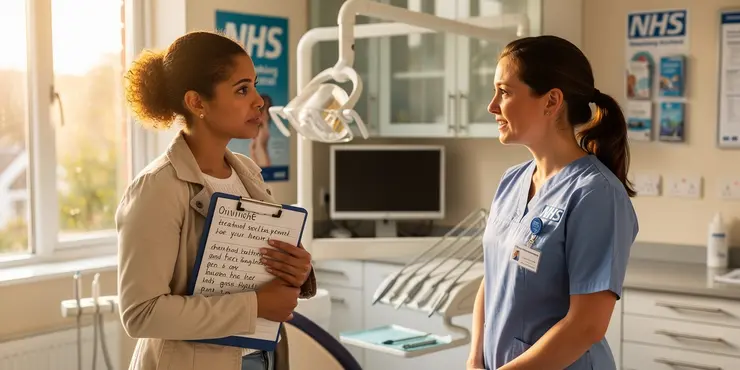
The first step is to address your concerns directly with the dental practice. Many issues are resolved at this stage through open communication.
Each NHS dental practice has a designated complaints manager. You can speak directly with them or put your concerns in writing.
Allow a reasonable time for the dental practice to respond. The NHS has a standard timeframe, but practices may vary slightly.
Escalating Your Complaint
If you're not satisfied with the response from the dental practice, you can escalate the issue. The next step would be to contact the NHS England Customer Contact Centre.
NHS England acts as an intermediary if direct communication with your dental practice does not solve the problem. They will investigate further and aim to provide a satisfactory resolution.
Another option is to contact the Parliamentary and Health Service Ombudsman. They deal with complaints about NHS services that have not been resolved locally.
Seeking Additional Support
If you need additional advice or support, organizations like Healthwatch or the NHS Complaints Advocacy services can help. These organizations provide independent advice and can guide you through the complaints process.
They can also represent you, if needed, while escalating your complaint to higher authorities. This could be beneficial if you're not comfortable handling the process alone.
Considering Alternative Options
While NHS services aim to meet high standards, exploring private dental care could be an option if you remain unhappy. Private care often offers more flexibility and personalized attention.
Always weigh the costs and benefits, as private dental treatments can be more expensive. However, ensuring your dental health and satisfaction may make it a worthwhile consideration.
Ultimately, whether you choose to stay with the NHS or switch to private care, make sure you are comfortable with the service provided.
Frequently Asked Questions
First, speak directly with your dentist or the dental practice manager to discuss your concerns and see if they can be resolved. If not, consider reaching out for further advice.
You can discuss the possibility of a refund with your dental practice, but refunds are handled on a case-by-case basis.
Yes, if informal discussions do not resolve your issue, you can make a formal complaint to the dental practice or the NHS depending on your situation.
You can write a letter to the practice manager of your dental surgery or use the practice's complaints procedure documentation, available at the surgery.
Include your name, address, the details of your complaint, how you would like the matter resolved, and any relevant dates and information.
Complaints should be made within 12 months of the date of the incident or the date you discovered the issue.
If you are unsatisfied with the response to your complaint, you can escalate the matter to the Parliamentary and Health Service Ombudsman.
Yes, you are free to choose another NHS dentist if you are not satisfied with your current treatment.
Making a complaint should not affect your ongoing or future dental treatment within the NHS.
Yes, you can seek legal advice, but it is usually best to pursue all other complaint avenues first.
Yes, organizations like Healthwatch or the Patient Advice and Liaison Service (PALS) can assist you.
The GDC regulates dentists and dental care professionals in the UK. They can investigate complaints about professional misconduct but not about NHS service levels.
The dental practice should acknowledge your complaint within 3 working days and aim to respond fully within 20 working days.
If you believe there was negligence, you may need to seek legal advice to discuss the possibility of a medical negligence claim.
The NHS does not typically provide mediation services specifically for dental complaints, but PALS may help facilitate communication between you and the practice.
You should not be removed from the practice list solely for making a complaint. Practices are expected to handle complaints professionally.
Yes, you can see a private dentist for a second opinion, but this will not be covered by the NHS.
Compensation claims depend on the specifics of your case and usually require assessing through legal channels, especially if negligence is involved.
Organizations like Healthwatch or your local Citizens Advice Bureau can provide guidance on writing effective complaints.
It depends on the circumstances. Discuss this with your dental practice to see what options are available for corrective work.

Ergsy Search Results
This website offers general information and is not a substitute for professional advice.
Always seek guidance from qualified professionals.
If you have any medical concerns or need urgent help, contact a healthcare professional or emergency services immediately.
Some of this content was generated with AI assistance. We've done our best to keep it accurate, helpful, and human-friendly.
- Ergsy carefully checks the information in the videos we provide here.
- Videos shown by Youtube after a video has completed, have NOT been reviewed by ERGSY.
- To view, click the arrow in centre of video.
- Most of the videos you find here will have subtitles and/or closed captions available.
- You may need to turn these on, and choose your preferred language.
- Go to the video you'd like to watch.
- If closed captions (CC) are available, settings will be visible on the bottom right of the video player.
- To turn on Captions, click settings.
- To turn off Captions, click settings again.