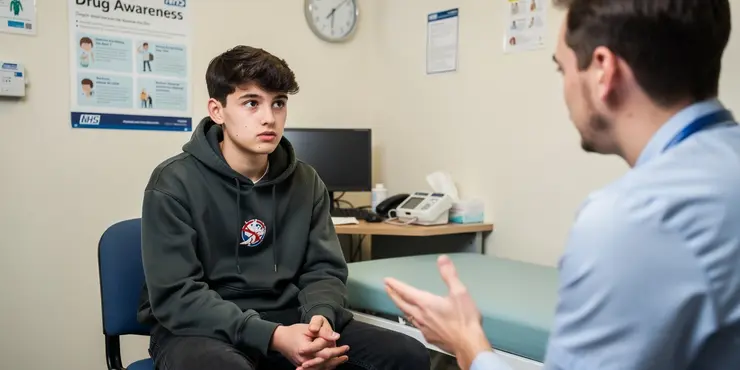

Get Answers
Can Minors Be Charged with Drug Offences in the UK?
In the United Kingdom, drug offences are taken seriously, and this includes those committed by minors. A minor, under UK law, refers to an individual under the age of 18. Drug offences can range from possession and supply to production and trafficking. The manner in which minors are dealt with under drug-related charges can differ from adults, emphasizing rehabilitation rather than punishment.
Legal Framework and Policy
The Misuse of Drugs Act 1971 is the primary legislation governing drug offences in the UK. It categorizes controlled substances into three classes: A, B, and C, depending on their potential for harm. When a minor is caught with controlled substances, several factors influence the legal response, such as the type and quantity of the drug, and the circumstances of the offence (e.g., possession versus intent to supply).
Police Action and Consequences
When minors are apprehended for drug offences, the police have several options. Initially, they may issue a community resolution or youth caution if it's the first offence and the drug is considered low risk. This approach is to educate rather than punish. However, if the offence is more severe or a repeat occurrence, a youth conditional caution may be issued, requiring the minor to fulfill certain conditions, such as attending a drug awareness program.
Court Proceedings
If the case goes to court, it will typically be heard in a youth court. The youth court is designed to handle cases involving defendants aged 10 to 17 and operates with less formality compared to adult courts. A range of sentences may be handed out, from fines to referral orders, where the minor may have to agree to a contract aimed at addressing their behaviour. In serious cases, a youth rehabilitation order or, in the most severe cases involving older minors, detention may be considered.
Emphasis on Rehabilitation
The UK legal system places a strong emphasis on the rehabilitation of young offenders. Interventions often involve working with youth offending teams that coordinate efforts to steer minors away from criminal activities. These teams conduct assessments to identify needs related to education, family situation, and drug use, offering a foundation for personalized rehabilitation plans. Such approaches help minors reintegrate into society and reduce recidivism.
Conclusion
While minors can indeed be charged with drug offences in the UK, the approach taken balances accountability with opportunities for rehabilitation. The emphasis is on preventing future involvement in drug-related crime through educational and corrective measures. This strategy reflects a societal commitment to helping young people amend their paths while maintaining public safety.
Can Children Be Charged with Drug Crimes in the UK?
In the UK, drug crimes are very serious. This includes crimes done by children. A child, in UK law, is someone under 18 years old. Drug crimes can be having drugs, selling drugs, making drugs, or moving drugs. Children who break drug laws are treated differently from adults. The focus is on helping them get better, not just punishing them.
Drug Laws and Rules
The Misuse of Drugs Act 1971 is the main law for drug crimes in the UK. It puts drugs in three groups: A, B, and C. This is based on how dangerous they are. If a child is found with drugs, things like what type of drug it is and how much they have will affect what happens next. It also matters if they just had the drugs or were trying to sell them.
Police Actions and What Happens Next
If the police catch a child with drugs, they have different choices. If it is the first time and the drug is not too serious, the police might give a warning or talk to them about it. This is to teach them instead of punishing them. If it happens again or it is a more serious crime, the police may make the child do certain things, like going to a drug awareness class.
Going to Court
If the case goes to court, it usually happens in a youth court. Youth courts are for children aged 10 to 17. They are less formal than adult courts. The court can give different punishments, like fines or referral orders. Referral orders mean the child must agree to a plan to change their behavior. For serious cases, the court may consider sending them to a program to help them, or in very bad cases, even detention.
Helping Young Offenders
The UK's legal system wants to help children who break the law. They usually work with teams that focus on young people. These teams help by looking at things like the child’s school, family, and drug use to make a special plan for them. The goal is to help the child not commit crimes again and to fit back into the community.
Conclusion
Yes, children can be charged with drug crimes in the UK. But the goal is to help them change, not just to punish them. The focus is on education and helping them make better choices in the future. This helps protect the public while giving children a chance to improve.
Frequently Asked Questions
Yes, minors can be charged with drug offences, although the legal process often differs from that of adults.
If a minor is caught with drugs, they may face charges in a juvenile court, where the focus is often on rehabilitation rather than punishment.
No, minors typically face different penalties than adults, with an emphasis on rehabilitation and education.
In certain serious cases, a minor can be tried as an adult, but this is generally rare for drug offences.
Minors have the right to an attorney, the right to remain silent, and other protections afforded by the juvenile justice system.
In many jurisdictions, juvenile records may be sealed or expunged under certain conditions, meaning they are not accessible to the public.
Parents or guardians are usually involved throughout the process, from attending court hearings to helping the minor meet any court-ordered requirements.
Yes, but the juvenile justice system typically prefers alternatives like probation, counseling, or community service.
For a first offence, penalties might include counseling, community service, probation, or drug education programs.
Yes, a minor can be charged with drug trafficking, which is considered a more serious offence than simple possession.
A drug charge may impact a minor's future opportunities, but juvenile records can often be sealed, reducing long-term effects.
In some cases, schools may be notified, especially if the offence occurred on school property.
Yes, in some jurisdictions, drug charges can lead to the suspension or delay of a minor's driving privileges.
Yes, drug education programs are often part of the penalties or rehabilitation for minors charged with drug offences.
Yes, some jurisdictions have diversion programs that allow charges to be dropped or reduced if the minor successfully completes certain conditions.
A lawyer can provide legal representation, protect the minor's rights, and seek the best possible outcome in their case.
While there are instances, the rates vary by region and demographic factors, but drug use and possession are among the more frequent charges minors face.
Yes, community service is frequently used as part of the penalty or rehabilitation process for minors.
Yes, minors will have to attend juvenile court hearings, often accompanied by a parent or guardian.
Minors have legal rights, and the ability to refuse a drug test can depend on the situation and local laws. Legal counsel should be sought.
Yes, kids under 18 can get in trouble for using or having drugs. But the way the law deals with them is not the same as for grown-ups.
If a kid is caught with drugs, they might have to go to a special court for children. This court wants to help them get better and make good choices instead of punishing them.
No, kids usually get different punishments than grown-ups. The focus is on helping them learn and improve.
Sometimes, if something very bad happens, a child can be treated like a grown-up in court. But this does not happen often if it is about drugs.
Children have rights. They can have a lawyer. They can stay quiet. There are special rules to help them in court.
In many places, kids' records can be hidden or erased if certain rules are met. This means the public can't see them.
Parents or caregivers are usually there to help. They come to court with the child and help them do what the court says.
Yes, but the rules for kids who break the law usually like to use other ways to help, like letting them stay at home but follow rules, talking with a counselor, or doing jobs to help the community.
If someone gets into trouble for the first time, they might have to do a few things to make up for it. These things can include talking to someone who can help, doing work to help their community, meeting with a probation officer, or going to classes to learn about drugs.
Yes, a child or teenager can get in trouble for selling or moving drugs. This is seen as a bigger problem than just having drugs.
A drug charge might affect a young person's future. But, the records can sometimes be closed, so it won't cause problems later.
Sometimes, schools might be told if something bad happened at the school.
Yes, in some places, if a young person breaks the law with drugs, they might not be allowed to drive for a while.
Yes, young people who get in trouble for breaking drug rules often have to go to classes to learn about drugs. This is part of their punishment or to help them get better.
Yes, some places have special programs that can help kids stay out of trouble. If they follow the rules, the charges against them might go away or become less serious.
A lawyer can help you in court. They make sure your rights are safe and try to get the best results for you.
Kids can sometimes get in trouble for using or having drugs. How often this happens can be different in different places and for different groups of people.
Community service is often used as a way to help young people learn after they do something wrong. It is part of their punishment or a way to help them get better.
To help understand this, you can use pictures or videos. These tools can make the information easier to remember.
Yes, kids will need to go to court. They should bring a parent or a grown-up they trust with them.
Kids have rights. Saying "no" to a drug test depends on where you live and what is happening. It's good to talk to a lawyer for help.

Ergsy Search Results
This website offers general information and is not a substitute for professional advice.
Always seek guidance from qualified professionals.
If you have any medical concerns or need urgent help, contact a healthcare professional or emergency services immediately.
Some of this content was generated with AI assistance. We've done our best to keep it accurate, helpful, and human-friendly.
- Ergsy carefully checks the information in the videos we provide here.
- Videos shown by Youtube after a video has completed, have NOT been reviewed by ERGSY.
- To view, click the arrow in centre of video.
- Most of the videos you find here will have subtitles and/or closed captions available.
- You may need to turn these on, and choose your preferred language.
- Go to the video you'd like to watch.
- If closed captions (CC) are available, settings will be visible on the bottom right of the video player.
- To turn on Captions, click settings.
- To turn off Captions, click settings again.