

Speak To An Expert
Get clear, personalised advice for your situation.
Jot down a few questions to make the most of your conversation.
More Items From Ergsy search
-

How do I report and pay Capital Gains Tax on property disposals?
Relevance: 100%
-

How do I report and pay Capital Gains Tax on property disposals?
Relevance: 99%
-
How do I pay the Capital Gains Tax after reporting the property disposal?
Relevance: 96%
-

What is Capital Gains Tax (CGT)?
Relevance: 83%
-

How do I report a property disposal to the tax authorities?
Relevance: 83%
-

What tax rate applies to capital gains from property sales?
Relevance: 83%
-

Are there expected changes to capital gains tax in 2026?
Relevance: 77%
-

When is the deadline for reporting property disposals for CGT purposes?
Relevance: 67%
-

What happens if I don't report a property disposal for CGT?
Relevance: 66%
-
How do I calculate the gain on my property sale?
Relevance: 58%

-

How do I know if I need to pay CGT on my property disposal?
Relevance: 58%
-

Can I offset losses from other properties when calculating my CGT?
Relevance: 57%
-

Are there specific forms required for reporting CGT on property disposals?
Relevance: 57%
-

What is the wealth tax in the UK?
Relevance: 57%
-

What is the Wealth Tax in the UK?
Relevance: 54%
-

Is there any relief available for CGT on property disposals?
Relevance: 53%
-
How can I reduce my CGT liability on a property sale?
Relevance: 51%
-

Do I need professional advice for reporting and paying CGT?
Relevance: 49%
-

What is the annual CGT allowance?
Relevance: 49%
-

Why doesn't the UK have a wealth tax?
Relevance: 49%
-

Do I need to pay CGT if I gift a property?
Relevance: 48%
-
Do I pay Inheritance Tax on a property I inherit?
Relevance: 44%
-

How might a wealth tax affect wealthy individuals?
Relevance: 43%
-

Could a wealth tax affect economic growth in the UK?
Relevance: 43%
-

Would a wealth tax replace other taxes in the UK?
Relevance: 43%
-

Can CGT be deferred or paid in installments?
Relevance: 43%
-

Has the UK ever had a wealth tax?
Relevance: 42%
-

Can gifting reduce future inheritance tax liabilities?
Relevance: 41%
-

What information do I need to complete my Self Assessment tax return?
Relevance: 41%
-

What is the objective of a wealth tax?
Relevance: 41%
-

What is a Wealth Tax?
Relevance: 40%
-

How might a wealth tax impact inequality in the UK?
Relevance: 40%
-

Can a wealth tax be levied annually?
Relevance: 40%
-

Why did I receive a tax refund letter from HMRC?
Relevance: 40%
-
Who needs to file a Self Assessment tax return?
Relevance: 40%
-

Can a wealth tax impact economic behavior?
Relevance: 40%
-
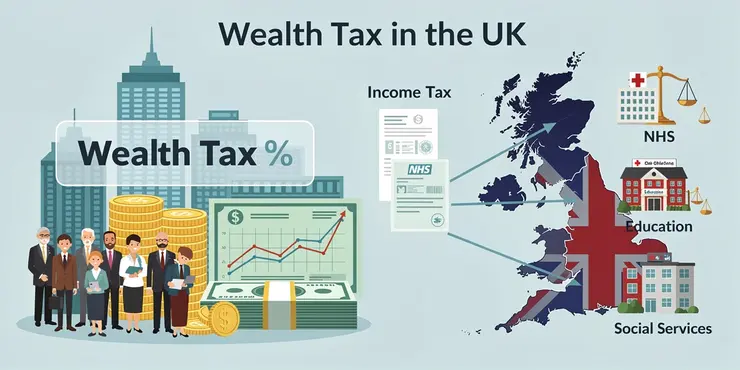
How does a wealth tax differ from an income tax?
Relevance: 39%
-
Is the Winter Fuel Payment taxable?
Relevance: 39%
-

Chancellor Unveils Plans to Reform UK Tax System
Relevance: 39%
-

Do I need to report the Winter Fuel Payment on my tax return?
Relevance: 39%
Understanding Capital Gains Tax on Property
Capital Gains Tax (CGT) is applied to the profit made from selling a property. It is important to report and pay this tax correctly to HM Revenue and Customs (HMRC). CGT typically applies to second homes or buy-to-let properties.
When you sell a property, you need to calculate the gain, which is the selling price minus the original purchase price and any allowable expenses. Gaining clear knowledge of liabilities helps in efficient tax planning.
Calculating Your Capital Gain
Start by determining your property's sale proceeds. Once established, subtract the purchase cost from these proceeds to find the gain. You can also deduct certain expenses, such as legal fees and estate agent costs.
If you have made home improvements, these costs can also reduce the capital gain. Ensure all documentation is accurate and retained for future reference.
Reporting the Gain to HMRC
After calculating the gain, the next step is to report it to HMRC. This is typically done through your Self Assessment tax return. Ensure you have your financial records and documentation ready for accuracy.
If your gain exceeds the annual tax-free allowance, you must report it separately within 60 days of the sale. You can use HMRC’s online services to report and pay.
Paying Capital Gains Tax
Once calculated, you'll need to pay any CGT owed promptly. HMRC provides several ways to pay, including bank transfer and debit card payments. Ensure timely payment to avoid penalties.
The CGT rate for property is higher than other assets, at either 18% or 28%. The rate depends on your taxable income and gains combined for the financial year.
Using Exemptions and Reliefs
There are exemptions and reliefs available to help reduce CGT liability. The most common is Private Residence Relief, applicable if the property was your main home at some point.
Check if you're eligible for reliefs or exemptions by consulting HMRC guidelines. These can make a significant difference in the amount you need to pay.
Consulting a Tax Professional
It can be beneficial to consult a tax professional when dealing with CGT. They can provide tailored advice and ensure compliance with tax laws.
A professional can also help with complex cases, such as multiple property disposals or international property ownership. This guidance can be valuable, especially for significant transactions.
Understanding Capital Gains Tax on Property
Capital Gains Tax (CGT) is a tax you pay when you make money from selling a property. You have to tell HM Revenue and Customs (HMRC) about it and pay the correct amount. This tax usually applies to properties that are not your main home.
When you sell a property, you need to figure out how much money you gained. This is done by subtracting what you paid for the property and any expenses from the selling price. Knowing how much tax you owe helps you plan better.
Calculating Your Capital Gain
First, find out how much you sold your property for. Then take away what you paid for it from that amount. You can also subtract any costs, like legal fees and fees paid to estate agents.
If you have spent money to improve the property, those costs can also reduce how much gain you report. Keep all your papers safe and correct for the future.
Reporting the Gain to HMRC
Once you know the gain, you need to tell HMRC. Usually, you do this through your Self Assessment tax return. Have all your financial papers ready to make sure your report is correct.
If the gain is more than your tax-free amount for the year, you must let them know within 60 days of selling the property. You can do this using HMRC’s online services.
Paying Capital Gains Tax
After working out the CGT, you need to pay it. HMRC lets you pay in different ways, like a bank transfer or using a debit card. Pay on time to avoid extra charges.
The tax rate for selling property is either 18% or 28%. The rate depends on how much money you make in a year.
Using Exemptions and Reliefs
There are ways to pay less CGT. If the property was your main home, you might pay less tax. This is called Private Residence Relief.
Check with HMRC to see if you can pay less tax. This can save you money.
Consulting a Tax Professional
Talking to a tax expert can help you understand CGT. They can give you advice and make sure you follow the tax rules.
An expert is helpful if you have more than one property or if the property is in another country. This advice is useful for big transactions.
Frequently Asked Questions
What is Capital Gains Tax?
Capital Gains Tax (CGT) is a tax on the profit when you sell or dispose of an asset that has increased in value.
When do I need to pay Capital Gains Tax on property?
You need to pay CGT when you sell or dispose of a property that is not your main residence and you have made a profit on it.
How do I calculate Capital Gains Tax?
To calculate CGT, subtract the property's purchase price and any allowable expenses from the sale price. Then apply the current CGT rate.
What expenses can I deduct for Capital Gains Tax?
You can deduct costs such as legal fees, estate agent fees, and improvement costs, but not the cost of repairs or maintenance.
How do I report Capital Gains Tax on property disposals?
You report CGT through your Self Assessment tax return or by using the online 'real-time' Capital Gains Tax service.
What information do I need to provide when reporting Capital Gains Tax?
You need the property's sale and purchase prices, dates of purchase and sale, and details of allowable expenses and reliefs.
Can I use the personal allowance to reduce Capital Gains Tax?
Yes, you can use the Annual Exempt Amount, which is a tax-free allowance to reduce your taxable gain.
What is the deadline for paying Capital Gains Tax?
For property disposals on or after April 2020, you must report and pay CGT within 60 days of the sale's completion.
Do I need to report a loss on property disposal?
If you made a loss on the disposal, you should report it to offset future gains. It does not need to be paid.
How does Private Residence Relief affect Capital Gains Tax?
Private Residence Relief can reduce the taxable gain on your main home if you have lived there as your primary residence.
What happens if I don't report my Capital Gains Tax on time?
Failing to report CGT on time can result in penalties and interest on the amount owed.
Is there a way to pay Capital Gains Tax in installments?
Generally, CGT must be paid in full by the deadline, but you can contact HMRC if you're facing financial difficulties.
Can non-residents be liable for Capital Gains Tax on UK property?
Yes, non-residents are liable for CGT on direct or indirect disposals of UK property since April 2015.
What is the rate of Capital Gains Tax on property?
The rate is typically 18% for basic rate taxpayers and 28% for higher and additional rate taxpayers.
Can I defer payment of Capital Gains Tax?
You cannot generally defer CGT payment unless through specific tax reliefs like roll-over relief, which are not common for property sales.
How do losses on other investments affect Capital Gains Tax?
Losses from other investments can offset gains from property sales, reducing the amount of CGT owed.
What records should I keep for Capital Gains Tax purposes?
You should maintain records of purchase and sale agreements, expenses, and any valuations used to calculate the gain.
Do joint property owners each have to pay Capital Gains Tax?
Yes, both parties report their share of the gain and utilize their individual allowances to minimize tax.
Are there any reliefs available for Capital Gains Tax?
Yes, reliefs like Entrepreneurs’ Relief, Lettings Relief, and others can reduce the taxable gain.
Where can I get help with reporting Capital Gains Tax?
You can seek assistance from a tax advisor, use HMRC's online resources, or contact their support for guidance.
What is Capital Gains Tax?
Capital Gains Tax is a tax you pay when you sell something for more money than you bought it. This could be a house, a car, or shares in a company.
Here is an easy way to think about it:
- You buy a toy for £10.
- You sell the toy later for £15.
- You made £5 extra. This extra is called "gain".
You might have to pay tax on the £5 gain. This is called Capital Gains Tax.
To help understand Capital Gains Tax, you can:
- Use simple counting blocks to see how buying and selling works.
- Ask someone to explain with a picture or drawing.
- Watch a video for kids about money and taxes.
When you sell something that has become more valuable over time, you might have to pay a tax called Capital Gains Tax (CGT). This is a tax on the money you make from selling it.
When do I have to pay Capital Gains Tax on a house?
Capital Gains Tax is a tax you pay when you sell a house or property and make money from it.
You have to pay this tax when:
- You sell a house that is not your main home.
- You make money from selling your house.
It’s a good idea to ask someone who knows about taxes to help you.
You pay CGT, which is a type of tax, when you sell a property. This property is not the one where you live most of the time. You pay this tax if you make money from the sale.
How do I work out Capital Gains Tax?
Here is how you work out Capital Gains Tax, step by step:
- Find out how much money you made when you sold something. This is called a "gain." You work it out by taking away the amount you paid for it from the amount you sold it for.
- See if there is any money you don't have to pay tax on. This is called an "allowance." Everyone has a tax-free allowance each year.
- If your gain is more than the allowance, you only pay tax on the extra part.
- Find out the tax rate you have to pay. This can be different for different people.
- Use the tax rate to work out how much tax you owe on the extra part of the gain.
It might help to use a calculator, or you can ask someone to help you if it seems tricky. There are online tools that can also help you work it out.
To find out how much Capital Gains Tax (CGT) you owe, follow these steps:
1. Start with the money you got from selling the property.
2. Take away the money you paid when you bought it.
3. Take away any extra costs you had, like repairs or legal fees.
4. Use the CGT rate to find out how much tax you need to pay.
If you need help, you can use a calculator online or ask someone you trust to help you.
What costs can I take off when I pay Capital Gains Tax?
When you sell something valuable, like a house, you might have to pay Capital Gains Tax.
But you can take away some costs, which means you pay less tax.
- Buying and selling costs: You can take off fees for lawyers or estate agents.
- Improvement costs: If you spent money to make the thing better, you can take off those costs too.
- Tools: You might find it helpful to use a calculator to see how much tax you need to pay.
- Help: Sometimes, asking an adult to explain can make it easier.
You can take away some costs like lawyer fees, real estate agent fees, and costs to make things better. But you can't take away the cost of fixing things or keeping them in good shape.
Tip: You can use things like picture tools or audiobooks to understand better!
How do I tell the tax office about money made from selling a home?
You tell the government about CGT by filling out your tax form called a Self Assessment. You can also do it online using the 'real-time' Capital Gains Tax service.
What do I need to tell when reporting Capital Gains Tax?
You need to know:
- How much you paid for the property
- When you bought and sold the property
- How much you sold the property for
- Any costs you had, like repairs or fees
- If there any special rules that can save you money
It might help to use a calculator or ask someone, like an accountant, to help you.
Can I use my personal allowance to pay less Capital Gains Tax?
Yes, you can use something called the Annual Exempt Amount. This is an amount of money that you don't have to pay tax on. It helps make the money you need to pay tax on smaller.
When do I need to pay Capital Gains Tax?
You need to pay Capital Gains Tax by a certain date.
To find out when to pay, you can:
- Ask someone who knows about taxes.
- Look online at a trusted tax website.
- Use a calendar to keep track of the date.
Use reminders or notes to help you remember when your taxes are due.
If you sell a property after April 2020, you have 60 days to tell the government and pay any tax you owe.
Do I have to tell someone if I lose money when selling my house or land?
If you sell your house or land and lose money, you might have to tell the government. This is called "reporting a loss." You can ask a grown-up to help you or use some tools to understand more.
You can also:
- Use a calculator to figure out how much money you lost.
- Ask a grown-up or a friend to help you with the math.
- Look for videos or pictures online that explain this.
If you lost money when selling something, tell the tax office. This can help you pay less tax in the future. You don’t have to pay anything now.
What is Private Residence Relief and how does it change Capital Gains Tax?
When you sell your home, sometimes you have to pay a tax. This tax is called Capital Gains Tax.
But there is a helpful rule called Private Residence Relief. This rule might mean you pay less tax on your home.
Private Residence Relief can make the tax less if you lived in the home as your main house.
If you need help, you can use a calculator or ask a tax expert for advice.
Private Residence Relief can help lower the tax you pay when selling your main home. This only works if you have lived there as your main place to live.
What if I forget to tell the tax office about my Capital Gains Tax?
If you don't tell the tax office about your CGT on time, you might have to pay extra money as a penalty. You could also have to pay extra interest on the money you owe.
Can I pay Capital Gains Tax a bit at a time?
If you need help understanding Capital Gains Tax, try using pictures or simple charts to explain. You can also ask someone you trust to help you.
Usually, you have to pay the full amount of CGT by the deadline. But if you have trouble paying, you can talk to HMRC for help.
Do people who don't live in the UK have to pay Capital Gains Tax on UK property?
If you don't live in the UK, you might still have to pay tax if you sell a building in the UK for more money than you bought it for. This tax is called Capital Gains Tax.
If you're not sure, you can ask for help from a tax expert.
You can use tools like simple language guides or ask someone to explain it to you if it feels difficult to understand.
Yes, if you don't live in the UK, you still have to pay tax when you sell UK property. This has been the rule since April 2015.
How much is the Capital Gains Tax when you sell a home?
The tax rate is usually 18% if you pay the basic rate. If you pay a higher rate, it is 28%.
Can I pay Capital Gains Tax later?
Do you need more time to pay your Capital Gains Tax? This is called deferring.
Here are some simple ways to understand and manage your payments:
- Ask for help from a friend or family member to explain.
- Use online tools or apps to help you understand money and taxes.
- Contact a tax advisor who can give you advice.
- Check if the government has a service to help with tax questions.
- Make a plan to set aside money for your tax, if you need to pay later.
Remember, it's okay to ask for help when you need it!
You usually can't put off paying CGT (Capital Gains Tax) unless you can get special help like roll-over relief. But, this help is not common when you sell a house.
How do losses on other investments change Capital Gains Tax?
If you lose money on one investment, it can help with taxes.
Here's how:
- You can use the loss to reduce the money you made on another investment.
- This might mean you pay less Capital Gains Tax.
Helpful tools:
- Calculator: Use it to add up your losses and gains.
- Friend or adult: Ask them to help explain if things are confusing.
If you lose money from other things you invested in, it can help lower the tax you need to pay when you make money from selling a property. This means you might have to pay less in taxes.
What papers do I need to keep for Capital Gains Tax?
Keep these papers to help with your taxes:
- Papers showing what you paid to buy the item.
- Papers showing what you got when you sold it.
- Any extra money you spent on it, like fixing or improving it.
Stick these papers in a folder or a box. You can use a computer or ask someone for help to keep track of them.
You should keep records of what you buy and sell, the money you spend, and any papers that tell you how much things are worth. These will help you work out how much money you have made.
Do people who own a property together need to pay Capital Gains Tax?
If two people own a house, do they each have to pay tax when they sell it for more money than they bought it? Here are some tips to help you understand: - **Capital Gains Tax**: This is money you pay to the government when you sell something for more than you paid for it. - **Joint Owners**: This means two or more people own something together, like a house. Tips for help: - Ask someone to explain big words. - Use a calculator to help with numbers. - Make a list of important things to remember.Yes, both people tell how much money they made. They each use their own tax-free amount to pay less tax.
Can you get help with Capital Gains Tax?
Yes, there are ways to lower the amount of tax you have to pay. Things like Entrepreneurs’ Relief and Lettings Relief can help you pay less tax.
Where can I get help with telling the tax office about Capital Gains Tax?
Do you need help with Capital Gains Tax? Here are some ways you can get help:
- Ask a grown-up you trust for help.
- Use a calculator to help with numbers.
- Look on the internet for more information.
- Call the tax office and ask your question.
- Talk to someone who understands taxes, like a tax advisor.
These tips can make it easier to understand what you need to do.
There are a few ways you can get help with taxes:
- You can ask a tax expert. They are people who know a lot about taxes.
- You can look at HMRC's website. They have information and tools you can use.
- If you have questions, you can call or write to HMRC for help.

Useful Links
This website offers general information and is not a substitute for professional advice.
Always seek guidance from qualified professionals.
If you have any medical concerns or need urgent help, contact a healthcare professional or emergency services immediately.
Some of this content was generated with AI assistance. We've done our best to keep it accurate, helpful, and human-friendly.
- Ergsy carefully checks the information in the videos we provide here.
- Videos shown by Youtube after a video has completed, have NOT been reviewed by ERGSY.
- To view, click the arrow in centre of video.
- Most of the videos you find here will have subtitles and/or closed captions available.
- You may need to turn these on, and choose your preferred language.
- Go to the video you'd like to watch.
- If closed captions (CC) are available, settings will be visible on the bottom right of the video player.
- To turn on Captions, click settings.
- To turn off Captions, click settings again.
More Items From Ergsy search
-
How do I report and pay Capital Gains Tax on property disposals?
Relevance: 100%
-
How do I report and pay Capital Gains Tax on property disposals?
Relevance: 99%
-
How do I pay the Capital Gains Tax after reporting the property disposal?
Relevance: 96%
-
What is Capital Gains Tax (CGT)?
Relevance: 83%
-
How do I report a property disposal to the tax authorities?
Relevance: 83%
-
What tax rate applies to capital gains from property sales?
Relevance: 83%
-
Are there expected changes to capital gains tax in 2026?
Relevance: 77%
-
When is the deadline for reporting property disposals for CGT purposes?
Relevance: 67%
-
What happens if I don't report a property disposal for CGT?
Relevance: 66%
-
How do I calculate the gain on my property sale?
Relevance: 58%
-
How do I know if I need to pay CGT on my property disposal?
Relevance: 58%
-
Can I offset losses from other properties when calculating my CGT?
Relevance: 57%
-
Are there specific forms required for reporting CGT on property disposals?
Relevance: 57%
-
What is the wealth tax in the UK?
Relevance: 57%
-
What is the Wealth Tax in the UK?
Relevance: 54%
-
Is there any relief available for CGT on property disposals?
Relevance: 53%
-
How can I reduce my CGT liability on a property sale?
Relevance: 51%
-
Do I need professional advice for reporting and paying CGT?
Relevance: 49%
-
What is the annual CGT allowance?
Relevance: 49%
-
Why doesn't the UK have a wealth tax?
Relevance: 49%
-
Do I need to pay CGT if I gift a property?
Relevance: 48%
-
Do I pay Inheritance Tax on a property I inherit?
Relevance: 44%
-
How might a wealth tax affect wealthy individuals?
Relevance: 43%
-
Could a wealth tax affect economic growth in the UK?
Relevance: 43%
-
Would a wealth tax replace other taxes in the UK?
Relevance: 43%
-
Can CGT be deferred or paid in installments?
Relevance: 43%
-
Has the UK ever had a wealth tax?
Relevance: 42%
-
Can gifting reduce future inheritance tax liabilities?
Relevance: 41%
-
What information do I need to complete my Self Assessment tax return?
Relevance: 41%
-
What is the objective of a wealth tax?
Relevance: 41%
-
What is a Wealth Tax?
Relevance: 40%
-
How might a wealth tax impact inequality in the UK?
Relevance: 40%
-
Can a wealth tax be levied annually?
Relevance: 40%
-
Why did I receive a tax refund letter from HMRC?
Relevance: 40%
-
Who needs to file a Self Assessment tax return?
Relevance: 40%
-
Can a wealth tax impact economic behavior?
Relevance: 40%
-
How does a wealth tax differ from an income tax?
Relevance: 39%
-
Is the Winter Fuel Payment taxable?
Relevance: 39%
-
Chancellor Unveils Plans to Reform UK Tax System
Relevance: 39%
-
Do I need to report the Winter Fuel Payment on my tax return?
Relevance: 39%